What Color Walls Go With White Kitchen Cabinets: Stunning Ideas
White kitchen cabinets are a versatile backdrop, but choosing the wrong wall color can make them look stark, flat, or disconnected from the rest of the room. The best shade depends on the cabinet’s undertone, your flooring and backsplash, available light, and the mood you want to create.
Soft greige, putty, pale blue, sage, and dusty navy are among the safest choices. For more drama, consider terracotta, forest green, buttery yellow, charcoal, or deep navy. You can also read our guide on decorating small apartment kitchen ideas.
Rather than searching for an exact shade that matches every white, start with the colors already in your kitchen, then test two or three wall colors beside the cabinets in real lighting.
Best Wall Color Families at a Glance
White cabinets work with nearly every color family, but some combinations are more forgiving than others. Use this overview to narrow the direction before selecting a specific paint chip. You can also read our guide on gold and white kitchen decor.
| Wall color family | Best cabinet and finish pairing | Why it works | Potential drawback |
|---|---|---|---|
| Warm greige, beige, or putty | Creamy white cabinets, oak, brass | Softens bright cabinetry and connects with wood and warm stone | Too much yellow or beige can make the room feel washed out |
| Soft dove or cool gray | Bright white cabinets, stainless steel, cool stone | Creates crisp contrast while remaining calm and versatile | A blue-gray undertone may clash with warm flooring |
| Pale or dusty blue | Most white cabinets, light wood, nickel | Feels airy and fresh without looking overly themed | Strong blue can feel cold in a dim room |
| Sage or olive green | Warm white cabinets, natural wood, brass | Adds nature-inspired color and works well with earthy materials | Understated greens can appear gray in cool light |
| Terracotta or muted clay | Creamy white cabinets, wood, black hardware | Creates warmth and an artisanal, layered look | Highly saturated versions can feel busy |
| Peach, blush, or muted yellow | Warm white cabinets, natural textures | Introduces cheerful color without the formality of navy | Poor lighting can make these shades muddy |
| Navy or charcoal | Bright white cabinets, pale floors, glass or metal accents | Gives white cabinetry a crisp architectural outline | Dark walls absorb light and need good illumination |
| Soft white or off-white | White cabinetry in a different undertone | Produces a seamless, minimalist room | Without texture or tonal variation, the space can look flat |
Color names are only labels. Two paints called “gray,” “beige,” or “sage” can look noticeably different, so treat this table as a starting point rather than a substitute for physical samples.
Start With the Undertone of Your White Cabinets
“White” is not a single color. Cabinets may lean yellow, cream, pink, gray, or blue, and that subtle undertone affects every wall shade layered around them. You can also read our guide on decorative anti fatigue kitchen mats.
Warm white or ivory cabinets contain yellow, cream, beige, or sometimes red undertones. They look especially natural with beige, putty, muted peach, sage, olive, terracotta, and warm gray. Natural wood floors and brass or bronze hardware also reinforce their warmth.
Cool or bright white cabinets tend to have a blue-gray undertone. They look crisp against soft dove gray, pale blue-gray, navy, charcoal, and cool putty. Stainless steel appliances and gray or white stone can reinforce this cooler direction. You can also read our guide on what color to paint kitchen walls with gray cabinets.
Creamy or off-white cabinets are softer than bright white. They pair well with warmer walls, but the two colors should still differ enough to remain visible. A cream cabinet against a similarly cream wall can disappear unless texture, sheen, or trim creates separation.
To identify the undertone, compare the cabinet doors with a piece of neutral white paper in indirect daylight. Then look at the flooring, backsplash, countertop, and metal finishes. A room does not need one color family everywhere, but repeating an undertone in at least two or three places usually makes the design feel intentional. You can also read our guide on decor ideas for top of kitchen cabinets.
A common mistake is assuming that warm cabinets require warm walls and cool cabinets require cool walls. That is a useful starting point, not a rule. For example, soft gray can complement warm white cabinetry if it has enough warmth, while a muted blue can work with both bright and creamy whites.
Warm Neutral Wall Colors
Beige, greige, taupe, and putty are especially useful when you want white cabinets to feel inviting rather than clinical. They add color without making a dramatic visual statement. You can also read our guide on black and white kitchen decor ideas.
Beige and Cream
A light beige wall can warm up white cabinetry while preserving an airy appearance. Choose a beige with gray or taupe in it if you want less of a yellow, traditional look. Deeper mushroom or greige shades add more depth and make the cabinets stand out clearly.
Beige works particularly well with white oak, honey-toned wood, cream stone, woven textures, and brushed brass. The main trade-off is lighting: warm artificial light can exaggerate yellow, making a delicate beige look closer to mustard. You can also read our guide on rta kitchen design tool.
Greige and Putty
Greige sits between gray and beige, making it one of the most versatile wall colors for white kitchens. A warm greige can bridge white cabinetry, wood flooring, and both warm and cool stone. Putty, a slightly earthier relative, is useful when the room needs more visual weight.
These colors work in traditional, transitional, modern, and minimalist kitchens. They are particularly effective when you want color without a strong focal point. You can also read our guide on what color walls go with dark grey kitchen cabinets.
Taupe
Taupe is deeper and moodier than pale greige. It can outline bright white cabinets strongly, but it can also make a compact kitchen feel visually tighter. If you choose taupe, balance it with light countertops, reflective surfaces, and good layered lighting rather than dark flooring and appliances throughout.
Soft Gray and Cool Neutral Ideas
Soft gray remains one of the most dependable choices because it adds definition without competing with the cabinets. The important decision is whether you want a cool gray, a warm gray, or a true neutral that does not lean strongly in either direction. You can also read our guide on what wall color goes with white kitchen cabinets.
A cool, pale gray creates a clean transitional look beside bright white cabinets. A warm mushroom-gray works better with creamy cabinetry and natural wood. A greige gray is the safer middle ground when the flooring and backsplash already contain both warm and cool tones.
For a small or dim kitchen, select a light sample and compare its light-reflecting value in the room. Dark gray can work beautifully, but it absorbs more light and needs sufficient illumination throughout the day. You can also read our guide on how to decorate kitchen wall tiles.

A soft gray preserves the crisp outline of white cabinetry without making the room feel severe.
Avoid choosing gray solely because it coordinates with stainless steel appliances. Instead, compare the sample with the countertop, backsplash, floor, cabinet undertone, and lighting. A blue-gray that looks subtle on a card can become noticeably cold beside reddish oak flooring.
Blue Ideas for White Cabinets
Blue is versatile because it can feel calm, airy, nautical, or dramatic. The shade and saturation matter more than the color family itself. You can also read our guide on what color to paint my kitchen walls with white cabinets.
Pale Blue and Blue-Gray
Pale blue creates gentle contrast with white cabinetry and works with both cool and warm floors. Blue-gray is especially versatile because it bridges soft gray and blue without looking obviously blue.
These colors suit coastal, modern, transitional, and restrained farmhouse kitchens. Add warmth with natural wood, cream textiles, brass, or a beige countertop. If the entire room becomes white and blue, introduce at least one earthy texture to prevent it from feeling overly themed. You can also read our guide on navy kitchen what colour walls.
Dusty Medium Blue
A muted medium blue has more personality than pale blue but remains practical. It works particularly well with bright white cabinets, light oak, brushed nickel, and gray or off-white stone.
Choose a gray-based blue if you want a refined look and a clay-based blue if you want more warmth. Strong cobalt or highly saturated blue is better reserved for a single wall, cabinetry, or accessories unless you want a genuinely high-impact kitchen. You can also read our guide on apron style kitchen sink.
Navy Blue
Navy gives white cabinets a dramatic outline and can make the architecture feel more substantial. It works with warm white, creamy white, or bright white cabinetry, although the cabinet undertone will determine how crisp the contrast appears.
Navy looks especially effective with light floors, white countertops, glass pendants, brass, or warm wood. Because it absorbs light, a dark kitchen should include ceiling lighting, under-cabinet lighting, task lighting, and reflective surfaces. Navy is not automatically wrong for a small room; it simply requires more deliberate lighting. You can also read our guide on sage green kitchen units what colour walls.
Green Ideas for White Cabinets
Green introduces a natural element without looking as formal as navy. It can feel soft, earthy, fresh, or deep depending on its undertone and intensity.
Pale Sage
Pale sage is one of the easiest greens to use with white cabinetry. Its gray component keeps it subtle, while the green prevents it from looking like another neutral wall. It pairs well with warm white cabinets, light wood, beige stone, linen, and brass. You can also read our guide on how to remove kitchen cabinets without damaging wall.
Sage is especially useful for cottage, country, traditional, and soft-modern kitchens. Avoid pairing it with highly glossy surfaces everywhere; matte cabinetry, natural textures, and simple hardware create a more relaxed look.
Olive Green
Olive has more depth and less sweetness than sage. It can make white cabinets appear crisp while maintaining an earthy connection to wood and stone. Olive also works with both vintage and contemporary design, depending on the cabinet profile and hardware. You can also read our guide on bed bath beyond dinnerware sets.
A lighter, gray-based olive works in a compact kitchen. A deeper olive is better on a large wall or in a room with generous lighting because it can visually close in the space.
Forest and Emerald Green
Deep green creates a dramatic, nature-inspired kitchen. Forest green feels grounded and versatile, while emerald is cleaner and more energetic. Both work with white cabinets, but the darker shades require strong lighting and enough contrasting surfaces to prevent the room from feeling enclosed. You can also read our guide on what colors are best for kitchen walls.
Deep green can transform an entire kitchen, while muted olive keeps the contrast softer.
Warm Statement Colors
Warm colors are especially effective when white cabinets need energy or personality. The best approach is often a muted, earthy version rather than an extremely bright shade.
Terracotta and Clay
Terracotta walls make white cabinets look rich and dimensional. The reddish-orange undertone works naturally with brick, tan stone, walnut, aged brass, black hardware, and woven materials. You can also read our guide on what color kitchen cabinets go with gray walls.
For a more sophisticated kitchen, choose a clay wall with brown or gray in it. A highly saturated terracotta can overpower delicate cabinetry, so use the wall as the main statement and keep the counters, backsplash, and accessories visually quieter.
Muted Peach and Blush
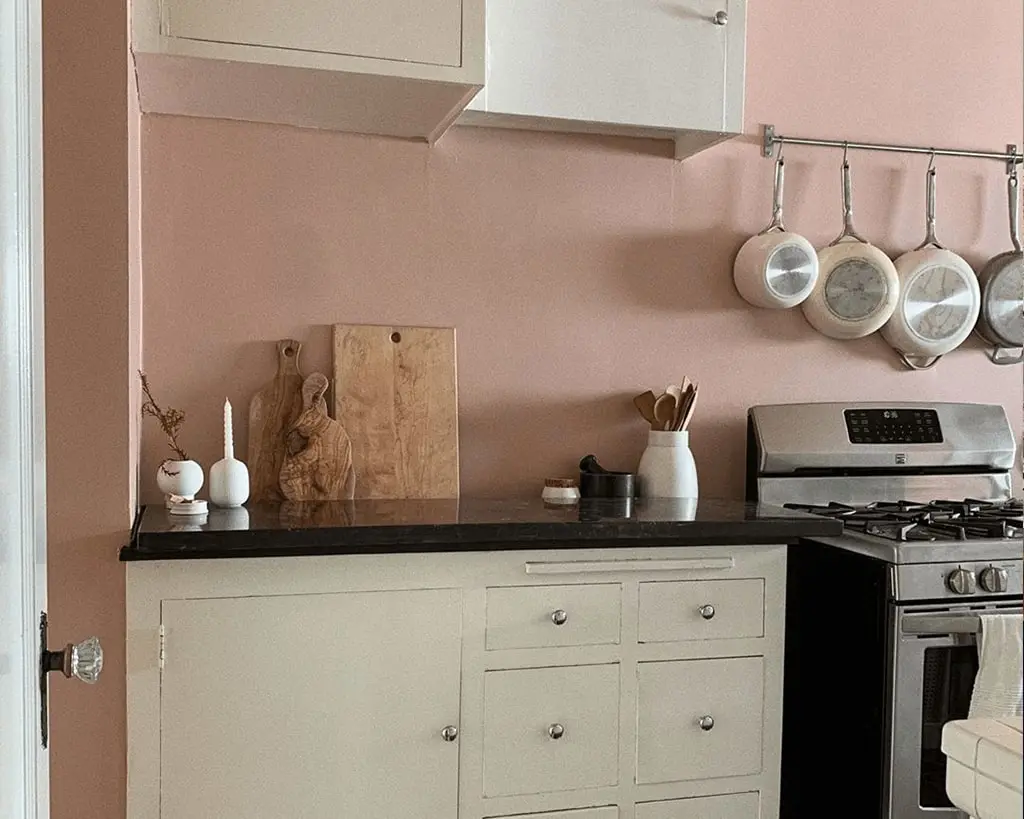
Peach and blush add warmth without the formality of red. Pale variations work well with bright white cabinets, while dustier, earthier shades suit creamy white cabinetry and natural wood. You can also read our guide on decorating ideas for over kitchen cabinets.
These colors are not limited to feminine kitchens; their depth comes from the undertone and pairing. Combine a muted peach wall with olive, navy, brass, or dark wood rather than matching every accessory to the pink.
Butter and Muted Yellow
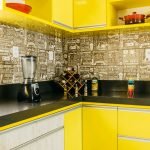
Butter yellow is cheerful and soft enough for white cabinetry. It works best with warm floors, light wood, sage green, cream countertops, and brushed brass. A gray-based yellow can look sophisticated in a modern kitchen, while a golden yellow feels warmer and more traditional. You can also read our guide on how to prep greasy kitchen walls for painting.
Strong yellow can become harsh under cool lighting, so sample it in the evening. In a north-facing or poorly lit room, choose a softer, creamier shade or add warm lighting before committing.
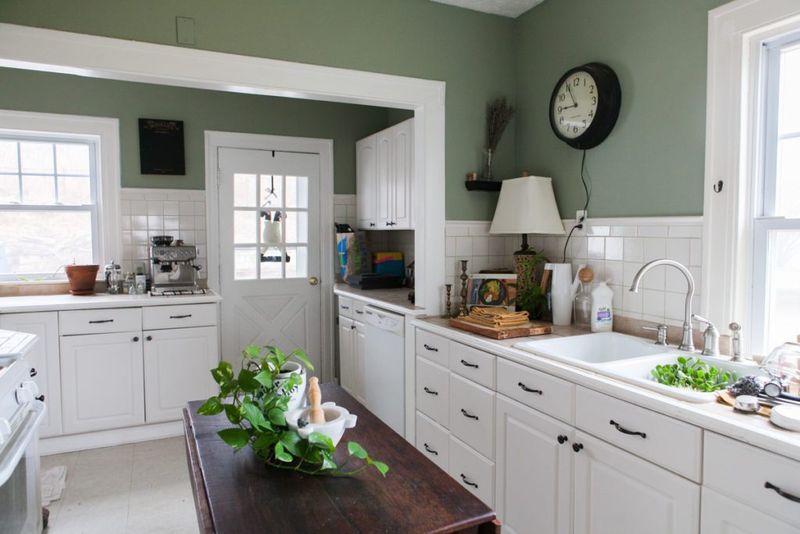
Pale blue and blush tones add personality while keeping white cabinetry bright and open.
Dark Wall Colors: Navy, Charcoal, and Deep Teal
White cabinets against navy, charcoal, or deep teal create one of the strongest contrasts in kitchen design. The cabinets become crisp focal points, and the wall appears clean and architectural. You can also read our guide on what color to paint kitchen walls with dark cabinets.
Dark walls are not limited to large rooms. They work well in smaller kitchens when the window area, cabinetry, counters, and lighting provide enough light. Pale floors, glossy or reflective surfaces, glass, and metallic fixtures help distribute that light.
Charcoal is usually softer and more neutral than black. Deep teal combines the drama of blue with a hint of green and pairs well with brass, copper, natural wood, and warm white countertops. Navy remains the most dependable dark option because it works with many countertop and flooring colors. You can also read our guide on what size screws for kitchen wall cabinets.
For a more restrained effect, paint the wall behind the main cabinet run a dark shade and use soft neutral colors on adjoining walls. A fully dark kitchen needs layered lighting, including general, task, and under-cabinet illumination.
Can the Walls Be White Too?
A white-on-white kitchen is a legitimate design choice, not a sign of a lack of contrast. It works best when the surfaces vary in undertone, texture, or reflectivity. You can also read our guide on how to paint high walls above kitchen cabinets.
Pair bright white cabinets with walls in warm cream, pale putty, or soft gray. If the cabinets are already warm white, choose a cooler wall tint to make their edges visible. Matte tile, natural stone, wood shelves, woven textures, and darker hardware add depth without introducing a major new color.
Matching the exact paint color on every surface can make cabinet doors disappear into the wall. Keep the wall slightly different in tone or finish, and use cabinet shadow lines, trim, lighting, or backsplash contrast to define the boundaries. You can also read our guide on what colour walls for a white kitchen.
Match the Wall to Flooring, Counters, Backsplash, and Hardware
The wall should connect to the room’s fixed materials rather than compete with them. If cabinets, flooring, and counters are already installed, let them guide the selection.
Start with the element with the strongest visual pattern. If the countertop has dramatic veining, a quiet wall may prevent the room from becoming busy. If the backsplash contains small tile or a detailed pattern, a solid wall color can provide needed breathing room. With a plain backsplash, the wall can safely carry more color. You can also read our guide on what color walls go with dark brown kitchen cabinets.
Natural wood usually calls for warm white, beige, putty, muted peach, sage, olive, or clay. Cool stone and stainless steel can support pale gray, blue-gray, navy, charcoal, or deep teal. Warm brass and bronze favor cream, terracotta, olive, and forest green.
Open shelves and wood accessories should also influence the palette. Compare their actual finish to the paint sample and plan for the care of frequently handled items, including proper caring for wood tools. You can also read our guide on blue and gray kitchen decor.
| Hardware or appliance finish | Effective wall colors | Design effect |
|---|---|---|
| Brushed nickel or stainless steel | Soft gray, pale blue, sage, cool putty | Clean and contemporary |
| Brass or bronze | Cream, beige, olive, navy, terracotta | Warm, layered, traditional or transitional |
| Matte black | Warm white, pale gray, terracotta, navy, soft green | Graphic and sharply defined |
| Mixed metals | Greige, putty, soft dove gray | Provides a neutral bridge between finishes |
| All-white appliances | Navy, green, blue, charcoal, or a warmer off-white | Keeps the cabinetry distinct and crisp |
If an appliance finish is uncertain, wall color can sometimes reveal the mismatch. Place black, silver, and brass finish samples beside the cabinet doors before ordering the wall paint.
Account for Lighting, Room Size, and Layout
Test Lighting Throughout the Day
Paint changes under sunlight, shade, and artificial light. A chip that looks balanced in the morning can become greenish under warm evening bulbs or overly blue near a large window. You can also read our guide on how deep are wall kitchen cabinets.
The perceived result depends on the source and quality of illumination, surrounding colors, and viewing conditions—the same principles explained by the International Commission on Illumination. This is also why a color viewed in a showroom can look different in your kitchen.
Tape large samples vertically and observe them in the morning, at midday, and after dark. Turn on the actual pendants and under-cabinet lights rather than judging the paint in a bright store. If a room has limited daylight, a lighter sample or higher-reflecting shade may be easier to live with, though well-lit dark colors remain possible. You can also read our guide on light gray kitchen cabinets what color walls.
If your kitchen includes a second prep area, settle the layout before selecting paint. A practical portable setup checklist can help identify storage and equipment needs that may affect the final room, particularly when indoor and outdoor cooking overlap.
Consider the Room’s Visual Flow
In a small kitchen, a light wall generally reflects more light and preserves an open feeling. Dark walls can make the boundaries feel closer, but good lighting, pale counters, and continuous flooring can offset that effect. You can also read our guide on how to paint wall tiles in kitchen.
Do not choose dark colors only when the room is large. Choose them when the window area and artificial lighting support them and when the overall layout provides enough balance.
In an open-plan home, consider the adjoining rooms. A navy kitchen wall next to a warm beige living room may feel disconnected unless beige or navy appears in both spaces. Sample the paint in the context of the entire sightline, not just from inside the kitchen. You can also read our guide on best kitchen rugs for wood floors.
Choose One Wall or All Four
Painting a single wall can create a strong focal area, especially behind white cabinets with an interesting countertop or range. Keep the accent wall in a major position rather than making the narrowest or least visible surface the most dramatic.
Painting all the walls one color usually creates a more unified room. It is often better when cabinetry wraps around several walls, the kitchen is highly visible from adjoining spaces, or the cabinet color is very close to a neutral. You can also read our guide on red kitchen walls what color cabinets.
If the kitchen and dining area are continuous, consider using the accent color on the kitchen wall while repeating small amounts of it in accessories, or choose a mid-depth shade that transitions comfortably between both spaces.
Choose the Right Wall Paint Finish
Color and sheen work together. The same wall color can look warmer, cooler, brighter, or more formal depending on the finish. You can also read our guide on how to install wall mounted kitchen cabinets.
A matte or flat finish creates a soft appearance but can show fingerprints, scuffs, and cleaning marks more readily. It may suit a low-traffic accent wall when those trade-offs are acceptable.
An eggshell finish is often a practical compromise for kitchen walls. It has modest reflectivity and is usually easier to maintain than matte, although the actual performance depends on the product. You can also read our guide on decoration for on top of kitchen cabinets.
A satin finish reflects more light and can make the color appear richer. It may also scrub more readily, but can reveal wall texture, patching, and unevenness.
A semi-gloss finish is highly reflective and often easier to wipe clean. It is common on cabinets and trim, but it is not automatically the best choice for every full kitchen wall because it can exaggerate surface flaws. You can also read our guide on what colour walls go with white kitchen cabinets.
Compare the manufacturer’s published performance information rather than relying only on the finish name. For a cooking area, low-VOC and ventilation considerations are also worth reviewing; the EPA’s indoor-air quality guidance provides a useful primary reference.
Good habits still matter. Adequate ventilation and habits such as keeping grease guards clean can reduce buildup near the cooking zone. If tile, paneling, or wallcovering will cover part of the wall, select the wall paint based on the surfaces that will actually remain exposed. You can also read our guide on how to remove grease stains from painted kitchen walls.
Test Paint Samples Like a Professional
The fastest way to avoid an expensive color mistake is to test a few samples under realistic conditions. Small chips help narrow the field, but they do not show enough area to reveal lighting and adjacency issues.
- Inventory the fixed finishes. List the flooring, backsplash, countertop, cabinet undertone, appliance finish, and hardware before browsing paint colors. The most expensive and difficult-to-change materials should lead the decision.
- Shortlist two or three families. Choose colors from the same broad family—for example, two greiges and one soft blue—so you are comparing subtle differences rather than unrelated shades.
- Use large vertical samples. Paint or obtain samples at least 8–12 inches square. Tape each sample to more than one relevant wall at approximately eye level rather than moving a small chip around the room.
- Include the edges. Place samples beside a cabinet door, backsplash, counter edge, and floor. This exposes unexpected undertone shifts that are invisible on a horizontal card.
- Observe multiple conditions. View the samples in morning light, daytime artificial light, and evening lighting. Check them over at least two days so the room experiences different light and uses.
- Assess the room from several distances. Stand at the doorway, at the main work zone, and in adjoining rooms. Then sit at a table or island to see whether the color becomes too dominant at eye level.
- Decide the scope last. After choosing a color, decide whether it belongs on one wall, all walls, a dining alcove, or the ceiling. The same sample can work in one location and feel too encompassing in another.
Photographs and phone screens are useful for saving options, but they are unreliable for judging subtle undertones and sheen. Make the final comparison with physical materials in the kitchen. You can also read our guide on what paint to use on kitchen walls.
Complete White Cabinet Color Palettes
If you need a clear starting point, borrow the structure of one of these palettes rather than copying every color exactly.
| Style | Wall color | Cabinet and material direction | Supporting details |
|---|---|---|---|
| Warm modern | Mushroom, putty, or warm greige | Creamy white cabinets, white oak, honed light stone | Brushed brass, linen, simple black accents |
| Cool modern | Soft dove gray or pale blue-gray | Bright white cabinets, quartz or pale stone, stainless steel | Minimal hardware and clean-lined lighting |
| Classic | Muted blue, soft sage, or pale putty | Warm white cabinets, wood floors, traditional backsplash | Brass, bronze, crown molding or shaker details |
| Relaxed natural | Sage, oatmeal, or light olive | Creamy white cabinets, natural wood, textured stone | Woven baskets, matte ceramics, simple pendant lighting |
| Bold contrast | Navy, forest green, charcoal, or deep teal | Bright white cabinets, pale counters, light flooring | One statement fixture and restrained accessories |
| Soft coastal | Pale blue-gray or misty blue | White cabinets, light oak, white or gray stone | Linen textures, nickel, simple striped towels |
| Monochrome | Soft white, warm white, or pale putty | White cabinets in mixed sheens | Gray veining, black hardware, natural wood |
A balanced kitchen usually needs one dominant color, one supporting neutral, and a small finish that repeats throughout the room. It does not need every available color in equal amounts. You can also read our guide on what color walls go with green kitchen cabinets.
Avoid Common Wall-Color Mistakes
Matching Everything Exactly
White cabinets do not need white walls. A subtle tonal difference gives the cabinetry definition and makes the entire room more interesting. Aim for contrast in undertone, texture, or reflectivity rather than an exact color match.
Selecting Paint Before the Counters Are Final
Stone, tile, grout, and flooring can introduce strong undertones that a small swatch may not reveal. If major work is still planned, create a palette using physical samples or high-quality temporary boards and postpone the final color decision. You can also read our guide on grey kitchen cabinets what colour walls.
Treating Dark Paint as a Large-Room Requirement
A dark wall is primarily a lighting and layout decision, not a room-size rule. Small kitchens can accommodate navy or forest green when they have good illumination, pale reflective surfaces, and a balanced floor.
Combining Unrelated Undertones
Warm oak, cool gray stone, yellow walls, and pink accessories can feel disjointed if no element bridges the palette. Repeat a warm or cool undertone in at least one additional material before the room is finished. You can also read our guide on beige kitchen cabinets what color walls.
Hiding Practical Problems for the Sake of Style
Color should not make damaged, worn, or unsuitable display items look intentional. Inspect open-shelf pieces before placing them against a new wall; warning signs in wooden tools can reveal problems that are easier to address than after the room is painted.
Painting an Accent Wall in the Wrong Location
Choose the wall that naturally draws the eye or frames the main cabinet run. A random dark wall can make the room feel divided, while a central or well-lit feature wall creates a deliberate composition. You can also read our guide on cold vs warm white wine fermentation.
Design for How You Actually Use the Kitchen
A beautiful palette still has to work around daily cooking and storage. Before finalizing the wall color, identify where splashes, grease, traffic, and frequently handled tools are most likely to occur.
Use washable paint in high-contact areas and plan the range, sink, and cabinet openings before deciding on an accent wall. Open shelves should display tools that can be reached and cleaned without creating constant clutter. When an item has loose parts, deep cracks, or retained moisture, basic utensil troubleshooting can identify whether it belongs in the display area or needs repair. You can also read our guide on apron hanging in kitchen.
For frequently used implements, separate display pieces from tools that are washed and returned often. Wall color cannot solve poor storage or maintenance, but a calmer background can reduce the visual impact of everyday wear and keep the kitchen organized.
Frequently Asked Questions
What wall color goes best with white kitchen cabinets?
There is no single best color for every kitchen, but warm greige, putty, soft dove gray, and pale blue-gray are among the most versatile options. They add contrast and depth without competing with the cabinetry. For a warmer kitchen, consider beige, sage, olive, terracotta, or muted peach. If you want stronger contrast, test navy, forest green, charcoal, or deep teal. The most reliable choice is the shade that coordinates with the flooring, countertop, backsplash, and lighting—not simply the trendiest color name. You can also read our guide on green kitchen cabinets what color walls.
Should kitchen walls be white when the cabinets are white?
They can be, but the walls and cabinets should usually differ slightly in undertone or finish. Warm cream walls can make cool white cabinetry stand out, while pale gray or putty can outline creamy cabinets. A tonal difference is more effective than using two versions of the same stark white. If you want a stronger separation, use a light greige, soft blue, or another pale neutral rather than relying on white alone.
Do dark walls make a small kitchen look smaller?
Dark walls can make the boundaries feel closer, but room size is not an absolute restriction. Navy, forest green, and charcoal can work in a small kitchen when there is good window light, layered artificial lighting, pale counters, and enough reflective surface. A lighter shade is usually easier to brighten, but a dark wall can create a more intimate and intentional atmosphere. Always view large samples in the actual room before deciding. You can also read our guide on apron stainless steel kitchen sink.
Is light gray safe with white kitchen cabinets?
Yes, as long as the gray’s undertone supports the cabinetry and adjacent materials. A blue-gray often looks crisp beside bright white cabinets, while a warm mushroom-gray complements creamy cabinetry and natural wood. If the floor and counters are warm but the gray looks cold, try a greige or mushroom shade. Test both at night because kitchen lighting can make even a subtle gray appear noticeably blue or beige.
What wall color works with white cabinets and wood flooring?
The answer depends on the wood tone. White oak generally works with warm greige, cream, pale sage, dusty blue, and soft mushroom. Walnut or darker stained wood can support cream, muted peach, terracotta, olive, forest green, or deep navy. If the flooring has strong yellow or orange undertones, a slightly gray or taupe wall can keep the palette from becoming overly warm. A repeat of the flooring color in the backsplash, curtains, or accessories can also make the transition look deliberate. You can also read our guide on how to clean kitchen wall tiles easily.
Should the wall color match the backsplash?
It does not need to match, and the two surfaces serve different roles. The backsplash protects the work area and often carries pattern or texture, while the wall forms the larger visual background. If the backsplash is busy, a quiet solid wall can provide relief. If it is plain, a stronger wall color may have room to become the main statement. Keep the wall, backsplash, countertop, and cabinets in the same warm or cool family rather than requiring an exact color match.
What paint finish is most practical for kitchen walls?
A washable eggshell or satin finish is often a practical starting point because it balances reflectivity and maintenance. Matte finishes create a soft look but may show fingerprints and cleaning marks, while semi-gloss can emphasize bumps, patches, and wall texture. Performance varies by product, so read the manufacturer’s cleaning and scrub recommendations. If the wall is tiled, paneled, or covered, choose the finish for the exposed areas rather than assuming the entire room requires the same sheen. You can also read our guide on tiles design for kitchen wall.
Conclusion
The best wall color for white kitchen cabinets is not necessarily the lightest or boldest option. It is the color that makes the cabinetry feel intentional, connects with the flooring and counters, and remains appealing in every type of light.
Start with the cabinet undertone, choose two or three wall-color families, and compare large samples beside the real materials. Keep the palette simple: one wall color, one cabinet and countertop scheme, and a repeated finish for hardware, lighting, or accessories. Whether you select warm putty, soft sage, dusty blue, or dramatic navy, the right sample will make the room feel brighter, deeper, and more cohesive. You can also read our guide on what color to paint kitchen walls with light grey cabinets.
Make your first move: tape up three 8–12-inch samples, view them in morning and evening light, and choose the wall color you still like when every practical detail is visible. You can also read our guide on oak kitchen cabinets what color walls.
Before purchasing full cans, compare the finalist with a cabinet door, flooring sample, backsplash tile, and countertop at a local paint retailer. Save the selected chip and these reference materials; reviewing them together before checkout helps prevent a small color difference from disrupting the entire palette. You can also read our guide on what color kitchen cabinets go with knotty pine.
Similar Posts






[…] Not all white cabinets are created equal: cool white cabinets have blue or gray undertones (ideal for modern, coastal, and minimalist kitchens), warm white cabinets have yellow or beige undertones (perfect for farmhouse, traditional, and cottage styles), and neutral white cabinets have balanced undertones that work with every palette. Pairing a cool white cabinet with a warm yellow wall will create a disjointed, clashing look; match undertones for a cohesive, intentional feel. If you're unsure of your cabinet's undertone, hold a piece of white paper next to the cabinet in natural light: if the paper looks yellow next to the cabinet, it's a warm white; if it looks blue, it's a cool white. For more on this, see our guide on what color walls go with white kitchen cabinets. […]
[…] Cool whites have subtle blue, gray, or green undertones. They feel crisp, clean, and modern, making them perfect for south or west-facing kitchens with lots of bright natural light, modern minimalist designs, or spaces with stainless steel appliances and gray cabinetry. The only downside is that cool whites can feel stark and sterile in dim, north-facing kitchens, especially when paired with warm incandescent lighting. For more on this, see our guide on what color walls go with white kitchen cabinets. […]
[…] Warm yellow walls add cheer and brightness that balances the coolness of blue cabinets, making them ideal for dark, north-facing kitchens that need a light boost. Opt for muted mustard, butter, or pale yellow shades instead of bright neon, which can feel harsh in a kitchen space. This pairing works beautifully for cottage, farmhouse, and eclectic kitchens, especially when paired with natural wood accents and white subway tile. For more on this, see our guide on what color walls go with white kitchen cabinets. […]