How to Clean and Maintain Your Picnic Basket
Learning how to maintain a picnic basket doesn't have to feel overwhelming. The right care routine depends almost entirely on your basket's materials, wicker, wood, leather, and metal all need different treatment. Get this wrong and you could watch a beloved heirloom crack, mold, or rust within a single season.
Manufacturer specifications and museum conservation guidelines consistently point to one non-negotiable rule: store your basket in a climate-controlled indoor space at 40 to 55 percent relative humidity. That stable range keeps natural fibers from drying out and splitting. Follow the material-specific steps below and your basket can easily last another decade or more of summer picnics.
Quick Answer
How to maintain a picnic basket: empty it after every use, clean fabric liners with cold water and mild detergent, condition leather straps monthly, polish metal hardware every few weeks, and store the basket indoors at 40 to 55 percent relative humidity. Perform a deep clean every two to three months and apply seasonal conditioning to wood and leather at least twice per year. Never store a damp basket or wrap it in plastic.
Why Your Picnic Basket Deserves More Love (and What Happens When It Doesn't)
A picnic basket sits at the intersection of craftsmanship and daily outdoor use. Every time you pack glasses, open a hinge, or carry it across uneven ground, stress builds in hidden places. The result?
Wicker that cracks, leather that dries, metal that rusts, and fabric linings that trap moisture and develop odors.
Neglecting maintenance doesn't just hurt appearance. Mold spores growing inside a damp basket create health risks for anyone eating off the linings. Loose metal hinges become safety hazards when they suddenly give way under the weight of heavy glassware.
Structural cracks in wicker weaken the entire frame, sometimes leading to catastrophic failure mid-carry.
Regular upkeep prevents these problems before they escalate. A quick post-use check takes five minutes. A seasonal deep clean restores the basket to near-original condition.
The effort pays dividends in longevity, food safety, and preserved resale value. Think about it like caring for fine dinnerware sets, the pieces you use most deserve the most attention.
Figuring Out What You're Working With: Material Breakdown
You can't clean what you don't understand. Most picnic baskets combine three or four materials, and each responds differently to water, heat, and chemicals. Identifying what you're working with is the foundation of every successful maintenance plan.
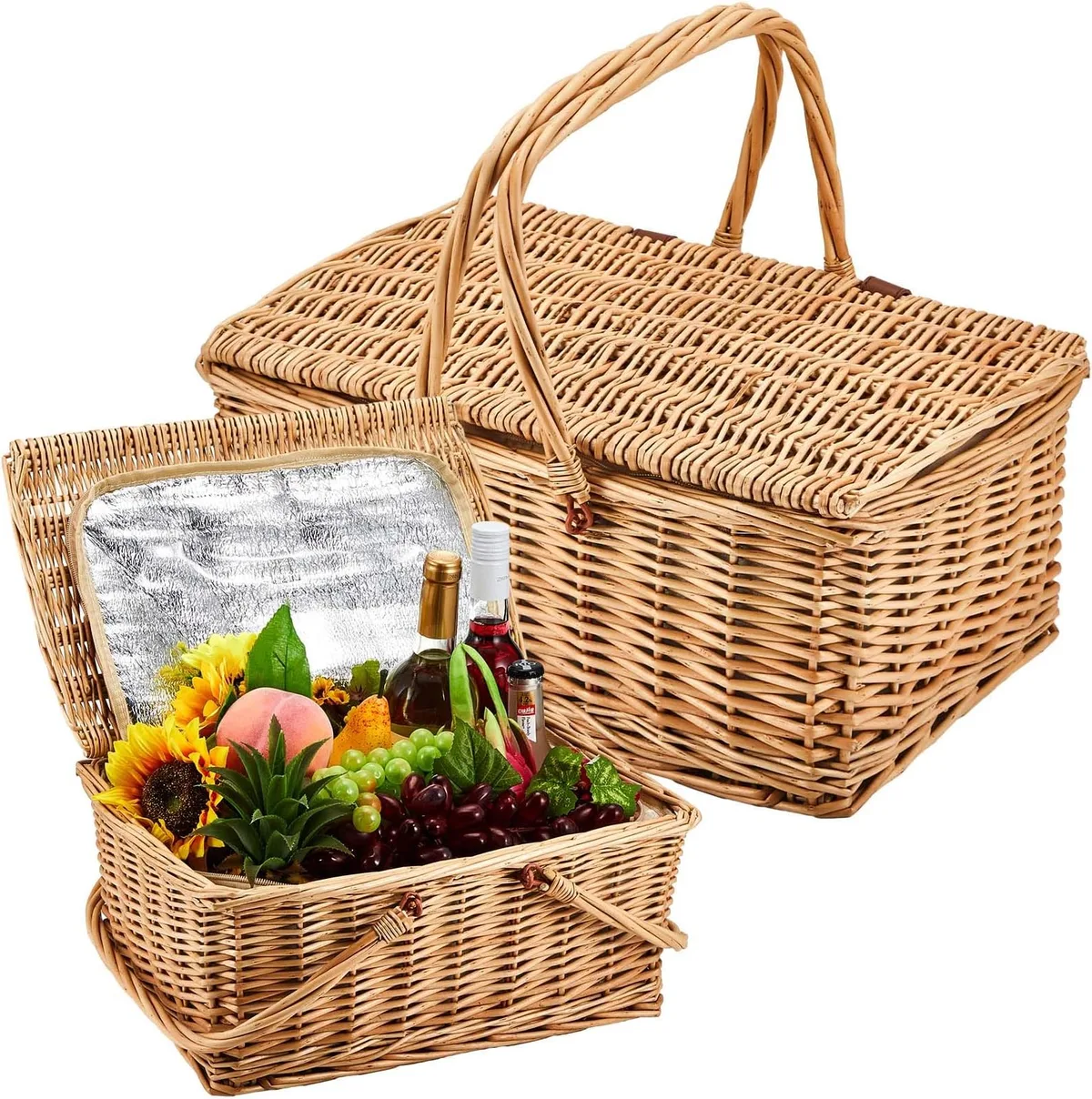
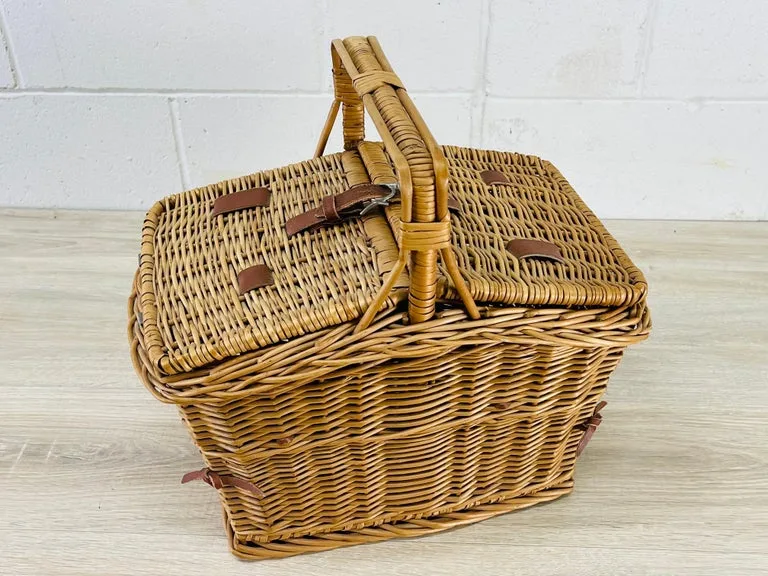
Wicker and rattan make up the body of most traditional baskets. These materials come from the stems of palm-like plants and are woven while green and pliable. They are naturally strong but vulnerable to moisture swings.
When wicker absorbs water, it swells. When it dries too quickly, it shrinks and cracks. Rapid humidity changes cause more damage than slow seasonal shifts.
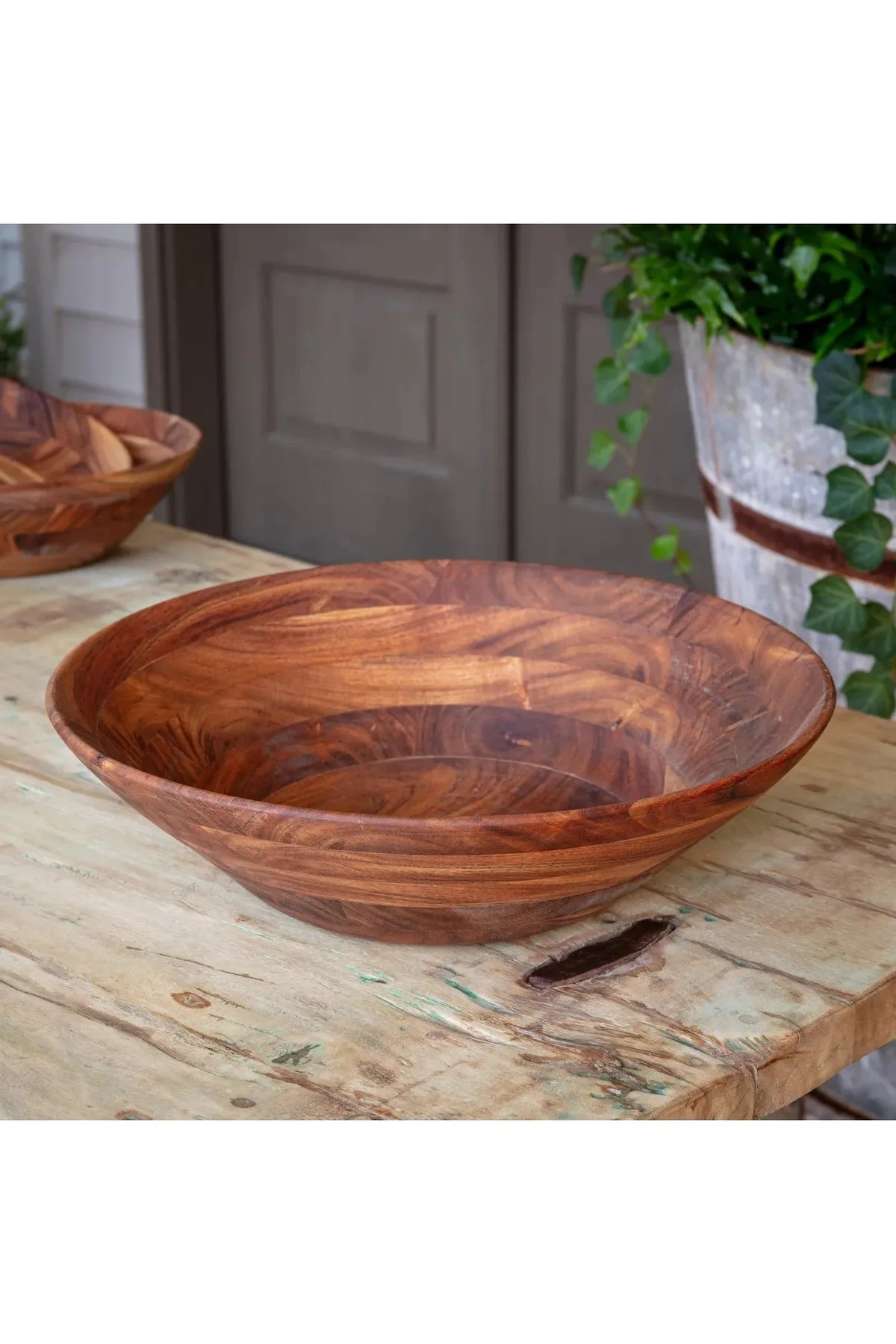
Wood frames and slats appear in many baskets, typically finished with varnish, lacquer, or penetrating oil. A glossy varnished surface repels water well but can cloud or peel if scratched. Oiled wood looks warmer but needs reapplication every six to twelve months depending on use.
Unfinished wood is rare in quality baskets because it absorbs moisture instantly.
Metal hardware includes hinges, latches, clasps, and sometimes decorative trim. Brass, steel, and aluminum each behave differently. Steel rusts when exposed to moisture unless coated.
Brass develops a patina over time, which many owners find attractive but which weakens thin structural pieces. Aluminum resists corrosion but can oxidize into a dull white film.
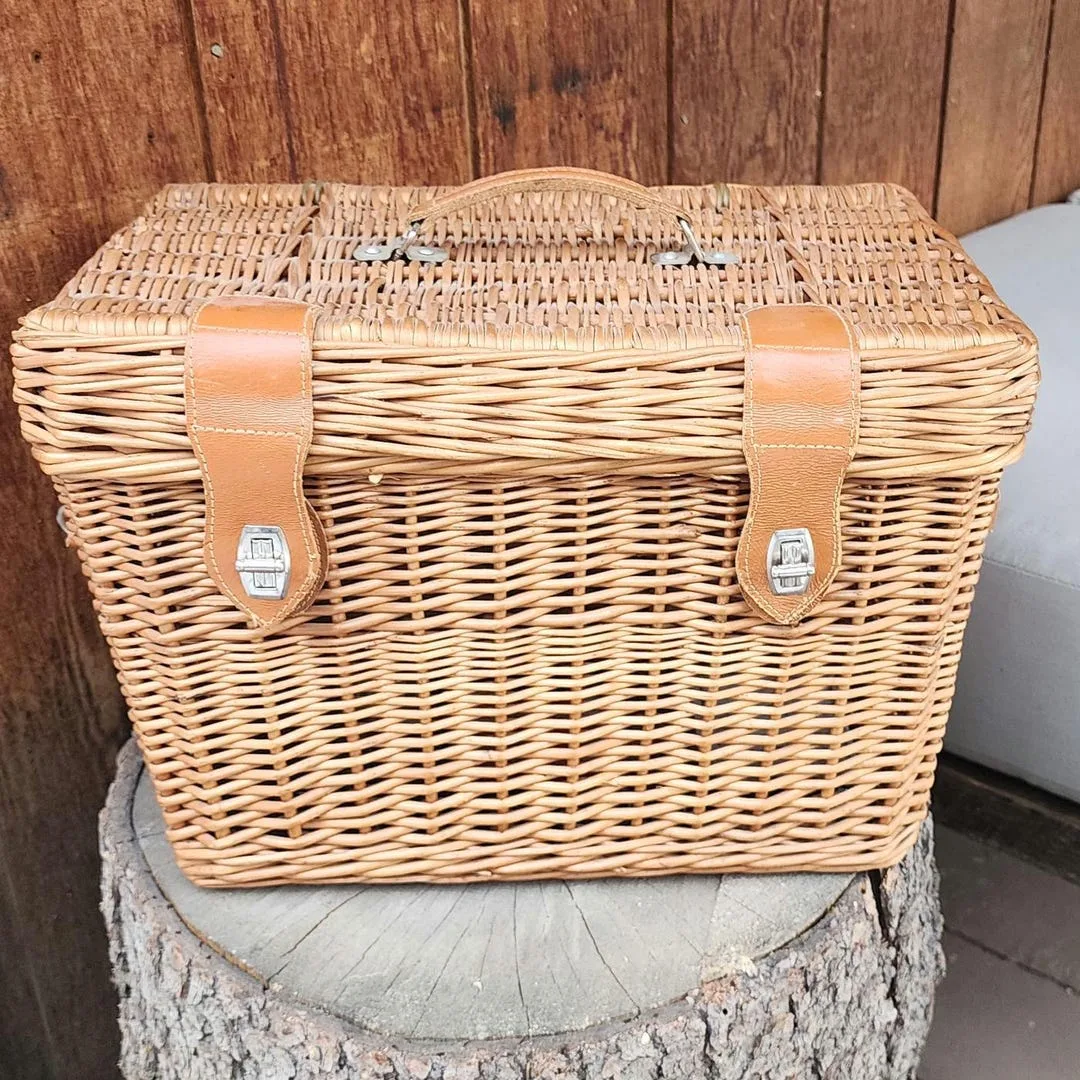
Leather straps and handles are the most tactile part of your basket. Full-grain leather lasts decades with proper conditioning. Bonded or faux leather delaminates within a few years and cannot be restored.
Treat every leather component as a living material that dries, cracks, and rots when ignored.
Canvas or fabric linings line the interior and hold glassware inserts, cutlery drawers, and serving trays. Linen cotton blends dry faster than pure cotton. Vinyl-coated fabrics resist stains but trap moisture underneath if not cleaned regularly.
Always remove food residue promptly to prevent bacterial growth and odor buildup, just as you would protect your glassware collection.
The Right Care Routine Based on Your Basket Type
Different baskets need different schedules, and sticking to a consistent routine beats reacting to disasters. Think in terms of frequency bands rather than one-size-fits-all advice.
Weekly or After-Every-Use Check-In, Empty the basket completely. Shake out crumbs from fabric linings. Wipe down metal hardware with a dry cloth.
Inspect wicker weave for loose strands or cracks. Check leather straps for dryness or stiffness. This five-minute habit catches small problems before they become expensive repairs.
Deep Clean Every Two to Three Months, Remove all interior trays, dividers, and glassware. Vacuum the wicker body using a soft brush attachment. Spot-clean fabric liners with cold water and mild detergent.
Condition leather straps. Polish metal hardware. Allow everything to dry thoroughly before reassembly.
Never pack a damp basket.
Seasonal Conditioning Every Six to Twelve Months, Apply leather conditioner to all straps and handles. Reapply wood oil or wax to exposed wooden surfaces. Test a small area first to ensure compatibility.
Lightly buff any varnished surfaces with a clean cloth to restore sheen. This yearly investment prevents the brittleness that leads to irreparable damage.
Long-Term Storage Prep, Before putting the basket away for winter or extended non-use, perform a full deep clean. Ensure complete dryness throughout, including inside weave crevices. Place silica gel packets or uncooked rice in breathable pouches inside the basket to absorb ambient moisture.
Wrap in a cotton sheet or breathable fabric bag, never plastic. Store upright in a cool, dry closet away from direct sunlight, heating vents, or exterior walls.
| Routine | Frequency | Time Required | Key Actions |
|---|---|---|---|
| Post-use check | After every outing | 5 minutes | Empty, inspect, dry wipe |
| Deep clean | Every 2–3 months | 1–2 hours | Full disassembly, wash, condition, dry |
| Seasonal conditioning | Every 6–12 months | 30–45 minutes | Leather care, wood polish, hardware care |
| Storage prep | Before long dormancy | 1–2 hours | Complete dryness, moisture absorbers, wrap |
Step-by-Step: Cleaning, Repairing, and Refreshing Each Material
This section covers the actual hands-on work. Follow the steps in order and never rush the drying phase. Moisture trapped inside wicker or under leather is the single fastest path to permanent damage.
Dusting and Dry-Cleaning Wicker and Rattan
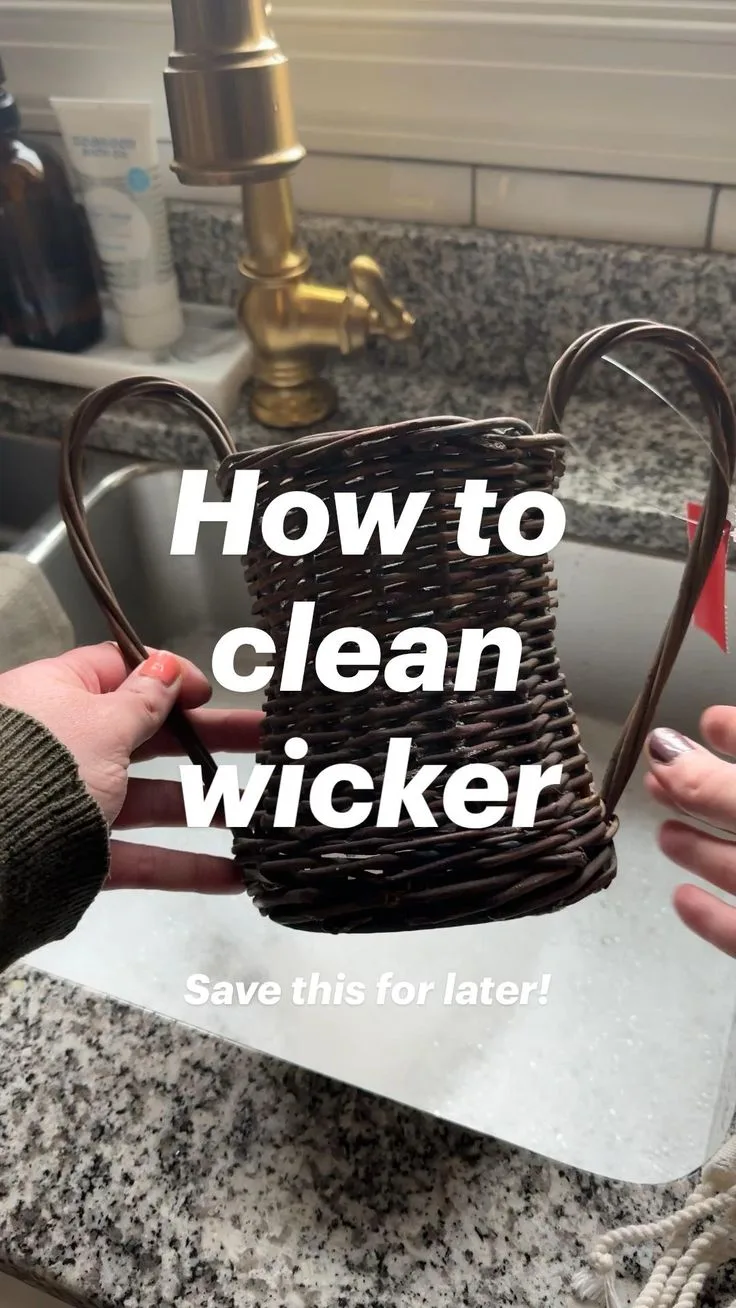
Use a soft-bristled brush, a clean paintbrush, or a vacuum attachment with a brush head. Gently brush along the grain of the weave to dislodge dirt from tight spaces. For stubborn debris trapped in the weave, use a wooden toothpick or a soft craft brush rather than metal tools that can scratch or snag fibers.
Never soak wicker. If a spot is visibly soiled, dampen a microfiber cloth slightly with distilled water and blot gently. Allow to air-dry completely before handling or storing.
Spot-Cleaning and Washing Fabric Liners
Remove all liners, trays, and inserts. Check care labels for machine-wash instructions. Hand-wash delicate liners in lukewarm water with a small amount of mild, fragrance-free detergent.
Rinse thoroughly until no soap residue remains. Lay flat to dry on a clean towel away from direct sunlight, which fades colors. Never place wet fabric back into a closed basket.
Polishing and Protecting Wood Surfaces
Wipe wooden surfaces with a slightly damp cloth to remove surface grime. Dry immediately. For varnished wood, apply a thin coat of furniture polish using a soft cotton cloth.
Buff gently in circular motions. For oiled wood, apply a food-safe mineral oil or beeswax blend every six months. Rub in liberally, let absorb for fifteen minutes, then buff off excess.
Avoid silicone-based polishes on wood that contacts food.
Cleaning and Protecting Metal Hinges, Latches, and Frames
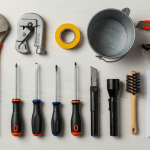
Wipe metal parts with a dry cloth to remove dust. For light surface rust, use fine steel wool or a rust-removing pad gently. Apply a thin layer of machine oil, camellia oil, or a dedicated metal protectant to clean, dry surfaces.
Move hinges and latches through their full range several times to work the lubricant in. Wipe away any excess. Do not use WD-40 as a long-term lubricant because it attracts dust and evaporates quickly.
Conditioning Leather Straps and Handles
Clean leather with a dedicated leather cleaner or a barely damp cloth. Apply a quality leather conditioner or balm using a soft cloth. Work it into the leather with gentle circular motions.
Let it absorb for twenty to thirty minutes. Buff lightly with a clean dry cloth. Condition every three to six months for frequently used baskets.
Over-conditioning can soften leather excessively, so apply conservatively.
Removing Mold, Mildew, and Odors Safely
If you detect musty smells or see discoloration, treat mold immediately. Mix one part white vinegar with one part water. Dampen a cloth and gently wipe affected areas on non-porous surfaces.
For fabric liners, add half a cup of white vinegar to the wash cycle. Never mix vinegar with bleach because this creates toxic chlorine gas. Allow all treated areas to dry completely outdoors in direct sunlight when possible, as UV light kills remaining spores.
Replace linings that retain odor after thorough cleaning.
Fixing Common Damage: Broken Weave, Loose Joints, and Worn Hardware
Minor loose weave can sometimes be coaxed back into place by lightly misting the area with water and pressing fibers together with your fingers while they dry. Severe breaks require replacement reed or professional wicker work from a trained restorer. Loose hinges may tighten with a small amount of thread-locking adhesive applied carefully to screw threads.
Worn leather straps should be replaced rather than patched for safety. When glassware trays are involved, consider how best to pack fragile items during any transport needed for repairs.
Storage Mistakes That Slowly Ruin Baskets
How you store a basket when it is not in use matters as much as how you clean it. Many baskets are ruined not through active use but through neglect during months of dormancy. The following mistakes are among the most common and damaging.
Storing a basket in a garage, shed, or attic exposes it to extreme temperature and humidity swings. Outdoor structures routinely exceed the safe 40 to 55 percent relative humidity range recommended by conservation experts. Winter heating systems dry out indoor air dramatically, while summer humidity in unconditioned spaces promotes mold growth inside wicker.
Keep your basket in a climate-controlled room whenever possible.

Wrapping a basket in plastic or sealing it in a trash bag traps residual moisture against the materials. Even a barely damp basket will develop mold in an airtight environment within days. Always use breathable cotton sheets, pillowcases, or purpose-made fabric storage bags.
Never store baskets in sealed plastic containers.
Leaving the basket partially open or closed in a dusty corner allows debris to accumulate inside weave gaps and under hinges. Dust acts as an abrasive over time and holds moisture against surfaces. Store baskets fully closed but in a space where air circulates freely around the exterior.
Placing heavy objects on top of a stored basket can distort the weave, warp wooden frames, and stress metal hinges. Store baskets upright on a flat surface with nothing resting on top. If stacking is unavoidable, place a rigid board between baskets to distribute weight evenly.
Storing near kitchen stoves, radiators, or direct sunlight causes accelerated drying and fading. Heat dries out wicker fibers, making them brittle. UV exposure breaks down wood finishes and fades fabric colors.
Choose a cool, dark closet or under-bed storage space for long-term storage.
How Often You Should Really Be Maintaining Your Basket
Maintenance frequency depends on usage intensity, climate, and basket quality. Use this practical schedule as a starting point and adjust based on your own observations.
Light monthly users, One deep clean every three to four months. Condition leather and wood every six months. Quick visual inspection before and after each outing.
Weekly users or event planners, Deep clean every two months. Condition leather monthly during peak season. Polish metal hardware every six weeks.
Inspect wicker weave for stress points monthly.
Occasional or seasonal users, Perform a thorough deep clean and conditioning session before the first outing each spring. Clean and condition again before storing for autumn. Mid-season quick checks are still worth the five minutes.
The minimum effective maintenance routine for any basket is: dry it thoroughly after every use, wipe hardware monthly, and condition leather and wood at least twice per year. Anything less invites gradual degradation that compounds over time. A basket that receives basic care every few months will outlast one neglected for a full season by many years.
Think of it the same way you would maintain a quality set of gold flatware, consistent, lightweight care beats occasional heavy intervention.
When to DIY and When to Call in a Pro
Most maintenance tasks are straightforward enough for a careful homeowner. But some problems cross the line into territory where amateur repair does more harm than good. Here is how to tell the difference.
Handle these yourself: dusting and dry-cleaning wicker, spot-cleaning fabric liners, wiping and oiling metal hardware, conditioning leather straps, removing surface mold with vinegar solutions, polishing varnished wood, tightening loose screw-type hinges, and preparing a basket for long-term storage. These tasks require basic supplies and about thirty minutes of focused attention.
Call a professional: severely broken wicker weave that compromises structural integrity, completely delaminated leather that cannot be rehydrated, extensive rust corrosion on structural metal components, mold deeply embedded in porous wood or wicker that survives surface cleaning, broken glassware tray frames, and antique or heirloom baskets with irreplaceable historical value. A skilled basket restorer can often salvage pieces that look beyond saving. Restoration costs typically range from $75 to $250 depending on scope, which still saves money compared to replacing a quality vintage basket.
If you are unsure whether a problem qualifies as DIY or professional work, err on the side of caution. Testing an aggressive cleaning method on a small hidden area first can reveal whether the material can handle it. Apply the same careful judgment you would when deciding how to sell valuable silverware, knowing when to handle something yourself and when to seek expert help protects your investment either way.
Frequently Asked Questions
Can I use a pressure washer on a wicker picnic basket?
Never use a pressure washer on wicker, rattan, or any natural fiber basket. The high-pressure stream forces water deep into the weave, causing swelling, internal mold growth, and joint separation. Gentle damp-cloth blotting or a soft brush is the safest approach for removing surface dirt.
How do I get a musty smell out of my picnic basket?
Mix equal parts white vinegar and water in a spray bottle. Lightly mist affected interior areas and fabric liners. Let the basket air-dry completely in a well-ventilated space with the lid open.
Place activated charcoal or silica gel packets inside overnight after cleaning to absorb lingering odors. Replace liners if the smell persists after two thorough treatments.
Is it safe to use household cleaners inside a picnic basket?
Avoid harsh household cleaners near food-contact surfaces. The USDA recommends using mild, fragrance-free detergents or diluted vinegar solutions for surfaces that touch food. Rinse all cleaned areas thoroughly with clean water and allow complete drying before returning any dishes, glasses, or food items to the basket interior.
Should I leave my picnic basket outside after a rainy picnic?
Never store a wet picnic basket outdoors or in a closed position while damp. Remove all contents, open the lid fully, and let it air-dry in a shaded, ventilated area for at least twelve to twenty-four hours depending on humidity levels. Only close and store the basket once every surface, including inside weave crevices, feels completely dry to the touch.
How do I prevent wicker from cracking in dry climates?
Apply a light coat of paste wax or specialized wicker sealant every six months in dry environments. Store the basket away from heating vents and direct sun. Keep a small bowl of water nearby during dry winters to add moisture to indoor air, or use a humidifier set to maintain 40 to 55 percent relative humidity around the storage area.
What is the best way to clean glassware inserts in a picnic basket?
Remove glassware trays and wash them separately in warm soapy water using a soft sponge. Dry each piece individually with a lint-free cloth before returning them to the basket. Inspect the tray itself for cracks or loose fittings.
Consider investing in a durable dinnerware set designed for outdoor use if you frequently transport glass or ceramic items.

Ethan Cole is a kitchen innovation enthusiast and food technology writer at DiningGadgets.com. With over 8 years of experience reviewing cookware, smart kitchen tools, and design trends, he helps readers discover gadgets that make cooking easier and dining more enjoyable. When he’s not testing the latest kitchen appliances, Ethan enjoys experimenting with recipes and sharing practical tips for modern homes.
Similar Posts