Camping Kitchen Gadgets: Key Features to Look For
You're standing at your gear aisle or scrolling online, staring at a hundred options for pots, stoves, and utensils. Picking the right camping kitchen gadgets features to look for can mean the difference between a satisfying hot meal and a frustrating, half-cooked dinner in the dark. Most people buy based on price or brand alone, then regret it when something breaks or becomes impossible to clean.
Manufacturer specifications and verified buyer feedback show that weight, material, and fuel compatibility matter far more than any single gimmick. A typical two-burner camp stove delivers 12,000 to 24,000 BTU per hour while weighing under five pounds. Let's walk through exactly what to prioritize so you stop guessing and start packing smarter.
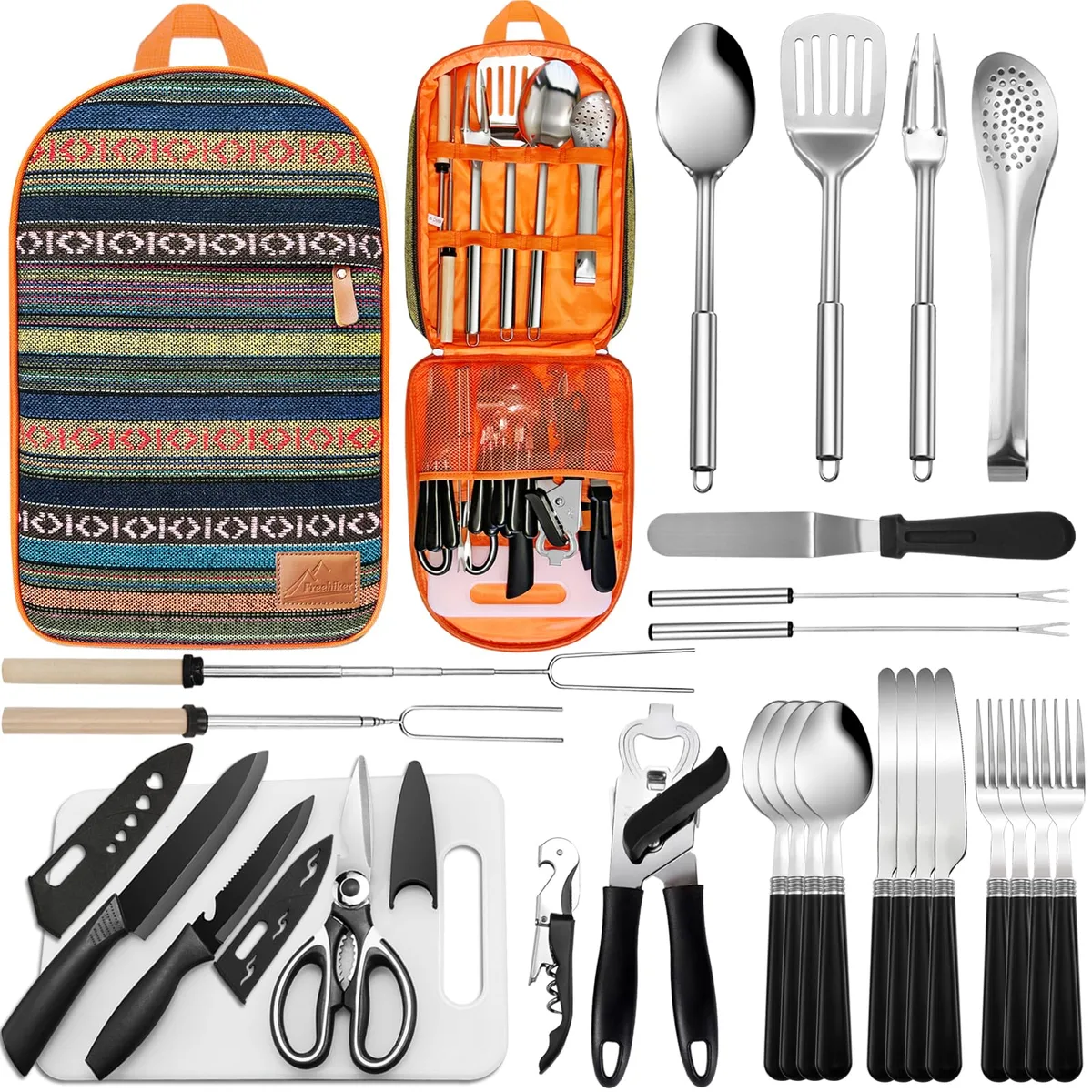
Image source: Web (Bing) / nellisauction.com (Web image (fair-use with source credit))
Quick Answer: What Actually Matters in Camping Kitchen Gadgets
Weight and packed size should be your very first filter. Every ounce adds up across pots, pans, utensils, and coolers, especially when you're carrying everything on your back. A set that collapses into itself saves significantly more space than standalone pieces stacked haphazardly in a pack.
Material choice drives almost everything else, including durability and cleanup effort. Anodized aluminum hits a versatile middle ground between cost and performance. Titanium stays lighter but comes at a premium price point.
Heat output and fuel compatibility deserve equal attention before purchase. Always verify that your chosen stove system matches the cookware diameter and fuel type available at your destination.
Compact nesting designs beat bulky single-purpose tools for nearly every trip scenario. Prioritize modularity so one stove, pot, and utensil set handle multiple meals without excess gear.
The Five Feature Buckets That Actually Matter
Weight and Packed Size
Grams and ounces compound quickly across every item in your cooking kit. Ultralight backpackers routinely target total cookware under two pounds. Car campers can afford heavier sets up to twenty pounds since vehicle transport removes the burden.
Nesting and folding designs shrink your overall footprint dramatically. A pot that collapses inside a matching pan occupies far less space than two rigid pieces layered separately. Look for handles that detach or swing away rather than protruding fixed extensions.
Verify collapsed dimensions against your pack or storage bin before buying. Manufacturers often list packed volume in liters or cubic inches. A three-liter pot bundle fits comfortably in a midsize hiking pack.
A nine-liter system needs a rooftop cargo box or truck bed.
Material and Build Quality
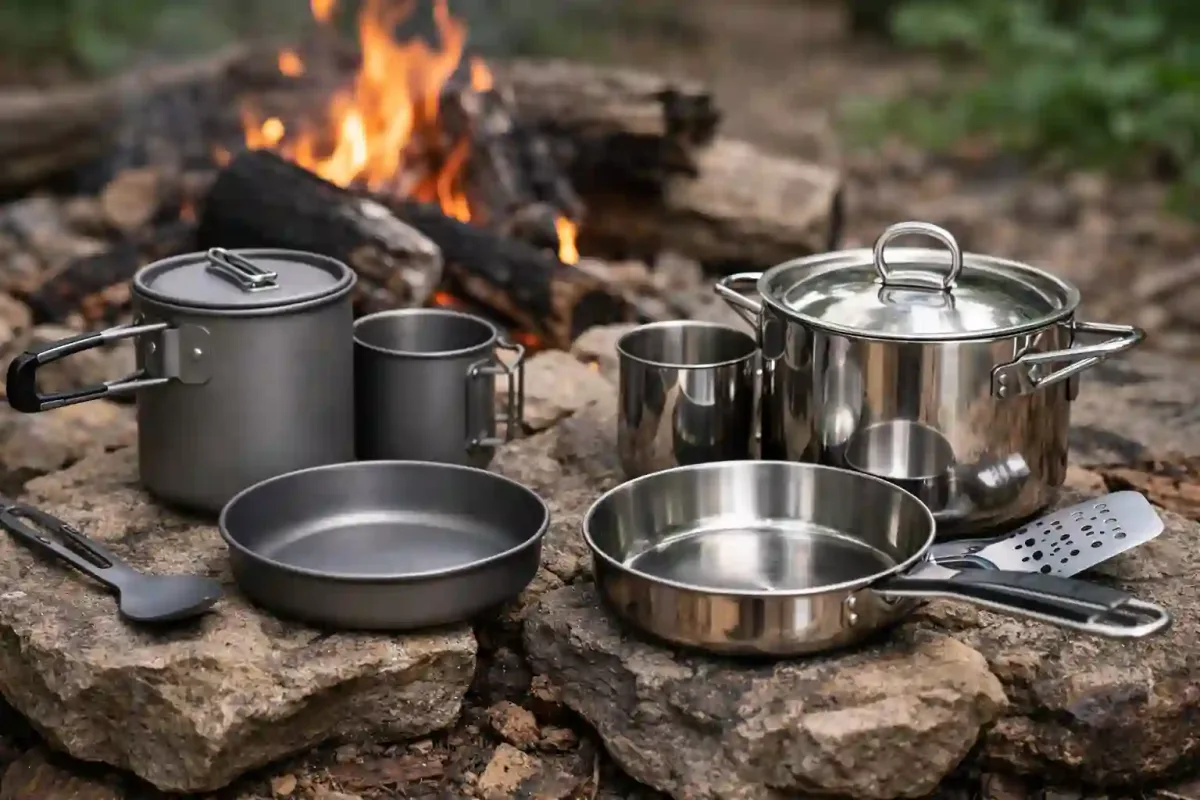
Image source: Bing (Web (fair-use with source credit))
Anodized aluminum offers a balanced combination of light weight, even heating, and reasonable longevity. It resists corrosion better than bare aluminum and costs less than titanium alternatives. This material works well for both beginners and experienced outdoorspeople seeking dependable performance.
Stainless steel stands up to rough handling and abrasive cleaning without scratching. It adds noticeable weight compared to aluminum but excels in durability-focused applications. Cast iron delivers unmatched heat retention for searing and slow cooking, though it demands seasoning and careful drying to prevent rust.
Silicone handles and foldable utensil components reduce burn risks and pack bulk. Check temperature resistance ratings before assuming silicone parts withstand direct flame contact. BPA-free plastic accessories provide lightweight options but may warp near high heat sources.
Manufacturers typically stamp material identifiers like "Anodized Al" or "18/10 SS" directly onto product pages. Verify these markers match your priority list instead of relying solely on marketing photos.
Heat Output and Fuel Compatibility
BTU ratings tell you how much thermal energy a stove delivers per hour. Backpacking burners range from 8,000 to 10,000 BTU hourly while twin-burner camp ranges reach 12,000 to 24,000 BTU. Match your primary pot diameter to the burner surface area for efficient boiling.
Fuel type selection depends heavily on climate and elevation. Isobutane-propane canisters perform reliably above freezing but struggle in cold conditions. White gas systems handle subfreezing temperatures and high altitudes with greater consistency, making them preferable for winter expeditions.
Wind protection matters just as much as raw power output. Integrated wind screens and stable base footprints reduce boil times considerably compared to unprotected open flames. Portable shielding panels clip onto most modern stove designs.
Always confirm canister valve threading matches your stove model before departure. Adapter rings solve incompatibility issues but add extra failure points worth avoiding when possible. Refer to official Leave No Trace guidelines for proper fuel disposal practices.
Versatility and Modularity
Interchangeable handle systems let you switch between pot and skillet configurations without carrying duplicate hardware. One stove attachment, multiple cooking formats, less bulk overall. This approach dominates ultralight backpacking communities where every gram counts.
Collapsible colanders and folding cutting boards eliminate rigid accessory dead space. Silicone versions roll compactly yet maintain structural integrity during use. Rigid polymer variants offer superior scraping surfaces but require dedicated packing room.
Grill grates slotting over single burners expand your repertoire from boiling to searing vegetables and proteins. Compact comal plates handle tortillas and flatbreads efficiently for group meals. These attachments transform basic stove setups into flexible outdoor kitchens.
Modular food storage containers with nested lids double as cooking vessels and organized packing cubes. Matching sizes ensure tight stacking inside cooler compartments and main pack layers alike.
Ease of Cleaning and Maintenance
Non-stick coatings simplify post-meal rinsing but degrade when scratched by metal utensils or abrasive sponges. Use wooden or silicone tools exclusively with coated surfaces. Mild biodegradable soap and warm water preserve finish integrity far longer than harsh detergents.
Seasoned cast iron and bare stainless steel tolerate steel wool scrubbing without damage. They require more initial effort but reward you with decades-long service lives when maintained properly. Lodge and similar manufacturers publish seasoning protocols online.
Wide-mouth pots and removable component designs accelerate rinsing in low-water environments. Narrow-necked vessels trap food residue deep inside, increasing cleaning time and water usage substantially.
Check whether dishwasher-safe labels apply only to select accessories rather than entire sets. Some manufacturers advertise convenience while expecting hand-wash care for critical heat-conducting bases.
Side-by-Side Comparison: Common Camping Kitchen Setups
Different trip styles demand entirely different gear philosophies. Ultralight backpackers sacrifice cooking capacity for minimal pack weight. Family car campers prioritize durability and full-meal versatility over grams saved.
Overlanders build rugged modular systems suited to roof tent access and variable weather exposure. Group glamping situations call for social cooking centers capable of preparing multiple dishes simultaneously.
| Setup | Best For | Typical Weight Range | Key Strengths | Trade-offs |
|---|---|---|---|---|
| Ultralight backpacking kit | Solo hikers, thru-trails | Under 2 lbs total | Minimal pack burden, fast boiling | Limited cooking capacity, basic utensils |
| Car camping duo-burner cookware | Families, base camps | 10–20 lbs total | Full meal prep, stable surface | Heavy, requires vehicle transport |
| Overlanding modular system | Roof tents, truck beds | 15–30 lbs total | Durable, expandable, weather-resistant | High initial cost, bulky storage |
| Group glamping setup | Festivals, large parties | 25+ lbs total | Social cooking, multiple dishes at once | Logistically complex, fuel-hungry |
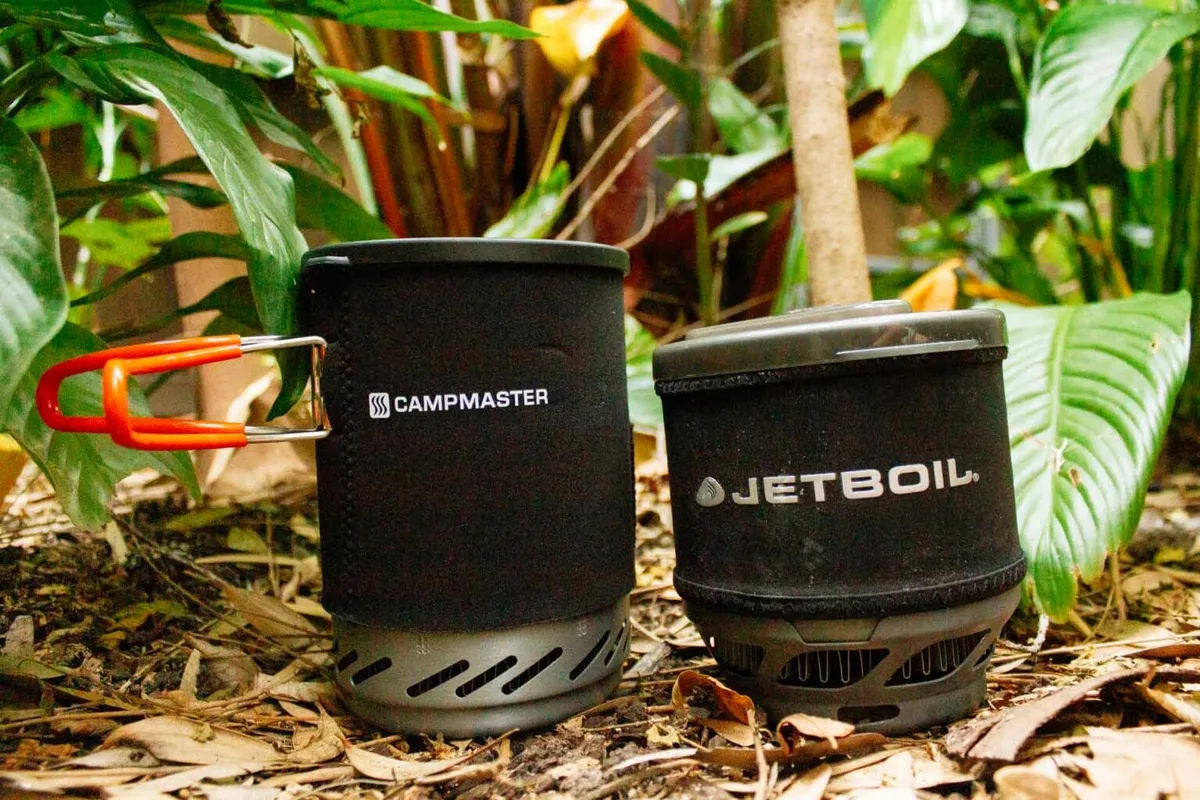
Image source: Web (Bing) / weareexplorers.co (Web image (fair-use with source credit))
Ultralight configurations typically include a single titanium pot, lightweight spork, and canister stove weighing under one pound combined. Users accept boiled meals and limited sauté capability in exchange for reduced shoulder strain on long-distance trails. Aggregate reviews consistently cite weight savings as the primary satisfaction driver for this category.
Car camping setups emphasize robust construction over gram counting. Two-burner propane stoves support simultaneous pot and pan use for complete dinner preparation. Families benefit from familiar cooking rhythms without sacrificing backyard comfort levels.
Vehicle payload limits rarely constrain these heavier arrangements.
Overlanding systems incorporate slide-out drawers, securing straps, and weatherproof latches designed for off-road vibration exposure. Modular drawer inserts organize utensils separately from fuel canisters and food supplies. Premium pricing reflects engineering tailored to sustained adventure travel rather than occasional weekend use.
Group glamping configurations scale upward dramatically in component count and organizational complexity. Multiple burners, large coolers, and extended utensil sets accommodate ten or more diners efficiently. Setup and breakdown routines require coordinated teamwork compared to solo packing simplicity.
Best Gear for Your Trip Type
Match your primary activity style before selecting individual gadgets. Solo backpackers should prioritize titanium or hard-anodized aluminum pots paired with ultralight canister stoves under one pound total. One-liter capacities suffice for rehydrating meals and boiling water for drinks.
Skip nonessential accessories and focus on single-purpose reliable items.
Couple or duo trips warrant adding a second smaller pan alongside your primary pot. A foldable cutting board completes basic prep workflows without occupying excessive pack volume. Utensil selections should include a spatula, spoon, and sharp knife rated for outdoor food handling tasks.
Family car camping demands durable two-burner propane stoves paired with comprehensive cookware suites. Enamelware or anodized aluminum pots withstand repeated dropping and abrasion better than coated alternatives. Coolers rated for forty-eight-hour ice retention keep ingredients fresh throughout extended weekend stays.
Include complete utensil assortments sized for adult and child portions alike.
Winter expedition guides recommend pressurized liquid fuel stoves exclusively due to consistent ignition below freezing. Wind-resistant cookware with insulated handles prevents frostbite risk during prolonged outdoor preparation. Bear-country travelers must integrate certified odor-proof food storage compliant with National Park Service regulations where applicable.
Seasonal festival and market vendors prioritize rapid setup capability alongside heavy-duty construction. Quick-connect fuel systems and collapsible work surfaces enable efficient service in constrained footprint areas. Replaceable component availability ensures uninterrupted operations throughout multi-day events.
Safety, Storage, and Long-Term Care
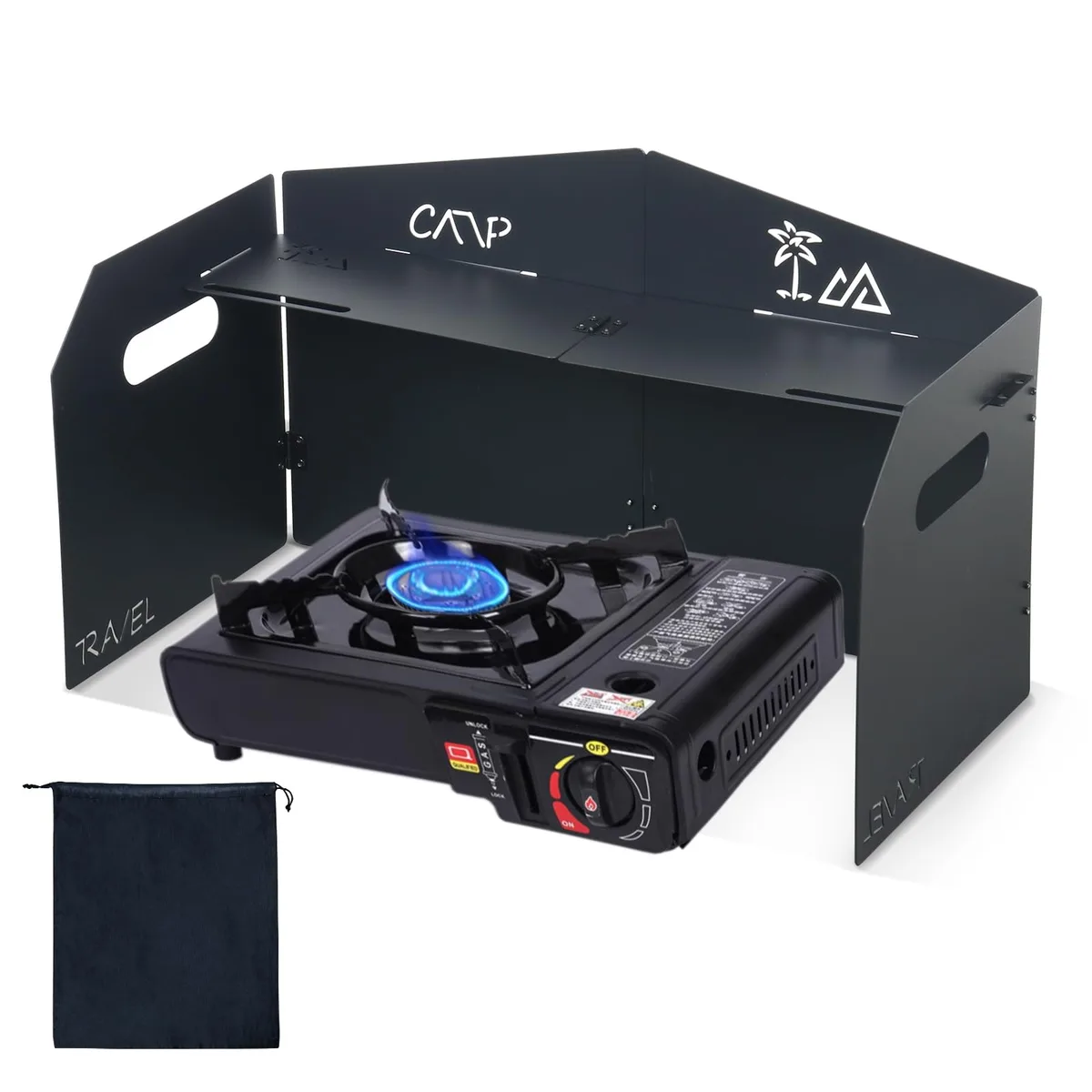
Image source: Web (Bing) / amazon.com (Web image (fair-use with source credit))
Always position fuel-burning stoves on stable, flat ground away from tent walls and overhanging branches. Carbon monoxide poisoning risks increase dramatically in enclosed shelters or poorly ventilated canyon settings. Maintain minimum three-foot clearance from flammable materials during active cooking operations.
Follow all local fire ban restrictions posted by U.S. Forest Service and state park authorities. Open-flame prohibitions typically activate during drought conditions or high wildfire danger periods.
Portable electronic ignition systems remain permissible alternatives where traditional matches prove restricted.
Clean cookware promptly after each use to prevent baked-on residue accumulation. Avoid soaking non-stick surfaces in soapy water for extended durations, as prolonged immersion degrades coating adhesion over time. Dry thoroughly before storage to inhibit corrosion formation on bare metal components.
Store fuel canisters upright in cool, dry locations separated from direct sunlight exposure. Valve seal integrity deteriorates faster under sustained UV radiation and temperature cycling. Inspect O-rings and gasket surfaces before each trip deployment for cracking or compression set deformation.
Pack gear using padded compression sacks rather than loose placement inside main pack compartments. Impact resistance during transport protects delicate thermometer probes, thin pot walls, and precision valve assemblies from denting or scratching damage. Regular inspection routines catch wear indicators early enough for preventive replacement before failure occurs mid-trip.
Common Mistakes to Avoid
Do you buy gear based on single features instead of system compatibility? This mistake causes mismatched stove and pot diameters, wasting fuel and time. Always verify burner size matches cookware base diameter before purchasing.
Are you ignoring weight penalties from bulkier handles or rigid lids? Fixed handles add dead weight that never collapses. Choose detachable or folding designs that nest inside your primary pot for minimal pack volume.
Do you overlook fuel availability at your destination? Remote areas may lack isobutane canister exchanges. Research resupply options beforehand and carry adapter rings as backup for alternative fuel types.
Do you skip wind protection and wonder why boiling takes forever? Exposed campsites increase boil times by 40 percent without shielding. Pack a portable wind screen or position natural barriers between flame and open terrain.
Are you packing fragile non-stick pans without protective wrapping? Rim contact during transport scratches coatings irreversibly. Wrap each piece in microfiber cloths or use dedicated compartmentalized bags for safe stacking.
Do you assume all coolers perform equally in hot climates? Insulation ratings vary widely across price points. Check manufacturer ice retention specs for 90°F ambient conditions rather than relying on general durability claims.
Is your cooking organization based on convenience instead of gravity access? Heavier items belong at pack bottom; lighter prep tools sit near top. Create a layered system that prevents repeated unpacking when retrieving frequently used utensils.
Do you clean non-stick surfaces with abrasive sponges? Steel wool destroys coating bonds within weeks. Switch to soft nylon scrubbers and pH-neutral soap to preserve release properties throughout trip duration.
FAQs
How do I choose between titanium and aluminum cookware?
Titanium offers lighter weight and greater durability at higher cost. Aluminum heats faster and costs less while still performing well for most camp meals. Your priority should determine the choice: minimal pack burden favors titanium; budget-conscious flexibility favors anodized aluminum.
What is the most important feature for a backpacking stove?
Weight and fuel efficiency combined with reliable ignition in windy conditions matter most. A stove under six ounces that boils one liter of water in four minutes using isobutane propane preserves both pack space and thermal energy. Verify wind-screen compatibility before purchase.
Can I use regular kitchen utensils while camping?
You can, but they add significant weight and bulk compared to folded alternatives. Titanium sporks and collapsible silicone spatulas reduce pack volume by nearly half while maintaining functional strength. Reserve rigid utensils for car camping where transport limits do not apply.
How do I clean non-stick camping gear without damaging it?
Use soft sponges, mild soap, and warm water only. Avoid steel wool, harsh detergents, and prolonged soaking that degrade coating adhesion over time. Dry thoroughly before storage to prevent moisture trapping against sensitive surfaces.
What should I consider when buying a cooler for a weekend trip?
Ice retention time, lid seal quality, and durable hinges matter more than raw capacity. A twenty quart hard-sided cooler retains ice forty eight hours in ninety degree Fahrenheit heat when pre-chilled properly. Compare manufacturer test data rather than relying on vague marketing statements.
Are bear-resistant food containers required in all wilderness areas?
Certified bear canisters remain mandatory in many national forests and backcountry zones during high-activity seasons. Check specific regulations through National Park Service resources before packing essential odor-proof storage solutions for safe campsite compliance.

Sophia Martinez is a culinary lifestyle writer and product reviewer for DiningGadgets.com. Passionate about blending style with functionality, she explores the latest dining essentials, kitchen décor, and cleaning hacks that transform everyday cooking spaces. With a background in home organization and design, Sophia brings readers expert advice on creating beautiful, practical kitchens that truly feel like the heart of the home.