What Color Walls Go With Dark Brown Kitchen Cabinets: Stunning Ideas
Dark brown kitchen cabinets are a timeless, durable choice that adds warmth and character to any home, but pairing them with the wrong wall color can leave your space feeling dim, cramped, or visually unbalanced. The right wall shade will highlight the rich depth of your cabinetry, brighten the room, and align with your personal style—whether you prefer a cozy traditional vibe, a sleek modern look, or a bold statement design. In this guide, we break down expert-approved wall color ideas, practical coordination tips for backsplashes, flooring, and hardware, and common pitfalls to avoid, so you can create a kitchen that feels both inviting and stunning. We’ve included ideas for every budget, kitchen size, and aesthetic preference, plus step-by-step guidance to test your top picks before committing to a full paint job.
Core Principles To Pick The Perfect Wall Color First
Before diving into specific shade ideas, it’s critical to assess a few key factors that will make or break your wall color choice, as outlined in industry design guidelines industry design guidelines. First, evaluate your kitchen’s natural light: north-facing rooms get cool, low light, while south-facing spaces have warm, abundant sunlight, both of which alter how paint undertones appear on walls. Next, identify your cabinet’s undertones: warm dark browns have red, yellow, or orange undertones, while cool dark browns lean gray or green—matching your wall’s undertones to your cabinets will create a cohesive, intentional look, rather than a clashing mismatch. Finally, clarify your style goal: do you want to maximize light in a small kitchen, create a moody statement space, or lean into a cozy rustic vibe? These principles will narrow down your options and eliminate choices that won’t work for your unique space. In practice, many homeowners skip this step and end up repainting within a year when their chosen shade looks drastically different in their kitchen’s lighting than it did on the store paint chip. You can also read our guide on what color kitchen cabinets go with gray walls.
For specific pairing ideas based on common cabinet materials, our guide to oak cabinet wall palettes oak cabinet wall palettes breaks down shade recommendations for every finish.
Top Neutral Wall Colors For Balanced, Timeless Kitchens
Neutral shades are the most popular choice for dark brown cabinet kitchens for good reason: they soften the richness of the wood without competing for attention, create a flexible backdrop for decor updates, and work with every design style from farmhouse to modern minimalist. You can also read our guide on what colors are best for kitchen walls.
Soft Beige & Warm Greige
Warm beige and greige (gray-beige blend) shades add subtle warmth that complements the natural tones of dark brown cabinets, without washing out the room. Look for shades with taupe or yellow undertones to avoid a cool, ashy look that clashes with warm cabinet finishes. This pair is ideal for traditional, farmhouse, or transitional kitchens, and works beautifully with natural wood accents, stone countertops, and woven textiles. For small kitchens, choose a light beige with a high LRV (light reflectance value) above 50 to maximize brightness.
Creamy Off-Whites
Creamy off-whites are softer than stark pure white, adding a warm, inviting glow that makes dark brown cabinets pop as a focal point without making the space feel dark or heavy. This shade is perfect for small or low-light kitchens, as its high LRV reflects light to open up the room. Pair it with warm brass or gold hardware, and colorful dinnerware for gatherings colorful dinnerware for gatherings for a personalized touch. Avoid creamy whites with cool blue or gray undertones, as these will clash with warm dark brown cabinets. You can also apply this same pairing logic to white cabinetry, per our white cabinet wall tips white cabinet wall tips. You can also read our guide on how to paint high walls above kitchen cabinets.
Warm Taupe
Warm taupe is a versatile, understated neutral that blends seamlessly with both warm and cool dark brown cabinet undertones. It adds a cozy, grounded vibe that works for rustic, mid-century modern, or contemporary kitchens, and hides minor scuffs and stains better than lighter neutrals—a practical plus for busy family homes. Pair taupe walls with matte black hardware and concrete countertops for a sleek, modern look, or with natural wood accents for a warm, rustic feel.
Bold & Moody Wall Colors For High-Contrast, Statement Kitchens
If you want to lean into drama and personality, bold dark or saturated wall colors create stunning contrast against dark brown cabinets, making the cabinetry stand out while adding depth and sophistication to your space. These shades work best in kitchens with ample natural light or layered artificial lighting to avoid feeling too heavy, a trend highlighted in our guide to popular kitchen wall shades popular kitchen wall shades. You can also read our guide on what color walls go with dark grey kitchen cabinets.
Deep Navy Blue
Deep navy blue is a timeless, sophisticated choice that pairs beautifully with both warm and cool dark brown cabinets. Its subtle blue undertones add cool contrast without clashing with the wood’s warmth, and it looks especially striking with brass, gold, or copper hardware. Use navy on all walls for a moody, cozy library-like kitchen, or as an accent wall behind the stove or sink for a more subtle pop of color. This shade works for traditional, coastal, and modern kitchen styles alike.
Forest Green
Forest green brings a natural, earthy contrast to dark brown cabinets, creating a calm, grounded vibe that feels connected to the outdoors. It’s perfect for rustic, cottage, or biophilic kitchen designs, and pairs beautifully with natural stone countertops, wooden open shelving, and woven basket storage. For a softer take, choose a muted olive-tinged forest green rather than a bright, saturated shade to keep the space feeling warm, not overwhelming. Pairing forest green walls with wooden or stone countertops for a harmonious feel, a look that also works for green cabinet wall pairings green cabinet wall pairings.
Charcoal & Matte Black
Charcoal and matte black create a sleek, ultra-modern contrast with dark brown cabinets, perfect for industrial or contemporary kitchen designs. The dark wall backdrop makes the rich tones of the wood cabinetry stand out as a design feature, rather than a dark, heavy element. To avoid feeling too cave-like, balance dark walls with bright, layered lighting (under-cabinet LED strips, pendant lights, and recessed lighting) and light-colored countertops or backsplashes to reflect light.
Soft Pastel & Light Wall Colors To Brighten Dark Cabinet Spaces
For small, low-light kitchens, or anyone who wants to keep their space feeling airy and open, soft pastel and light wall colors create gentle contrast with dark brown cabinets without overwhelming the room. These shades reflect light to make the kitchen feel larger, while adding a subtle pop of personality.
Pale Blue
Pale blue adds a cool, tranquil backdrop that softens the richness of dark brown cabinets, making the space feel calm and airy—perfect for busy family kitchens or coastal-inspired designs. It pairs beautifully with brushed nickel or chrome hardware, white countertops, and light wood flooring. For north-facing kitchens with cool, low light, choose a pale blue with warm yellow undertones to avoid a cold, sterile feel.
Mint Green
Mint green is a fresh, playful pastel that adds a subtle pop of color without feeling too bold. It works beautifully with dark brown cabinets for natural, eco-friendly, or cottage-style kitchens, and pairs well with natural wood accents, white subway tile backsplashes, and rattan lighting fixtures. Choose a muted, desaturated mint rather than a bright neon shade to keep the look sophisticated, not juvenile.
Blush Pink
Blush pink is an unexpected but incredibly versatile choice that adds warm, soft contrast to dark brown cabinets, creating a cozy, inviting vibe that works for vintage, romantic, or modern farmhouse kitchens. It pairs beautifully with brass or gold hardware, marble countertops, and warm wood flooring. For a more muted take, choose a blush with gray undertones rather than a bright, bubblegum pink to keep the look elegant.
Earthy & Warm Wall Colors To Amplify Your Cabinets' Natural Richness
Dark brown cabinets have natural, earthy warmth, so pairing them with warm, nature-inspired wall colors amplifies that cozy, grounded vibe, creating a kitchen that feels like a welcoming retreat.
Terracotta
Terracotta walls add warm, Mediterranean-inspired depth that complements the rich tones of dark brown cabinets perfectly. This reddish-brown shade creates a cozy, rustic vibe that works for Southwestern, farmhouse, or bohemian kitchen designs. Choose a matte terracotta finish to avoid glare, and pair it with natural stone countertops, terracotta tile backsplashes, and woven textiles for a cohesive, layered look.
Olive Green
Olive green is a muted, earthy shade that adds subtle contrast to dark brown cabinets without feeling too bold. It’s perfect for modern rustic, biophilic, or minimalist kitchen designs, and pairs beautifully with light wood flooring, brass hardware, and natural fiber decor. For small kitchens, choose a light olive with a high LRV to avoid making the space feel too dark. Neutral-colored grout can soften tile edges, blending smoothly with wall colors, a trick that also works for green cabinet wall combos green cabinet wall combos.
Mustard Yellow
Mustard yellow adds a warm, retro-inspired pop of color that energizes the space while complementing the richness of dark brown cabinets. It’s perfect for mid-century modern, eclectic, or cottage-style kitchens, and works especially well as an accent wall behind open shelving or the stove. Pair it with black hardware and light wood countertops for a balanced, playful look.
Coordinating Wall Colors With Backsplashes, Flooring & Hardware
Your wall color doesn’t exist in a vacuum—it needs to work seamlessly with your backsplash, flooring, and hardware to create a cohesive, balanced kitchen. Here’s how to tie all elements together:
Pairing With Backsplashes
For neutral wall colors, you can choose a backsplash that either matches the wall tone for a seamless look, or adds subtle contrast with a complementary shade. For bold or pastel wall colors, stick to neutral backsplashes (white subway tile, light marble, or beige ceramic) to avoid overwhelming the space. If you have dark brown cabinets, a light-colored backsplash will bridge the gap between the dark cabinetry and your wall color, creating a balanced visual flow. Tile patterns offer many ways to enhance your kitchen design, and our guide to kitchen tile painting tips kitchen tile painting tips walks you through updating existing tile to match your new wall color.
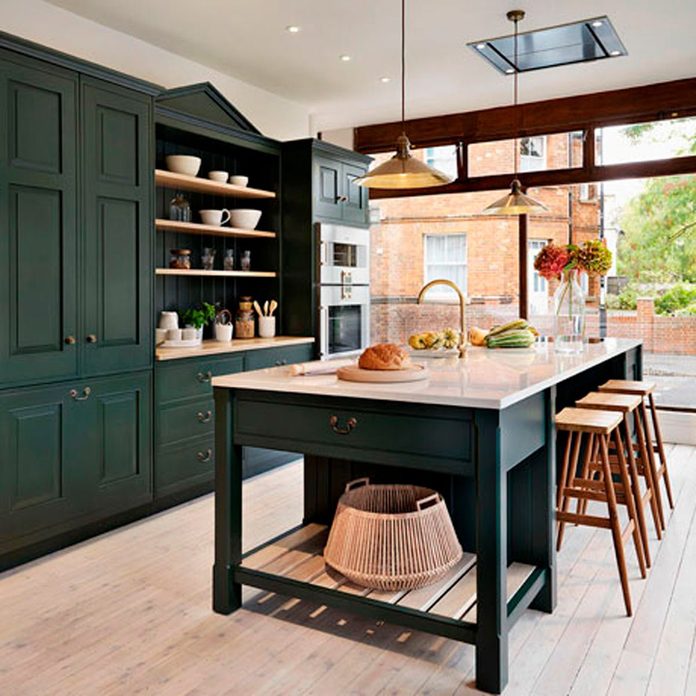 A classic white subway tile backsplash bridges dark brown cabinets and soft pastel walls for a clean, traditional aesthetic.
Pairing With Flooring
Light wood flooring (oak, maple, ash) creates bright contrast with dark brown cabinets, so pair it with light neutral or pastel wall colors to keep the space feeling open. Medium or dark wood flooring blends with the cabinets for a seamless, cozy look, so choose a slightly lighter wall shade (warm beige, soft greige) to add contrast. Avoid very dark wood floors as they can make the room feel small and heavy, and our top picks for kitchen rugs for wood floors kitchen rugs for wood floors can add warmth and texture to balance the space. The wall color should complement both the floor and cabinets, a rule that also applies to beige cabinet wall pairings beige cabinet wall pairings. A neutral wall color keeps the focus on the cabinets and floor while making the kitchen feel open, and our guide to beige cabinet wall ideas beige cabinet wall ideas offers more pairing inspiration.
 This kitchen pairs warm dark brown cabinets with soft off-white walls and light oak flooring for a balanced, timeless look.
Pairing With Hardware & Finishes
Your hardware’s metal finish will impact how your wall color looks next to dark brown cabinets: warm metals (brass, gold, copper) complement warm-toned wall colors (beige, terracotta, cream) and warm dark brown cabinets, while cool metals (chrome, stainless steel, matte black) work best with cool-toned wall colors (pale blue, gray, green) and cool dark brown cabinets. If you’re mixing metal finishes, ensure they share a common undertone (all warm or all cool) to avoid a cluttered, uncoordinated look. Balancing silver and chrome finishes with warm wall colors or soft textiles will keep your kitchen welcoming, a principle that also applies to red wall cabinet pairings red wall cabinet pairings.
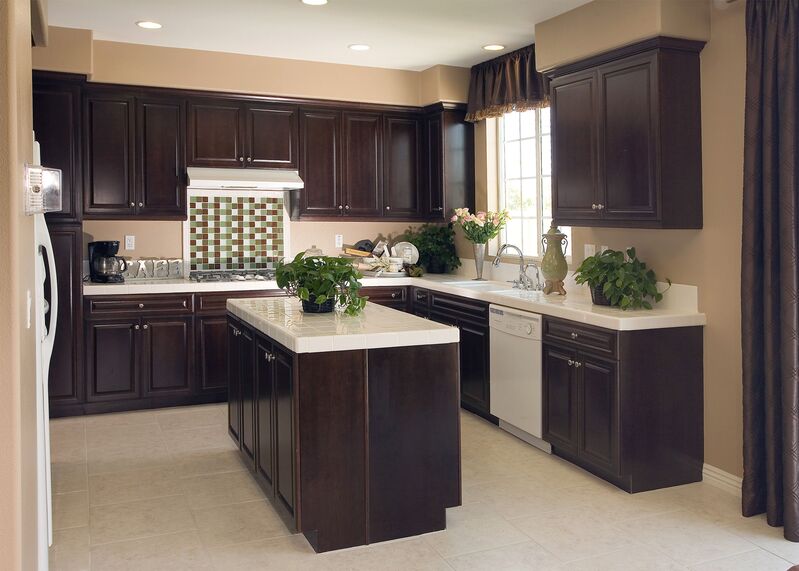 Warm grey walls complement dark brown painted cabinets, with brass accents adding a touch of warmth.
Common Wall Color Mistakes To Avoid With Dark Brown Cabinets
Even with endless color options, a few common errors can leave your kitchen looking unpolished or feeling cramped. Avoid these pitfalls to get a professional, cohesive result:
- Choosing stark cool whites for warm-toned cabinets: If your dark brown cabinets have red or yellow undertones, a cool white with blue or gray undertones will create a jarring, clashing look. Always match your wall’s undertone to your cabinet’s undertone for cohesion.
- Using overly dark wall colors in small, low-light kitchens: Dark navy, charcoal, or black walls can shrink the visual size of a small kitchen with limited windows. Reserve these shades for large, well-lit spaces, or use them only on a single accent wall.
- Skipping the sample test: Paint chips look drastically different in store lighting than they do in your kitchen. Always test 2-3 swatches on your walls, let them cure for 24 hours, and view them at morning, noon, and night to see how they interact with your cabinets and lighting.
- Matching wall color too closely to your cabinets: If your wall shade is almost identical to your cabinet finish, there will be no contrast, making the space feel flat and heavy. Aim for at least a 2-3 shade difference between your wall and cabinet colors for visual balance.
- Ignoring your backsplash and flooring undertones: Your wall color needs to complement not just your cabinets, but also your backsplash and flooring. For example, cool gray tile floors will clash with warm beige walls, so always bring samples of all your kitchen finishes with you when shopping for paint. Avoid very dark or bright wall colors that clash with the floor and cabinets, a mistake that’s easy to make when choosing yellow wall cabinet matches yellow wall cabinet matches. Soft white, light taupe, or muted greens work well, shades that also pair beautifully with light gray cabinet wall shades light gray cabinet wall shades.
Step-By-Step: How To Test Wall Colors Before Committing
Testing your top color picks is non-negotiable to avoid costly, time-consuming repaints. Follow these simple steps for a foolproof process:
- Select 2-3 of your top wall color shades, and buy small sample pots from your paint retailer. For indoor air quality safety, the EPA recommends choosing low-VOC paint finishes for kitchen spaces low-VOC paint guidance.
- Paint 2×2 foot swatches on multiple walls in your kitchen, including walls near windows and corners, as lighting varies across the space.
- Let the swatches cure fully for 24 hours (some paints dry lighter or darker as they set).
- View the swatches at different times of day: morning (cool light), noon (bright direct light), and evening (warm artificial light) to see how the undertones shift.
- Hold up samples of your backsplash, countertop, and flooring next to each swatch to ensure the palette is cohesive. Your wall color choices should work in harmony with the type of artificial light you prefer, a rule that also applies to gray cabinet wall pairings gray cabinet wall pairings.
- If you’re using a bold dark wall color, paint a larger 4×4 foot section to see how it affects the room’s perceived size.
Frequently Asked Questions
What is the most popular wall color for dark brown kitchen cabinets?
Soft warm greige, creamy off-white, and light beige are the most popular wall colors for dark brown cabinets, as they offer timeless versatility, brighten low-light spaces, and work with every design style from farmhouse to modern. These neutrals also make it easy to update your decor seasonally without repainting.
Can I use white walls with dark brown cabinets?
Yes, but avoid stark cool white with warm-toned dark brown cabinets, as the clashing undertones will look jarring. Opt for creamy off-white or warm white with yellow or taupe undertones to complement the wood’s warmth and create a bright, airy feel.
What wall color makes a small kitchen with dark brown cabinets look bigger?
Light, high-LRV shades like creamy off-white, pale blue, or soft beige will reflect light and make a small kitchen feel larger. Avoid dark wall colors or overly saturated bold shades, as these absorb light and shrink the visual size of the space.
Do I need to match my wall color to my backsplash?
No, but your wall and backsplash should share complementary undertones for cohesion. For example, warm beige walls pair well with warm-toned marble or terracotta backsplashes, while cool gray walls work with blue-tinged marble or white subway tile. For more backsplash pairing tips, check out our guide to paint selection guidance paint selection guidance.
Can I use an accent wall with dark brown cabinets?
Absolutely. An accent wall in a bold shade (navy, forest green, terracotta) or a soft pastel (pale blue, blush pink) adds personality without overwhelming the space. Accent walls work best behind the stove, sink, or open shelving to create a focal point.
Will dark wall colors work in a small kitchen with dark brown cabinets?
Dark wall colors can work in small kitchens, but only if you have ample natural light or layered artificial lighting to offset the light-absorbing effect of the dark walls and cabinets. For small, low-light kitchens, stick to light, high-LRV shades to keep the space feeling open and airy. If you’re set on a dark wall, use it only on a single accent wall to avoid overwhelming the room.
Final Tips For A Stunning Finish
Once you’ve selected your perfect wall color, a few small finishing touches will elevate the overall look of your kitchen. Add layered lighting (recessed lights, under-cabinet LEDs, pendant lights) to ensure the space feels bright and welcoming, especially if you chose a darker wall shade. Incorporate warm metallic accents (brass handles, copper light fixtures, gold faucet details) to tie the wall color to your cabinet hardware, and add small pops of color with decor (dishware, plants, soft table linens soft table linens) to personalize the space. If you’re planning a full kitchen upgrade, our guide to fixture upgrade basics fixture upgrade basics walks you through simple, high-impact updates to complete your design. For more timeless cabinet pairings timeless cabinet pairings, explore our full library of kitchen design guides.
Conclusion
The right wall color can transform dark brown kitchen cabinets from a dated, heavy feature into the stunning focal point of your space. Whether you opt for a soft neutral to brighten a small kitchen, a bold moody shade for a statement design, or an earthy warm tone to amplify your cabinets’ natural richness, the key is to prioritize cohesion with your cabinet undertones, kitchen lighting, and existing finishes. Test samples thoroughly, avoid common mismatches, and lean into a shade that fits your personal style—your kitchen should feel like a space you love spending time in, no matter what design trends come and go. For more kitchen design inspiration and practical upgrade tips, explore our full library of home improvement guides.