What Colour Walls With Grey Kitchen: Stunning Shades to Transform Your Space
Grey kitchens have dominated residential design trends for nearly a decade, and for good reason: the neutral hue pairs with every style from rustic farmhouse to sleek modern, and hides everyday wear and tear far better than stark white or bright bold shades. According to 2025 trend data from the National Kitchen + Bath Association, grey remains the most popular cabinet finish for residential kitchen remodels, chosen for its versatility and timeless appeal. But pairing the right wall color with your grey kitchen—whether your cabinets are cool charcoal, warm taupe-grey, or a soft dove shade—can make the difference between a space that feels sterile and one that feels warm, inviting, and uniquely yours.
This guide breaks down the most flattering wall shades for every grey undertone, plus practical tips for testing paint, choosing finishes, and styling your space to get a polished, professional result without costly design fees.

Understand Your Grey’s Undertone First
Not all grey is created equal, and the subtle undertone of your existing grey cabinets or walls will make or break your wall color pairing. Grey falls into three broad undertone categories, each requiring a different complementary wall shade to avoid clashing:
- Cool grey: Has blue, green, or black undertones, with a crisp, modern, sometimes icy feel. It works best in bright, sunlit kitchens.
- Warm grey: Has brown, beige, or red undertones, with a cozy, inviting, earthy feel. It works best in dimmer, north-facing kitchens.
- Neutral grey: Has a balanced mix of warm and cool undertones, making it versatile for all lighting conditions and design styles.
To identify your grey’s undertone, hold a plain white piece of paper next to your grey surfaces. If you see blue, green, or purple hues peeking through, it’s cool. If you see brown, beige, or red, it’s warm. If it’s hard to pinpoint, it’s neutral. The same principle applies when pairing walls with green cabinetry, where accounting for undertones ensures a cohesive, balanced look.
Top Wall Colors for Grey Kitchens
Once you’ve identified your grey’s undertone, you can narrow down wall shades that will enhance its natural tone rather than clashing with it.
Soft Whites and Off-Whites
The most foolproof option for any grey kitchen, soft whites and off-whites reflect natural light to make small spaces feel larger, and create a crisp, clean backdrop that lets your grey cabinets and countertops shine. For cool grey kitchens, opt for off-whites with subtle warm undertones (like Swiss Coffee or Navajo White) to balance coolness. For warm grey kitchens, choose cool off-whites (like Benjamin Moore Simply White) to tone down earthy warmth. Avoid stark pure white, which can feel clinical and highlight cool grey undertones too harshly.
Warm Earth Tones (Beige, Taupe, Terracotta)
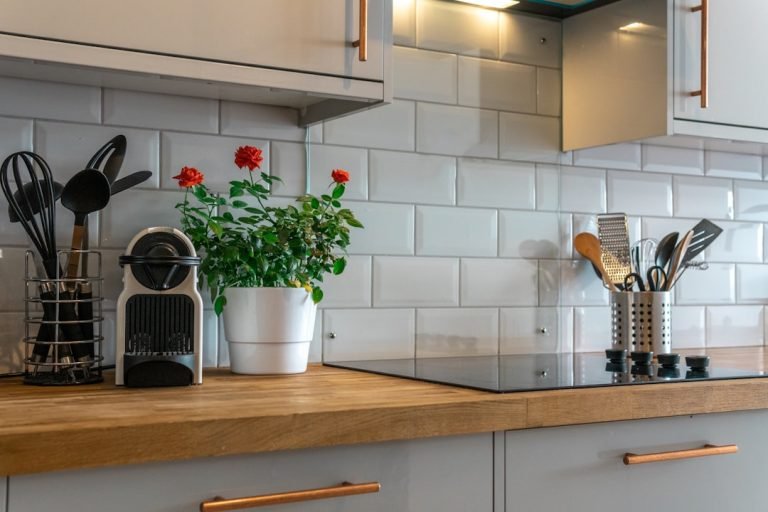
Ideal for warm grey kitchens or homes with a rustic, farmhouse, or Mediterranean design style, warm earth tones add cozy depth without overwhelming neutral grey surfaces. Light beige and soft taupe work well for full-wall applications, while deeper terracotta or clay shades make for stunning accent walls. These shades pair beautifully with natural wood accents, subway tile backsplashes, and woven home textiles. They also complement warm cabinet finishes, making them a reliable choice when pairing walls with warm cabinetry.
Soft Pastels (Blush Pink, Pale Blue, Sage Green)
For homeowners who want to add gentle personality without committing to a bold shade, soft pastels are the perfect middle ground. Pale blue adds a calm, coastal vibe to cool grey kitchens, while soft blush pink adds warm, gentle charm to charcoal grey. Sage green brings a natural, grounding feel that pairs beautifully with wood finishes and indoor kitchen plants. These shades work best in kitchens with plenty of natural light, as they can appear muted and dull in dim, north-facing spaces.
Deep, Dramatic Shades (Navy, Emerald, Charcoal)
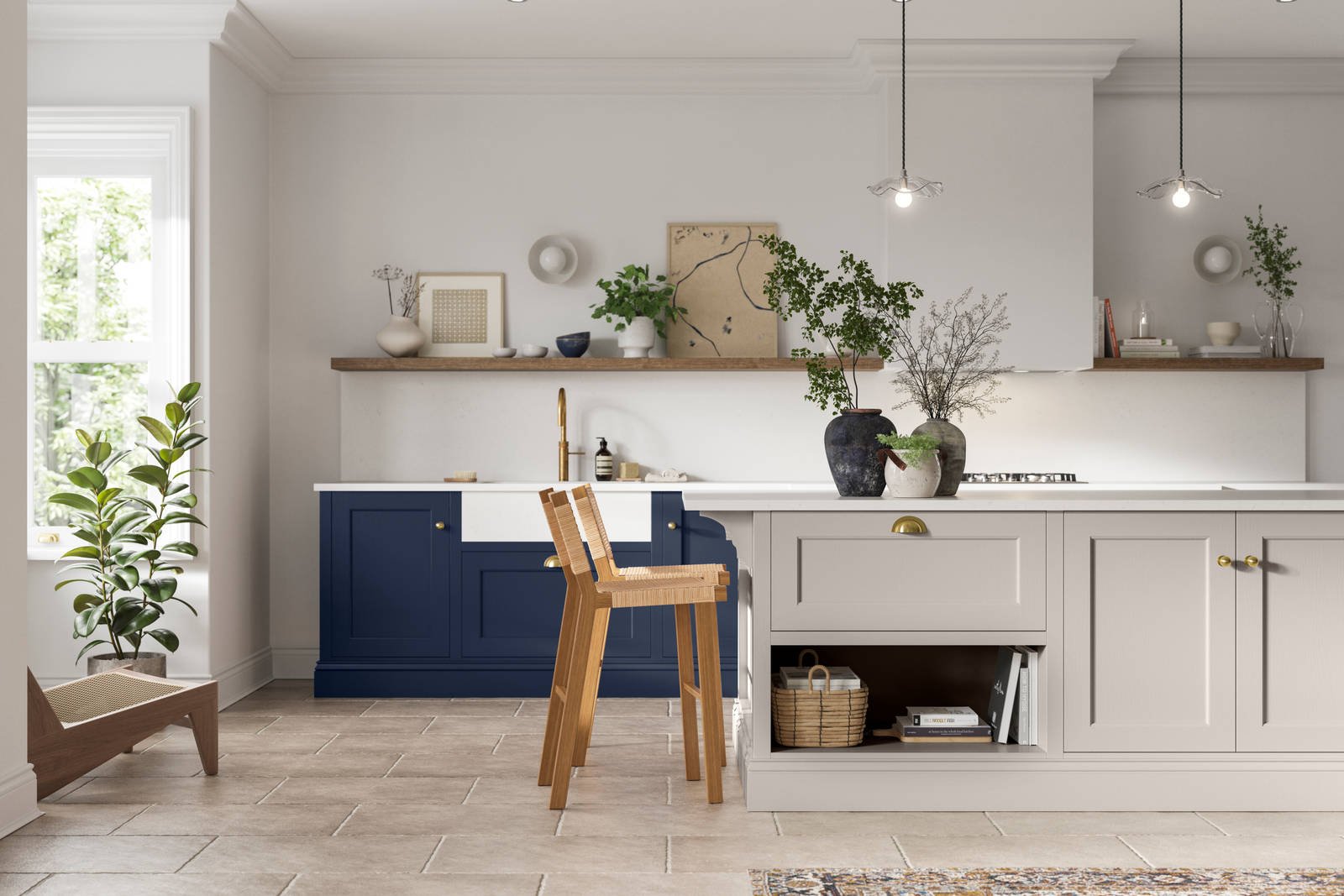
For large, open-plan kitchens or homes with a modern, industrial, or luxe design style, deep dramatic shades add sophistication and depth. Navy blue pairs beautifully with brass fixtures and white marble countertops for a timeless, elegant look, while emerald green adds a lush, luxurious vibe to spaces with dark wood accents. For a monochromatic, moody look, choose a charcoal grey shade two to three shades darker than your existing grey cabinets. Avoid deep shades in small, windowless kitchens, as they can make the space feel cramped and dark.
Bold Accent Wall Ideas for Grey Kitchens
If you’re not ready to paint all four walls, an accent wall is a low-commitment, high-impact way to add personality to your grey kitchen. The key to a successful accent wall is choosing a color that contrasts with your grey cabinets, and placing it in a high-visibility spot like the wall behind your range hood, the wall with your kitchen sink, or the wall opposite your main kitchen entrance.
Top accent colors for grey kitchens include:
- Mustard yellow: Adds a warm, sunny pop that contrasts beautifully with cool grey, perfect for cottage or eclectic design styles.
- Deep teal: Adds modern, understated elegance, pairing with gold fixtures and dark wood accents for a luxe feel.
- Soft terracotta: Brings a warm, rustic vibe ideal for farmhouse or Mediterranean kitchens.
- Soft blush: Adds a gentle, feminine touch without being overwhelming, working well with white cabinets and marble countertops.

Neutral Wall Pairings for a Cohesive Look
For minimalist, understated kitchens, neutral wall shades create a calm, balanced backdrop that lets your grey cabinets and kitchen decor take center stage.
Greige (Grey + Beige)
The perfect middle ground for warm and cool grey kitchens, greige blends subtle beige warmth with grey’s modern edge to create a versatile, foolproof shade that works with every cabinet finish, countertop material, and design style. It’s an ideal choice for homeowners who want a neutral space without the cold feel of pure grey or beige.
Warm Off-Whites and Creams
Ideal for cool grey kitchens, warm off-whites and creams add softness and brightness without the stark contrast of pure white. They make small kitchens feel larger, and pair seamlessly with stainless steel appliances and light wood flooring.
Soft Taupe
A step darker than beige, soft taupe adds depth and warmth to warm grey kitchens, creating a cozy, inviting atmosphere perfect for family homes. It pairs well with dark wood cabinets and patterned tile backsplashes, and works equally well in traditional and contemporary design styles.
Paint Finishes and Textures for Grey Kitchens
Kitchens are high-traffic, high-splash zones, so your paint finish matters as much as your paint color. The right finish will hold up to daily cleaning, grease splatters, and moisture without fading or staining.
Best Paint Finishes for Kitchens
- Matte/Flat: Perfect for low-splash upper walls away from countertops and stoves, as it hides wall imperfections beautifully. It is not scrubbable, so avoid using it in high-use zones.
- Satin/Eggshell: The most popular choice for full kitchen walls, as it has a subtle, low-sheen finish that resists moisture and stains, is easy to wipe down, and doesn’t highlight wall imperfections as much as semi-gloss.
- Semi-Gloss: Ideal for high-splash zones behind stoves, sinks, and backsplashes, as it is extremely durable and easy to clean. It can highlight uneven walls, so only use it on smooth, well-prepped surfaces.
For homes with children, pets, or anyone sensitive to strong fumes, opt for low- or zero-VOC paint formulas, which meet indoor air quality standards set by the U.S. Environmental Protection Agency.
Textured and Panel Accents
To add extra dimension to your grey kitchen, consider textured paint finishes (like sand or subtle stucco effects) on a single accent wall, or add durable wall panels like wood shiplap, ceramic tile, or brushed metal to break up flat paint. These accents add visual interest and are far easier to clean than matte paint in high-splash zones, making them a great choice for kitchens used for home winemaking sessions or frequent large family gatherings. For kitchens used for frequent winemaking projects, moisture-resistant, washable finishes will hold up to regular spills and splashes without fading.
How Lighting Impacts Your Wall Color Choice
Lighting can completely change how a wall color looks in your grey kitchen, so it’s critical to test samples in your space before committing to a full gallon.
Natural Light Considerations
- North-facing kitchens: Get cool, dim natural light all day, so avoid cool grey or blue wall shades that will make the space feel gloomy. Opt for warm off-whites, soft beige, or warm pastels to brighten the room.
- South-facing kitchens: Get bright, warm natural light all day, so you can safely choose cool grey, deep teal, or navy walls without the space feeling dark.
- East-facing kitchens: Get soft, warm morning light and cool afternoon light, so test paint samples at multiple times of day to see how the shade shifts.
Artificial Lighting Considerations
Warm LED bulbs (2700K-3000K) make cool wall shades feel warmer and more inviting, while cool white bulbs (3500K-4000K) make warm wall shades feel brighter and more crisp. If you have under-cabinet lighting, test paint samples with those lights on, as they can cast a yellow or blue tint on wall colors.
Pro Testing Tip
A common mistake homeowners make is selecting a paint color based on a tiny 2×2 inch swatch in a store. Instead, paint a 2×2 foot sample on your kitchen wall, and observe it at 8AM, 12PM, 4PM, and 8PM to see how it looks in all lighting conditions. This eliminates costly repaints down the line.
Prepping Your Grey Kitchen for a Paint Refresh
A professional-looking paint job starts with proper prep, especially in a high-use space like a kitchen. Follow these steps before opening your first can of paint:
- Remove all hardware: Take down cabinet handles, light switch covers, and any removable wall decor. For stubborn fixtures like wall-mounted faucets, follow our guide to removing old hardware to avoid damaging walls or pipes.
- Clean walls thoroughly: Grease and grime from cooking can build up on kitchen walls, so wash them with a degreaser before painting to ensure paint adheres properly.
- Patch holes and sand smooth: Fill any nail holes or cracks with spackle, sand smooth once dry, and wipe away dust.
- Prime if needed: If you’re painting a dark grey wall a light shade, or a light grey wall a dark shade, use a stain-blocking primer to avoid bleed-through and ensure even coverage.
- Tape edges: Use painter’s tape to protect baseboards, cabinets, and trim for clean, crisp lines.
Styling Your Grey Kitchen After Painting
Once your walls are painted, tie the whole space together with thoughtful styling that complements your new wall color:
- Coordinate with countertops and backsplashes: Light quartz or granite countertops pair beautifully with dark wall colors for high contrast, while dark stone countertops pair best with light wall colors to avoid feeling heavy. For busy patterned backsplashes, stick to neutral wall colors to avoid clashing.
- Add layered decor: Use open shelving to display colorful dishware, glass jars, and small plants to add personality without overwhelming the space. Metallic accents (brass, gold, matte black) in light fixtures, cabinet handles, and faucets will tie the wall color to the rest of the kitchen’s hardware.
- Choose complementary flooring: Light wood or pale tile floors pair beautifully with all grey and wall color combinations, making small kitchens feel larger. Dark hardwood or patterned tile floors add warmth and anchor bold accent walls.
If your kitchen doubles as a space for home beer and winemaking or hosting dinner parties, opt for durable, easy-to-clean finishes on walls and flooring to handle high foot traffic and spills.

Frequently Asked Questions
What wall colors work best with cool grey kitchen cabinets?
Cool grey cabinets have blue, green, or black undertones, so pair them with warm off-whites, soft beige, pale blush, or warm sage green to balance their coolness. Avoid cool blue or green wall shades, as they can make the space feel cold and uninviting.
What wall colors work best with warm grey kitchen cabinets?
Warm grey cabinets have brown, beige, or red undertones, so pair them with cool off-whites, soft blue, pale green, or light greige to tone down their warmth. Avoid warm yellow or terracotta wall shades, as they can make the space feel overly stuffy.
Can I use the same grey shade for my walls and cabinets?
Yes, a monochromatic grey palette creates a sophisticated, moody look. To avoid a flat, boring space, mix different grey undertones (e.g., cool charcoal cabinets with warm greige walls) and add texture with shiplap, tile, or metallic accents.
Do I need to prime grey walls before painting a new color?
It depends on the shade change. If you’re painting a light grey wall a darker shade, you can often skip priming if the new paint has good coverage. If you’re painting a dark grey wall a lighter shade, use a stain-blocking primer to avoid bleed-through and ensure even, true color.
Are bold wall colors a good fit for small grey kitchens?
Bold dark shades (like navy or emerald) can make small kitchens feel cramped, so use them only on a single accent wall, or opt for lighter bold shades like mustard yellow or soft terracotta that add personality without closing in the space.
Final Tips for a Stunning Grey Kitchen Refresh
Choosing the right wall color for your grey kitchen doesn’t have to be overwhelming. Start by identifying your grey’s undertone, test paint samples in your actual lighting, and opt for durable, scrubbable finishes that hold up to daily use. Whether you prefer soft, airy whites, warm earth tones, or bold accent walls, the right shade will transform your kitchen into a space that feels both stylish and functional for years to come.
Ready to tackle your kitchen refresh? Start by prepping your space with our guide to removing wall-mounted hardware for a crisp, professional paint finish.