Grey Kitchen Walls What Color Cabinets: Stunning Combinations Revealed
Grey is one of the most popular kitchen wall colors for 2026, prized for its versatility, calming effect, and ability to complement nearly any design style. But while grey walls act as a perfect neutral backdrop, choosing the right cabinet color to pair with them can feel overwhelming—too matchy, and the space feels flat; too clashing, and it feels disjointed. This guide breaks down stunning, designer-tested cabinet combinations for every grey wall undertone, plus pro tips for lighting, hardware, and maintenance to make your kitchen feel cohesive, functional, and uniquely yours.
Step 1: First, Pinpoint Your Grey Wall Undertone
Grey is never a fully neutral color—every shade has a subtle undertone that will either clash or complement your cabinet choice. Identifying your wall’s undertone is the most important first step to avoiding a mismatched look.
- Cool grey walls have faint blue, green, or purple hints, and pair best with cool cabinet tones (bright white, soft blue, matte black).
- Warm grey (greige) walls have faint red, yellow, or brown hints, and work with warm cabinet tones (cream, natural wood, soft green).
- Neutral grey walls have no strong undertone bias, and pair well with nearly any cabinet color. To test your wall’s undertone, hold a plain white piece of paper next to it in natural light: if the grey looks slightly blue or green next to the white, it’s cool; if it looks slightly beige or brown, it’s warm. Per guidelines from the National Kitchen and Bath Association, matching cabinet and wall undertones is the most reliable way to avoid clashing and create a cohesive, timeless kitchen design.
Top Stunning Cabinet Combinations for Grey Kitchen Walls
Once you’ve identified your wall’s undertone, you can narrow down cabinet options that will create the exact mood you want for your space.
Crisp White Cabinets: Timeless, Bright, and Airy
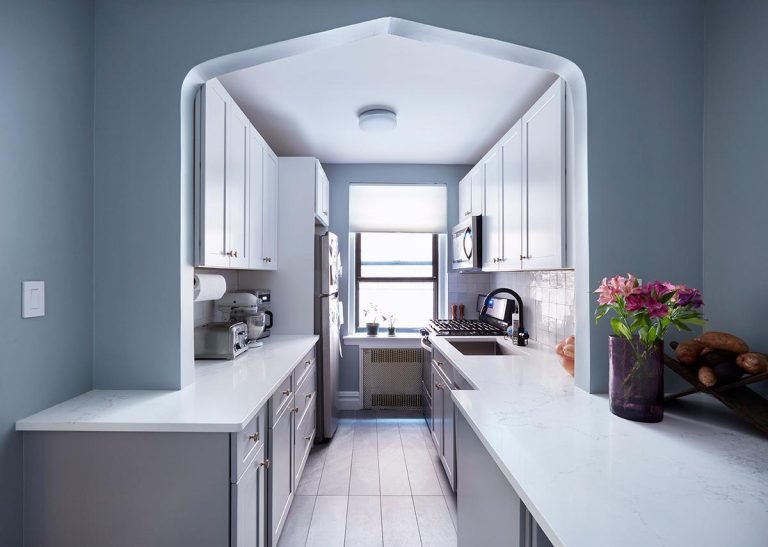
Consistently top-ranked by interior designers for its versatility, white cabinets create a crisp, clean contrast with grey walls that makes any kitchen feel open and inviting. The shade of white you choose depends entirely on your wall’s undertone:
- Cool grey walls pair best with bright, cool-toned white cabinets with no yellow or cream undertones for a sleek, modern look.
- Warm greige walls look best with creamy off-white, biscuit, or ivory cabinets to avoid a harsh, clashing contrast. This combination is ideal for small kitchens, low-light spaces, or anyone who prefers a minimalist, airy aesthetic. A common mistake is pairing stark bright white with warm grey walls, which creates a dull, mismatched look—always test paint samples on your wall before committing.
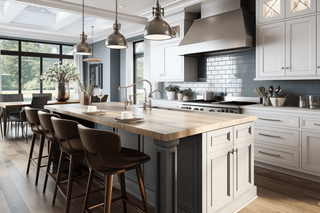 Crisp white cabinets reflect light to make small grey-walled kitchens feel larger and brighter.
Credit: homecabinets.com
Crisp white cabinets reflect light to make small grey-walled kitchens feel larger and brighter.
Credit: homecabinets.com
Bold Black Cabinets: Sleek, Dramatic, and Modern
For homeowners who love high-impact, contemporary design, black cabinets create a striking, sophisticated contrast with grey walls. This combination works best in kitchens with plenty of natural light or strong task lighting to avoid the space feeling dark or cave-like. Matte black finishes are a popular 2026 trend, as they hide smudges and fingerprints far better than high-gloss black, making them ideal for busy families. Pair with light-colored countertops (white quartz, honed marble) and warm metallic hardware (brass, gold) to balance the dark tones and add warmth. A common mistake is using black cabinets with dark charcoal grey walls in a small, windowless kitchen, which will make the space feel cramped and uninviting.
Warm Wood-Tone Cabinets: Cozy, Organic, and Timeless
If you want to soften the cool neutrality of grey walls, warm wood cabinets are the perfect choice. Their natural grain and earthy tones add texture and warmth that painted cabinets can’t match, creating a welcoming, lived-in feel that works for farmhouse, Scandinavian, and transitional design styles. The right wood tone depends on your desired mood:
- Light oak or maple: Bright, airy, and modern, perfect for small kitchens or coastal-inspired spaces.
- Medium walnut or cherry: Warm, rich, and classic, ideal for traditional or farmhouse kitchens.
- Dark espresso or mahogany: Bold, dramatic, and luxurious, best for large, high-end kitchens with plenty of lighting. Pro tip: Test wood samples against your grey wall at different times of day, as wood can pick up subtle undertones from grey that shift its appearance in different lighting. A common mistake is pairing a heavily red-toned wood (like cherry) with a cool blue-grey wall, which creates a jarring, disjointed look. If you’re exploring other wood cabinet pairings, our guide to brown cabinet wall pairings offers additional inspiration for every design style.
Soft Blue Cabinets: Calm, Coastal, and Refreshing
For a subtle pop of color that doesn’t overwhelm your space, soft muted blue cabinets are an excellent match for grey walls. Desaturated shades like dusty blue, sky blue, or slate blue complement cool and neutral grey undertones to create a serene, cohesive look that works for coastal, modern, and family-friendly kitchens. This combination is particularly popular in 2026 for biophilic design, as soft blue evokes the sky and ocean to create a calming, stress-reducing environment. Pair with white subway tile backsplashes and brushed nickel hardware for a classic, timeless finish. Avoid bright, neon blue shades, which can feel harsh against grey walls and quickly feel dated.
Deep Green Cabinets: Luxurious, Earthy, and Unique
If you want a statement cabinet color that feels both bold and grounded, deep green cabinets pair beautifully with grey walls for a high-end, nature-inspired look. Light grey walls work best with soft sage or olive green for a subtle, earthy vibe, while dark charcoal grey walls pair with forest or emerald green for a moody, luxurious feel. This is a top 2026 trend for homeowners looking to add personality without committing to overly bright colors. Pair with natural wood accents (open shelving, cutting boards) and warm under-cabinet lighting to keep the look from feeling too cold. If you’re exploring other green cabinet combinations, our guide to green cabinet wall pairings breaks down undertone matching for every shade of green.
Two-Tone Cabinet Ideas to Add Depth
Two-tone cabinets are a low-commitment way to add visual interest to your grey-walled kitchen without repainting the entire space. The key to a balanced two-tone look is to use a consistent undertone across both cabinet colors to avoid clashing. Popular, designer-approved combinations for grey walls include:
- White upper cabinets + dark wood or black lower cabinets: Draws the eye upward to make the ceiling feel higher, perfect for small kitchens.
- Light grey upper cabinets + deep blue or green lower cabinets: Adds a subtle pop of color without overwhelming the space.
- Grey upper cabinets + natural wood lower cabinets: Blends modern and organic elements for a warm, inviting look.
- Matte black lower cabinets + medium grey upper cabinets: Creates a sleek, monochromatic effect for industrial-style kitchens. Pro tip: Use the same hardware finish for both cabinet tones to keep the design cohesive, and avoid mixing warm and cool undertones (e.g., red-toned wood lower cabinets with cool blue-grey upper cabinets) to prevent a disjointed look.
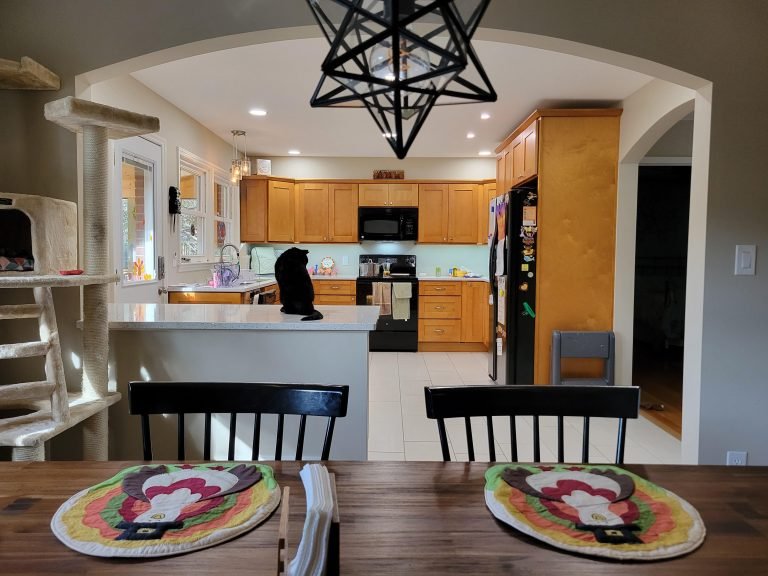
 Warm wood cabinets add organic texture to balance cool grey wall tones for a cozy, inviting space.
Credit: www.reddit.com
Warm wood cabinets add organic texture to balance cool grey wall tones for a cozy, inviting space.
Credit: www.reddit.com
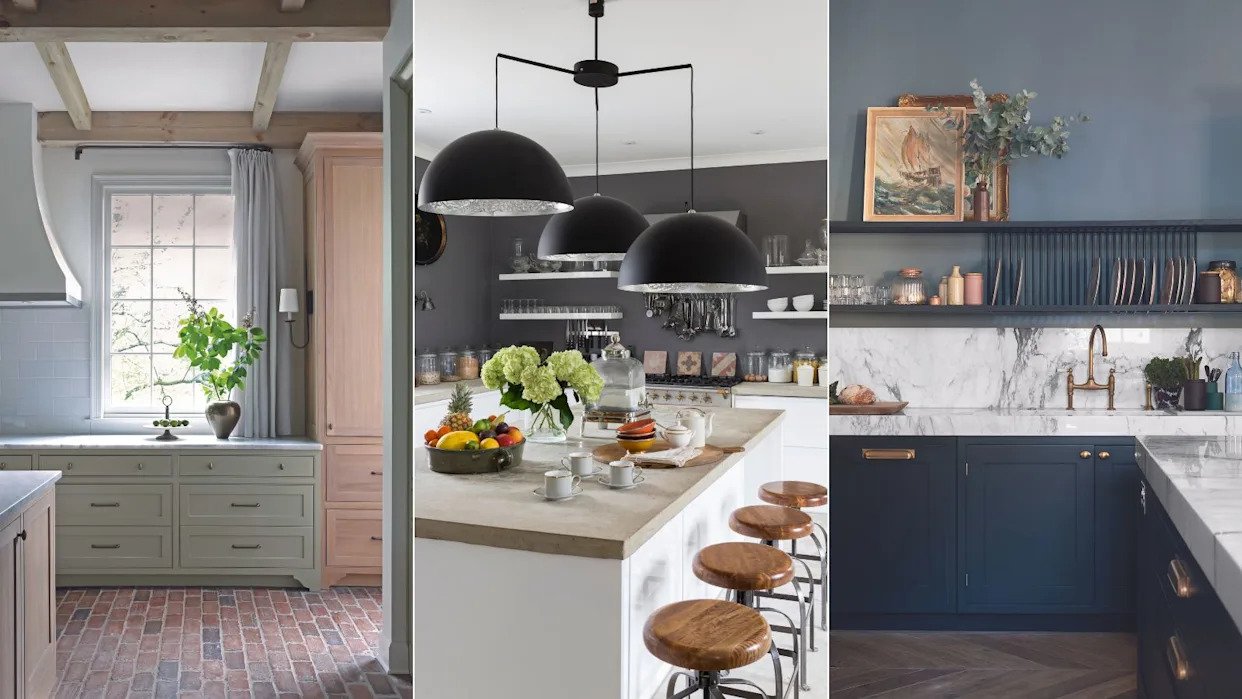
 Two-tone cabinetry adds visual depth to grey-walled kitchens without requiring a full remodel.
Credit: www.goodhousekeeping.com
Two-tone cabinetry adds visual depth to grey-walled kitchens without requiring a full remodel.
Credit: www.goodhousekeeping.com
Pro Tips to Nail Your Grey Wall and Cabinet Combination
The right cabinet color is only one piece of the puzzle—small design choices around lighting, hardware, and maintenance will make your combination feel intentional and polished.
Factor in Lighting and Kitchen Size
The amount of natural light your kitchen receives will dramatically impact how your cabinet and wall combination looks. North-facing kitchens with cool, dim light benefit from warm cabinet tones (wood, off-white, soft green) to add warmth and brightness. South-facing kitchens with abundant bright light can handle dark cabinets (black, espresso) and cool tones (blue, crisp white) without feeling gloomy. For small kitchens, stick to light upper cabinets to keep the space feeling open; large kitchens can handle dark lower cabinets or bold two-tone designs without feeling cramped. The U.S. Department of Energy recommends layering ambient, task, and accent lighting in kitchens to highlight color choices and improve functionality U.S. Department of Energy kitchen lighting guidance. Add under-cabinet LED strips to illuminate countertops and make cabinet colors pop, and use warm-toned pendant lights over islands to add coziness.
Choose Hardware That Unifies the Look
Hardware is the small finishing touch that ties your cabinet and wall combination together. For cool grey walls paired with white, blue, or black cabinets: opt for brushed nickel, chrome, or matte black hardware for a sleek, modern feel. For warm grey walls paired with wood or green cabinets: choose brass, bronze, or oil-rubbed gold hardware to add warmth and elegance. Stick to the same finish and a consistent style (e.g., all bar pulls, all round knobs) to avoid a cluttered, mismatched look.
Maintain Your Combination for Long-Lasting Beauty
Proper maintenance will keep your grey walls and cabinets looking fresh for years. For painted cabinets (white, blue, green, black): use a mild, non-abrasive cleaner, avoid harsh chemicals that can strip paint or dull finishes, and wipe up spills immediately to prevent staining. Matte finishes hide fingerprints and minor scratches better than glossy finishes, but can be harder to clean; semi-gloss finishes are easy to wipe down but show smudges more clearly. For wood cabinets: use a wood-specific cleaner to preserve the finish, and avoid excessive water that can warp the wood. For grey walls: use a melamine sponge for scuff marks, but test in an inconspicuous spot first to avoid discoloration; touch up paint as needed to cover wear from daily use. If you’re updating your kitchen’s fixtures alongside your cabinet and wall refresh, our step-by-step guide to removing a wall-mounted faucet makes the process quick and mess-free.
Frequently Asked Questions
What cabinet colors complement grey kitchen walls?
The most versatile options include crisp white, warm wood tones, soft blue, deep green, matte black, and two-tone combinations. The best choice depends on your grey wall’s undertone: cool greys pair with white, blue, and black cabinets; warm greiges pair with wood, cream, and soft green cabinets. For a low-risk, timeless pick, off-white or light wood cabinets work with nearly every grey shade.
Are dark cabinets a good choice for grey walls?
Yes, dark cabinets (black, espresso, navy) create a high-contrast, sophisticated look with grey walls, but they work best in kitchens with ample natural light or strong artificial lighting. In small or windowless spaces, pair dark lower cabinets with light upper cabinets to avoid making the room feel cramped. Matte dark finishes hide smudges and fingerprints better than high-gloss options, making them ideal for busy households.
Can I use two-tone cabinets with grey walls?
Absolutely, two-tone cabinets are a popular way to add depth and personality to grey-walled kitchens. The most common, balanced pairing is light upper cabinets (white, light grey) with darker lower cabinets (black, wood, navy) to draw the eye upward and make the space feel larger. For a more subtle look, match upper cabinets to your grey wall tone for a monochromatic, seamless effect.
Is grey-on-grey cabinetry and walls a good choice?
Yes, grey-on-grey works beautifully when you use varying shades and finishes to avoid monotony. Pair matte charcoal lower cabinets with a lighter grey wall and semi-gloss grey upper cabinets to create subtle contrast. Add warm metallic hardware and natural wood accents to keep the look from feeling cold or flat. This combination is ideal for modern and industrial-style kitchens.
Final Thoughts
Grey kitchen walls are a blank canvas that works with nearly every cabinet color, as long as you prioritize undertone matching and your space’s unique lighting and size needs. Crisp white cabinets bring brightness to small, low-light spaces; bold black cabinets add drama to large, sunlit kitchens; warm wood tones bring cozy organic texture to any layout; and soft blue or green cabinets add a subtle, on-trend pop of color for a unique, personal touch. Two-tone cabinets offer a low-commitment way to add depth without a full remodel. When in doubt, test 2-3 cabinet paint or finish samples against your grey wall in natural light at different times of day to see how they interact before making a final decision. The best kitchen design is one that fits your lifestyle and makes you happy to spend time in the space. A well-designed kitchen is the perfect space to host gatherings, and pairing the right cabinet and wall colors sets the tone for memorable meals. If you enjoy crafting custom drinks for guests, our guide to top-rated wine making kits offers options for every skill level, and you can stock up on everything you need via our online wine making supplies collection.