

Are your kitchen walls looking dull or covered in stubborn stains? You’re not alone.
What to Use to Clean Kitchen Walls. Grease splatters, food spills, and everyday grime can quickly make your kitchen walls lose their shine. But here’s the good news: cleaning them doesn’t have to be a hassle. With the right tools and simple ingredients, you can restore your walls to their fresh, spotless state in no time.
Keep reading to discover exactly what to use to clean your kitchen walls effectively—and make your space feel brand new again.

Best cleaning supplies for removing grease from kitchen walls
Choosing The Right Cleaner
Choosing the right cleaner for kitchen walls helps keep them spotless without damage. Different wall materials and finishes need specific care. Selecting a cleaner that suits your wall type protects paint and surfaces. It also removes grease, stains, and dirt effectively. Understanding the options makes cleaning easier and safer.
Natural Vs Chemical Cleaners
Natural cleaners use simple ingredients like vinegar, baking soda, and lemon. They are gentle and eco-friendly. These cleaners work well on light stains and everyday dirt. Chemical cleaners have stronger ingredients to tackle tough grease and grime. They work fast but can harm some wall surfaces. Always check the label for safe use and proper ventilation.
Best Cleaners For Different Wall Types
| Wall Type | Recommended Cleaner | Notes |
|---|---|---|
| Tile | Dish soap and water or commercial tile cleaner | Effective on grease and easy to rinse |
| Wallpaper | Mild detergent and soft cloth | Avoid soaking to prevent damage |
| Wood paneling | Wood cleaner or mild soap | Protects finish and avoids warping |
| Drywall | Mild soap solution or vinegar mix | Use sparingly to avoid softening |
Safe Options For Painted Walls
- Use a soft sponge with warm, soapy water.
- Test cleaner on a small hidden spot first.
- Avoid abrasive scrubbers that can scratch paint.
- Choose gentle cleaners like diluted vinegar or mild detergent.
- Wipe walls with a damp cloth to remove cleaner residue.
Essential Cleaning Tools
Choosing the right tools makes cleaning your kitchen walls less of a chore and more efficient. Your wall surfaces vary, so picking appropriate tools can prevent damage and help tackle tough stains. Think of your tools as the foundation of a successful cleaning session—without them, even the best cleaners fall short.
Soft Cloths And Sponges
Soft cloths and sponges are essential for gentle cleaning tasks. They work well on painted walls and delicate surfaces without scratching or peeling the paint.
Microfiber cloths are a great choice because they trap dirt without spreading it around. Sponges with a soft side and a scrubber side let you switch from light wiping to tougher scrubbing easily.
Have you noticed how using the wrong cloth can leave streaks or lint behind? That’s why investing in quality soft cloths can save you time and frustration.
Scrub Brushes And Pads
Scrub brushes and pads come into play when grime sticks stubbornly to your walls. Look for brushes with firm but not overly stiff bristles to avoid damaging paint or wallpaper.
Non-abrasive scrub pads are perfect for tackling grease in the kitchen. If your walls have textured surfaces, a brush can reach into grooves better than a sponge.
Ask yourself: Are you scrubbing hard enough or just repeating the same ineffective motion? The right brush can make your effort count.
Protective Gear
Protecting yourself during cleaning is often overlooked but crucial. Gloves shield your hands from harsh chemicals and prolonged moisture exposure.
Consider wearing goggles if you use strong cleaning sprays to avoid accidental splashes in your eyes. An apron or old clothes prevent stains and keep you comfortable.
Cleaning your walls shouldn’t come at the cost of your skin health. What simple protective gear can you start using today to make your cleaning safer?
Step-by-step Cleaning Process
Cleaning kitchen walls can feel overwhelming, but breaking it down into clear steps makes the process manageable and even satisfying. The right approach not only removes grease and stains but also protects your paint and wallpaper. Let’s walk through how you can clean your kitchen walls effectively, ensuring a fresh and inviting space.
Preparing The Wall Surface
Start by removing any loose dust or cobwebs with a dry microfiber cloth or a soft brush. This prevents dirt from smearing when you apply the cleaner.
Next, cover your countertops and floors with old towels or plastic sheets to catch drips. Protecting surrounding areas saves you cleanup time later.
Look closely for any greasy spots or sticky residues. You might want to pre-treat these areas with a gentle degreaser before the main cleaning.
Applying Cleaner Correctly
Choose a cleaner suited to your wall type—mild dish soap mixed with warm water works well for painted surfaces. Avoid harsh chemicals that could strip paint or damage wallpaper.
Dampen a soft sponge or cloth with the solution and wring it out so it’s not dripping wet. Excess water can damage walls and cause streaks.
Work in small sections, wiping gently in circular motions. This technique helps lift grime without rubbing off paint.
Rinsing And Drying Techniques
After cleaning, rinse your sponge or cloth with clean water and wipe down each section again to remove soap residue. Soap left behind can attract more dirt quickly.
Use a dry microfiber cloth or towel to pat the walls dry. This step prevents water spots and helps you spot any missed areas.
Open windows or turn on a fan to speed up drying. Proper airflow reduces the chance of mold growth, especially in humid kitchens.
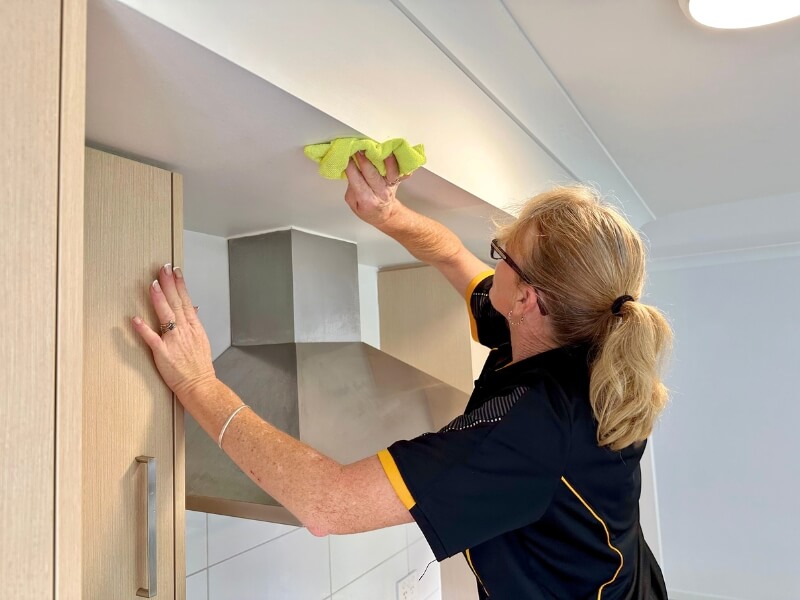
Woman cleaning kitchen wall with sponge and natural cleaner
Dealing With Tough Stains
Stubborn stains on kitchen walls can feel impossible to remove, especially when everyday cleaners just don’t cut it. Tough stains often require a bit more effort and the right approach to truly vanish without damaging your paint or wallpaper. Let’s look at effective ways to tackle these persistent marks so your kitchen walls look fresh and clean again.
Grease And Oil Removal
Grease splatters are common near stoves and can leave your walls sticky and discolored. To break down these oily stains, mix a few drops of dish soap with warm water. Dish soap is designed to cut through grease, making it a perfect choice.
Apply the solution with a soft sponge and gently scrub the area. Avoid harsh scrubbing that might damage the paint. If the grease persists, try adding a small amount of baking soda to the mixture for extra scrubbing power without scratching.
Mold And Mildew Treatment
Kitchen walls near sinks or windows sometimes develop mold or mildew due to moisture. Treat these areas quickly to prevent health issues and wall damage. A simple blend of equal parts white vinegar and water works wonders against mold spores.
Spray the mixture on the affected spots and let it sit for at least 15 minutes. Then wipe the area clean with a damp cloth. For stubborn mold, a paste of baking soda and water applied directly to the stain can help lift it off safely.
Handling Crayon And Marker Marks
Kids’ artwork on walls can be charming until you need to clean it up. Crayon and marker marks require a gentle but effective approach. Start by rubbing a damp cloth with a bit of baking soda over the marks—it acts like a mild abrasive without harming paint.
If baking soda alone doesn’t work, try a magic eraser carefully on the spot. Test it first on a hidden area to make sure it won’t remove paint. You might be surprised how easily you can erase those colorful reminders of creativity.
Preventing Future Stains
Keeping your kitchen walls spotless is not just about cleaning after stains appear. Preventing future stains saves time and keeps your kitchen looking fresh longer. Small changes in how you care for your walls can make a big difference in avoiding stubborn marks and discoloration.
Regular Maintenance Tips
Set a routine to wipe down your kitchen walls at least once a week. Use a mild detergent mixed with warm water to gently clean grease and food splashes before they set in.
Pay special attention to areas near the stove and sink where stains occur most often. Quick spot cleaning after cooking helps stop stains from becoming permanent.
Have you noticed how wiping spills immediately can prevent scrubbing later? Keeping a spray bottle with a gentle cleaner nearby encourages quick action and less buildup.
Protective Coatings And Sealants
Applying a clear, washable sealant on your kitchen walls creates a barrier against stains. These coatings make it easier to clean grease and liquids without damaging the paint or wallpaper.
Choose sealants designed specifically for kitchen use, as they resist moisture and heat. Some products even allow you to wipe off food splatters with just a damp cloth.
Before sealing, make sure your walls are clean and dry. This step ensures the coating sticks well and lasts longer, giving you better protection.
Ventilation And Moisture Control
Proper ventilation reduces moisture that can cause stains and mildew on your kitchen walls. Use exhaust fans or open windows while cooking to let steam and smoke escape quickly.
Moisture control also prevents paint from peeling and keeps your walls in good condition. Consider a dehumidifier if your kitchen tends to stay damp.
Have you ever noticed how a well-ventilated kitchen feels fresher and cleaner? Keeping air moving lowers the chances of stains sticking and helps maintain your kitchen’s appearance.

What to Use to Clean Kitchen Walls
Frequently Asked Questions
What Is The Best Cleaner For Kitchen Walls?
Mild dish soap mixed with warm water is ideal for cleaning kitchen walls. It removes grease and dirt effectively without damaging paint.
Can Vinegar Clean Kitchen Walls Safely?
Yes, diluted white vinegar is safe for most kitchen walls. It naturally cuts grease and disinfects without harsh chemicals.
How Do I Remove Grease From Kitchen Walls?
Use a mixture of baking soda and water to scrub grease spots gently. It lifts stains without harming paint or wallpaper.
Are Commercial Kitchen Wall Cleaners Effective?
Yes, commercial cleaners designed for kitchens effectively remove tough stains and grease. Always follow product instructions for best results.
Conclusion
Cleaning kitchen walls doesn’t have to be difficult. With the right tools, it’s easy. A mild detergent works wonders for removing grease. Use a soft sponge to avoid scratches. Warm water helps loosen dirt and stains. Vinegar can tackle tougher grime.
Always test a small spot first. Regular cleaning keeps walls fresh and bright. Natural solutions are safe and effective. Remember, consistent maintenance is key. A clean kitchen wall enhances your cooking space. It creates a welcoming environment. Keep your kitchen walls spotless with these simple tips.
Enjoy a cleaner, healthier home.
