

Are your kitchen walls looking dull or stained? You’re not alone.
How to Clean Kitchen Walls. Cooking, splashes, and everyday messes can leave marks that make your kitchen feel less fresh. But cleaning those walls doesn’t have to be a big chore. With the right tips, you can quickly restore your kitchen’s bright and clean look.
Keep reading, and you’ll discover simple, effective ways to make your kitchen walls shine like new—without spending hours or using harsh chemicals. Ready to transform your space? Let’s get started!
Choosing The Right Cleaning Supplies
Choosing the right cleaning supplies is key to getting your kitchen walls spotless without causing damage. Using harsh chemicals or rough tools can strip paint or leave streaks, turning a simple task into a frustrating one. Let’s break down what cleaners and tools work best so you can clean efficiently and safely.
Types Of Cleaners For Kitchen Walls
You might think any cleaner will do, but the type you pick matters a lot. Mild dish soap mixed with warm water often does the trick for general dirt and grease. It’s gentle yet effective, and you likely already have it at home.
For tougher stains like baked-on grease or crayon marks, try a mixture of vinegar and water or a baking soda paste. These natural cleaners cut through grime without harsh chemicals. Avoid bleach or ammonia-based cleaners unless your walls are very stubbornly stained, as they can discolor paint or wallpaper.
Have you ever grabbed a strong cleaner only to find it made your walls look worse? Testing a small hidden spot first can save you headaches. Notice how the surface reacts before cleaning the entire area.
Safe Tools And Materials
Choosing the right tools is just as important as picking the right cleaner. Soft sponges, microfiber cloths, or non-abrasive scrub brushes work best. They lift dirt without scratching or damaging the wall’s finish.
Steer clear of steel wool or rough scouring pads, which can leave permanent marks. Instead, use a gentle touch and plenty of rinsing water to avoid residue buildup.
Do you have an old toothbrush? It’s perfect for cleaning corners and textured surfaces where dirt hides. Simple tools like this can make your cleaning more thorough without risk.
Preparing Your Kitchen Walls For Cleaning
Preparing your kitchen walls for cleaning sets the stage for a smoother and more effective process. It’s not just about grabbing a cloth and some cleaner. Taking a moment to prep can save you time and prevent damage to your walls and surroundings.
Removing Loose Dirt And Dust
Start by gently wiping the walls with a dry microfiber cloth or a soft brush. This removes dust and loose dirt that could turn into mud when mixed with cleaning solutions.
Pay attention to corners and edges where dust tends to gather. If you skip this step, you might end up spreading dirt around instead of removing it.
Protecting Surrounding Areas
Before you bring out any liquids, cover nearby countertops, appliances, and floors with old towels or plastic sheets. This protects these surfaces from splashes and drips.
Also, move any fragile or valuable items away from the walls. You wouldn’t want a favorite photo frame to get ruined during cleaning.
Cleaning Different Wall Surfaces
Cleaning kitchen walls requires different approaches based on the wall surface type. Each surface reacts differently to water, soap, and scrubbing. Knowing the right way prevents damage and keeps walls looking fresh. Follow simple tips for painted, tile, and wallpapered walls below.
Cleaning Painted Walls
Use a soft cloth or sponge with warm, soapy water. Avoid harsh scrubbing to protect the paint. Test a small hidden area first to check for color fading. For stubborn stains, use a mixture of baking soda and water as a gentle scrub. Rinse with clean water and dry with a towel to avoid streaks.
Handling Tile Walls
Tile walls handle water well, so use a sponge with mild detergent. Focus on grout lines, which collect dirt and grease. A toothbrush and baking soda paste work well for grout cleaning. Rinse tiles thoroughly to remove soap residue. Dry tiles with a microfiber cloth to prevent water spots.
Caring For Wallpapered Walls
Use a dry microfiber cloth to remove dust gently. Avoid water or liquid cleaners that can damage wallpaper. For stains, try a wallpaper cleaner sponge or a soft eraser. Always test cleaning products on a small hidden patch first. Handle wallpaper with care to keep it intact and vibrant.
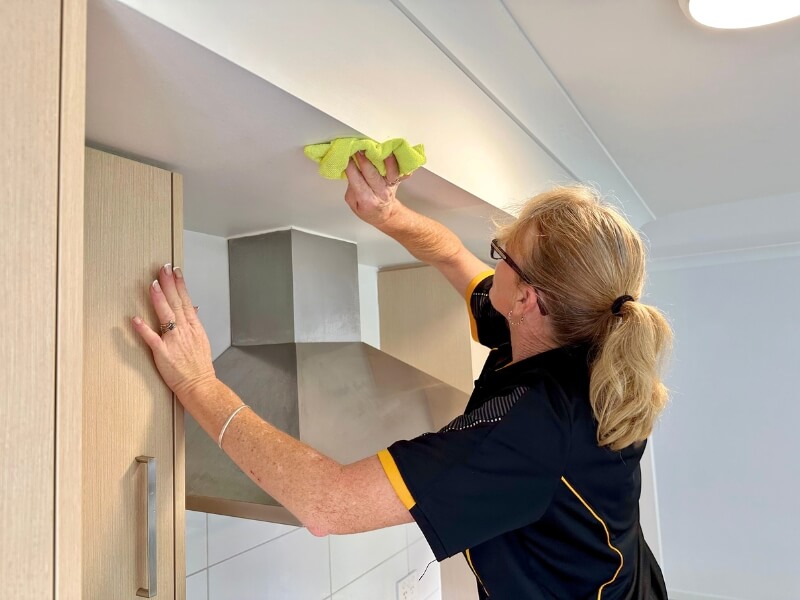
Person wiping grease off kitchen walls with a sponge
Dealing With Tough Stains
Tough stains on kitchen walls can be stubborn and frustrating. They often resist quick wipes and need special care to completely disappear. Tackling these spots effectively not only improves the look of your kitchen but also keeps your home healthier.
Grease And Oil Spots
Grease stains are common near stoves and cooking areas. They can build up over time and attract dirt, making walls look grimy.
To clean these spots, mix warm water with a few drops of dish soap. Use a soft cloth or sponge to gently scrub the area.
If grease is very thick, sprinkle baking soda on the stain, then scrub with a damp cloth. This helps break down the oil without damaging paint.
Food And Drink Stains
Spills from sauces, coffee, or juice can leave colorful stains on your walls. Acting fast is key to prevent permanent marks.
Start by blotting the stain with a clean cloth to soak up any excess liquid. Then, apply a mixture of vinegar and water to lift the color.
For stubborn stains, a paste made from baking soda and water works well. Rub it gently on the stain and rinse with a damp cloth.
Mold And Mildew Removal
Mold and mildew can grow on kitchen walls where moisture lingers. These spots are not just ugly; they can affect your health too.
Use a solution of one part bleach to three parts water to kill mold. Apply carefully with a sponge and allow it to sit for a few minutes before rinsing.
Wear gloves and ensure good ventilation while cleaning mold. Regularly check damp areas to prevent mold from coming back.
Drying And Maintaining Clean Walls
Drying and maintaining clean kitchen walls is key to keeping your space fresh and bright. Proper drying stops water damage and mold growth. Maintaining cleanliness prevents stains and grime buildup, saving time on future cleaning.
Proper Drying Techniques
After washing your kitchen walls, dry them quickly and thoroughly. Use a clean, dry cloth or microfiber towel to wipe off any water. Open windows or turn on a fan to improve air flow. Avoid leaving moisture on the walls to prevent peeling paint or mold.
For stubborn damp areas, gently pat them dry instead of rubbing. This protects the paint and surface texture. Keep the kitchen well-ventilated during and after cleaning to help walls dry faster.
Tips For Long-lasting Clean Walls
- Clean spills and splashes promptly to avoid stains.
- Use mild cleaning solutions suitable for your wall type.
- Dust walls regularly with a soft cloth or duster.
- Keep kitchen humidity low by using exhaust fans while cooking.
- Inspect walls monthly for any signs of dirt or damage.
Following these steps keeps your kitchen walls looking fresh for longer. It reduces the need for deep cleaning and repairs. Clean, dry walls make your kitchen a pleasant place to cook and spend time.

Kitchen wall cleaning with warm soapy water and cloth

Grease stains being removed from kitchen wall tiles
Frequently Asked Questions
How Do I Remove Grease From Kitchen Walls?
Use a mixture of warm water, dish soap, and vinegar. Apply with a sponge, scrub gently, and rinse with clean water. This effectively cuts through grease without damaging the paint or wallpaper.
What Is The Best Cleaning Solution For Kitchen Walls?
A mild detergent mixed with warm water works best. Avoid harsh chemicals that can damage paint. Vinegar or baking soda solutions are natural alternatives for tough stains.
How Often Should Kitchen Walls Be Cleaned?
Clean kitchen walls every 1 to 2 months. More frequent cleaning is needed near cooking areas. Regular cleaning prevents buildup of grease and grime, maintaining a fresh appearance.
Can I Use Bleach To Clean Kitchen Walls?
Bleach can be used on non-porous surfaces but sparingly. Dilute it well and test a small area first. Avoid bleach on painted walls to prevent discoloration or damage.
Conclusion
Cleaning kitchen walls doesn’t have to be difficult. Regular maintenance keeps them spotless. Use gentle cleaners to avoid damage. Scrub stains gently for best results. Consistent care enhances your kitchen’s look. Always dry walls after cleaning. This prevents moisture issues.
A clean kitchen feels inviting and cozy. Remember, proper tools make cleaning easier. Soft cloths and mild detergents work wonders. Fresh walls create a pleasant cooking space. Enjoy the fresh, clean environment you’ve created. Happy cleaning!

Sophia Martinez is a culinary lifestyle writer and product reviewer for DiningGadgets.com. Passionate about blending style with functionality, she explores the latest dining essentials, kitchen décor, and cleaning hacks that transform everyday cooking spaces. With a background in home organization and design, Sophia brings readers expert advice on creating beautiful, practical kitchens that truly feel like the heart of the home.