

Are stains on your kitchen walls driving you crazy? You’re not alone.
Cooking spills, grease splatters, and everyday messes can leave stubborn marks that make your kitchen look dirty and worn out. But don’t worry—cleaning those stains doesn’t have to be a headache. You’ll discover simple, effective solutions that work without damaging your walls or wasting your time.
Keep reading to find out exactly what to use to bring your kitchen walls back to life. Your walls will thank you!
Common Kitchen Wall Stains
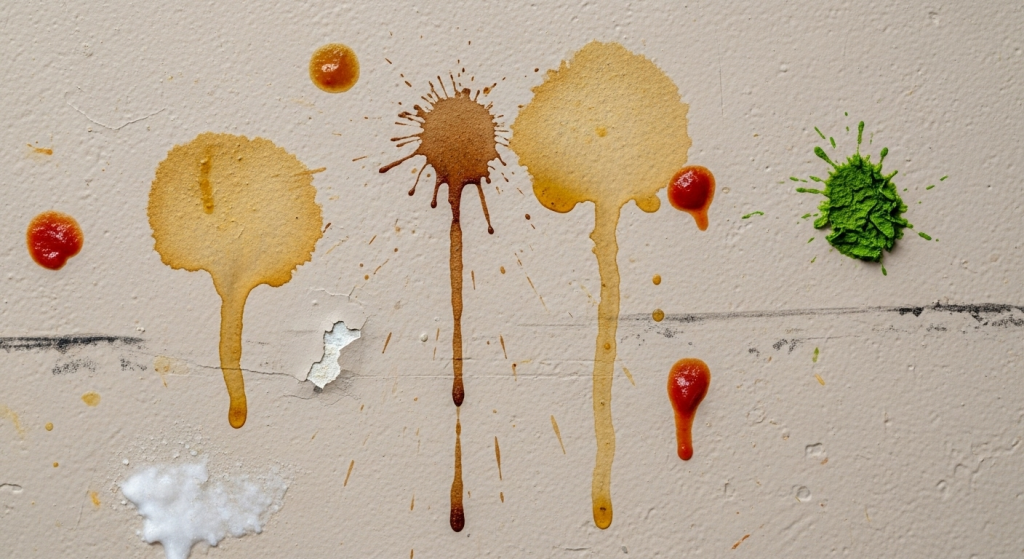
Kitchen walls face many types of stains. These marks come from daily cooking and cleaning. Knowing the common stains helps choose the right cleaning method. Some stains are easy to remove, but others need special care. Identifying the stain type is key to keeping walls clean and fresh.
Grease And Oil Marks
Grease and oil marks appear near stoves and cooking areas. They come from frying and splattering oils. These stains feel sticky and can attract dust. Over time, they darken and make walls look dirty. Cleaning grease needs strong but safe cleaners to break down the oil.
Food Splashes
Food splashes happen during cooking or eating. Sauces, soups, and drinks often splash on walls. These spots can dry and leave stubborn stains. Some foods may cause color stains that are hard to wipe off. Quick cleaning stops these stains from setting in.
Smoke Residue
Smoke residue builds up from cooking smoke or candles. It leaves a thin, dark film on walls. This film can make walls look dull and dirty. Smoke stains need deep cleaning with special solutions. Regular cleaning prevents thick buildup.
Water Spots
Water spots form from splashes or leaks near sinks. They leave mineral deposits or ring marks on walls. These spots look white or cloudy. Water stains can damage paint if left too long. Wiping walls dry helps avoid water marks.
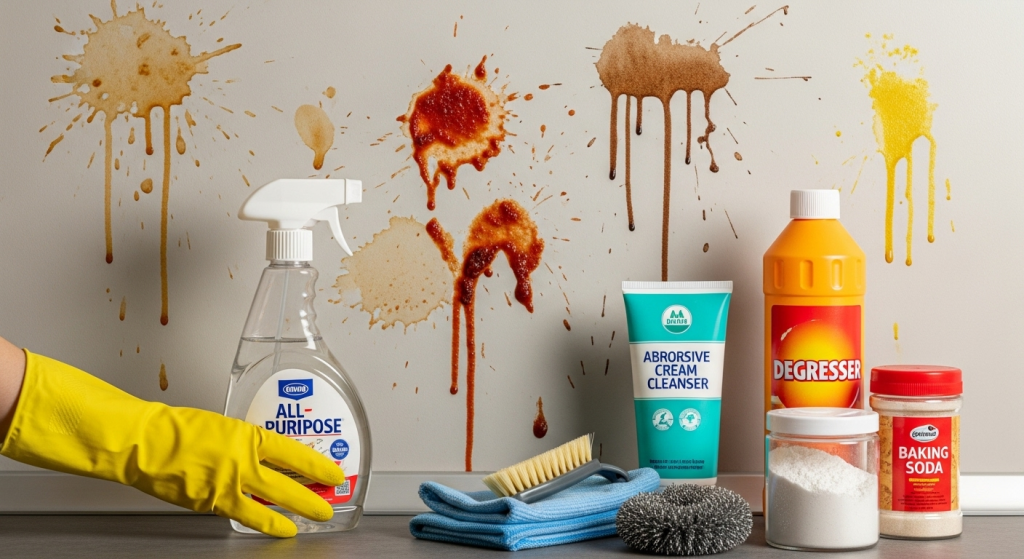
Image: DIY kitchen wall cleaning tips
Choosing The Right Cleaning Products
Choosing the right cleaning products for stains on kitchen walls can make a huge difference in your cleaning results and wall care. You want something effective yet gentle enough to protect your paint or wallpaper. What if the product you pick not only cleans but also keeps your kitchen fresh and safe for your family?
Natural Cleaners
Natural cleaners like vinegar, baking soda, and lemon juice are surprisingly powerful against common kitchen stains. I once used a simple mix of vinegar and water to remove stubborn grease spots, and it worked without damaging my wall paint.
These ingredients are easy to find and safe around kids and pets. Plus, they don’t leave harsh chemical residues behind. Try mixing one part vinegar with two parts water in a spray bottle and test on a small wall patch first.
Commercial Cleaning Agents
Commercial products often promise quick and strong stain removal, especially for tough grease and food splatters. Brands like Mr. Clean or Goo Gone offer formulas designed specifically for kitchen walls.
However, some contain chemicals that might discolor paint or irritate skin. Always read labels and wear gloves. Testing a small hidden area before full application can save you from unwanted damage.
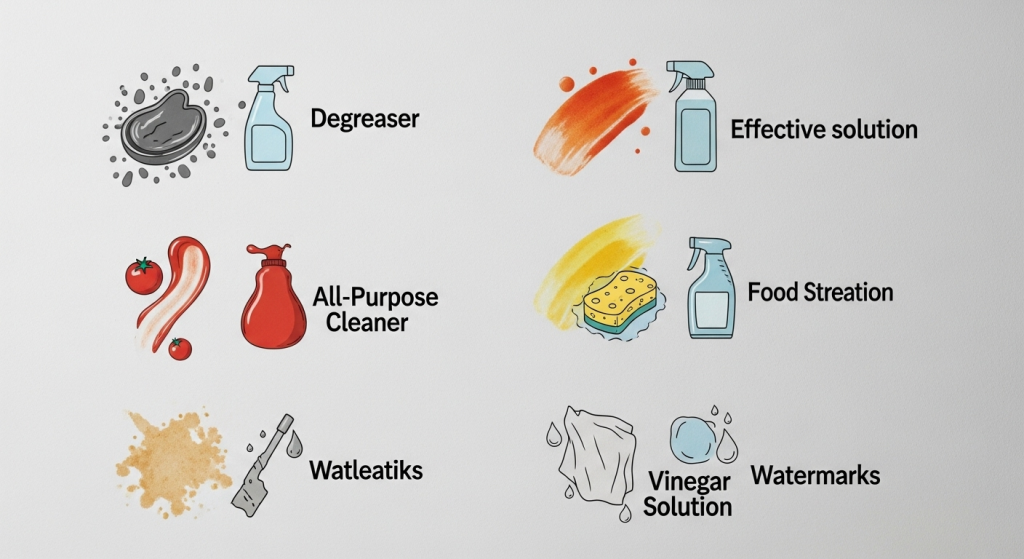
Image: Choosing The Right Cleaning Products
Eco-friendly Options
Eco-friendly cleaning products combine effectiveness with sustainability. They usually avoid harsh chemicals, using plant-based ingredients instead.
Choosing these options reduces your environmental impact and keeps indoor air quality better. Brands such as Seventh Generation or Method are popular choices that clean well without harmful fumes.
Have you considered how your cleaning choices affect your home’s air and the planet? Picking eco-friendly products can make a subtle but meaningful difference.
Diy Cleaning Solutions
DIY cleaning solutions offer an effective and affordable way to tackle stains on your kitchen walls. These mixtures use common household ingredients, making them both safe and easy to prepare. You’ll often find that these natural options work just as well as commercial cleaners, without harsh chemicals.
Vinegar And Baking Soda Mixture
This combo is a powerful stain remover. Start by sprinkling baking soda directly onto the stained area. Then, spray or dab white vinegar over it to create a fizzing reaction that lifts grime.
Let it sit for 5 to 10 minutes. Afterward, gently scrub with a soft brush or sponge, then wipe clean with a damp cloth. I’ve used this mixture on tough grease spots, and it never fails to brighten the wall without damaging the paint.
Lemon And Salt Scrub
Lemon’s natural acidity cuts through stains, while salt acts as a gentle abrasive. Cut a lemon in half, sprinkle salt on the cut side, and rub it on the stain. The combination helps break down the stain and lifts it from the surface.
Leave it for a few minutes before wiping away with a damp cloth. If you want to freshen up your kitchen’s smell, this method doubles as a natural deodorizer. Have you tried this on your walls yet?
Dish Soap And Warm Water
Sometimes, simplicity works best. Mix a few drops of mild dish soap with warm water in a spray bottle. Spray the solution onto the stained area and let it sit for a couple of minutes.
Use a soft sponge or cloth to wipe the stain away with gentle circular motions. This approach is great for light, everyday stains and is gentle enough for all types of paint finishes. It’s my go-to when I want a quick clean without scrubbing too hard.
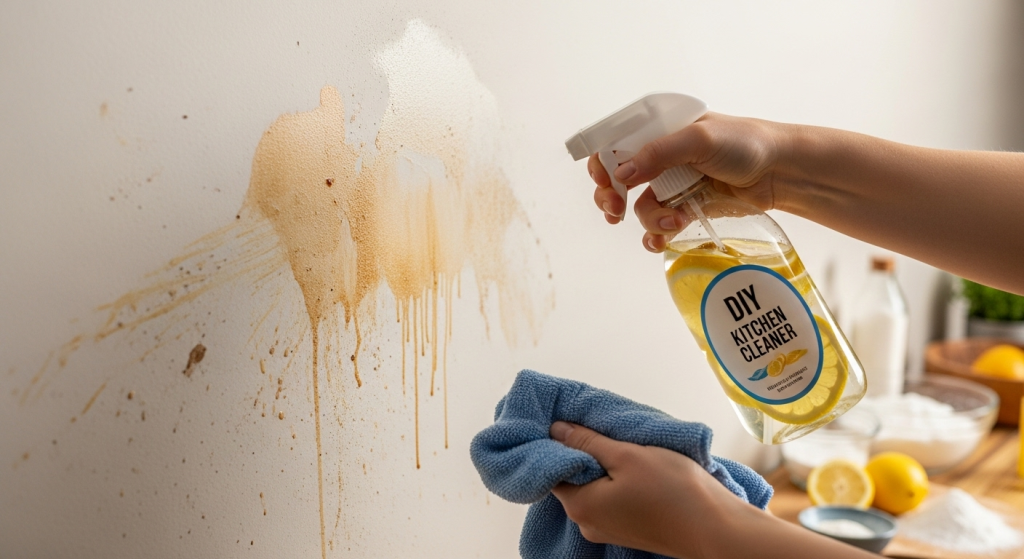
Image: Diy Cleaning Solutions
Cleaning Techniques For Different Wall Surfaces
Cleaning stains from kitchen walls requires different approaches depending on the wall surface you have. Using the wrong technique or cleaner can damage your walls or leave stains behind. Understanding how to clean each type of surface helps you keep your kitchen looking fresh and spotless without extra effort.
Painted Walls
For painted walls, start with a gentle cleaner to avoid removing paint or causing discoloration. Mix warm water with a few drops of mild dish soap and use a soft sponge or cloth.
Test the solution on a small hidden spot first. Gently rub the stained area in circular motions, then wipe with a clean damp cloth to remove soap residue.
If grease stains linger, add a bit of baking soda to the mixture for extra scrubbing power without harsh chemicals. Avoid abrasive scrubbers that can scratch the paint.
Tile And Backsplash
Tiles and backsplashes handle stronger cleaners better, but grout can be sensitive. Use a mixture of equal parts water and white vinegar in a spray bottle for an easy, natural cleaner.
Spray the solution on tiles and grout, let it sit for 5–10 minutes, then scrub grout lines with a soft-bristle brush.
For tougher stains, a paste made from baking soda and water works well on grout. Rinse thoroughly to prevent residue buildup, which can attract dirt.
Wallpaper
Wallpaper needs a delicate touch. Avoid soaking the surface since water can cause peeling or bubbling.
Use a dry microfiber cloth or a wallpaper sponge to gently wipe away stains. For greasy marks, a small amount of mild dish soap on a barely damp cloth can help.
Always blot stains instead of rubbing, and test any cleaner on an inconspicuous area before treating the stain.
Wood Paneling
Wood paneling can absorb moisture, so use cleaners sparingly. A mix of water and mild dish soap applied with a soft cloth usually works well.
Wipe with a dry cloth immediately after cleaning to avoid water damage. For stubborn stains, try a wood-specific cleaner or a solution of vinegar and water applied carefully.
Have you noticed how some stains just won’t budge without the right technique? Your choice of cleaner and method can make all the difference in protecting your walls while removing stains effectively.
Preventing Future Stains
Preventing future stains on your kitchen walls is just as important as cleaning existing ones. Stains can quickly build up if you don’t take steps to protect your walls regularly. Small changes in your daily routine and environment can make a big difference in keeping your kitchen walls looking fresh and clean.
Regular Maintenance Tips
Cleaning your kitchen walls regularly helps stop stains before they set in. Use a mild detergent mixed with warm water and a soft cloth to wipe down walls at least once a week.
Pay special attention to areas near the stove and sink where splashes and grease are common. Spot clean spills immediately to prevent permanent marks. Have you noticed how a quick wipe after cooking saves you hours of scrubbing later?
Protective Coatings
Applying a protective coating to your kitchen walls can shield them from grease, moisture, and stains. Clear wall sealers or washable paint finishes create a barrier that makes cleaning easier and prevents stains from soaking in.
Look for coatings labeled as “scrubbable” or “washable” for the best results. These finishes stand up to repeated cleaning without fading or peeling, so your walls stay looking good longer.
Ventilation Improvements
Proper ventilation reduces moisture and airborne grease, two main causes of wall stains. Installing or upgrading a range hood that vents outside can dramatically cut down on buildup.
If your kitchen lacks good airflow, consider adding exhaust fans or opening windows while cooking. Have you ever noticed how much less greasy your walls stay after improving ventilation?
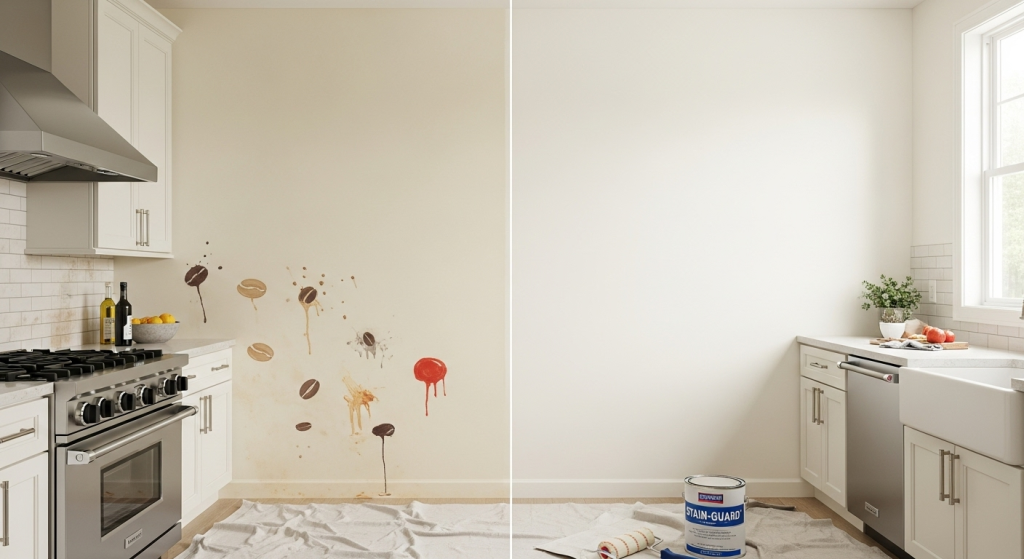
Image: Stains on Kitchen Walls Preventing Future Stains
When To Seek Professional Help
Stains on kitchen walls can be stubborn. Some marks resist all home cleaning efforts. Knowing when to seek professional help saves time and prevents damage. Professionals have tools and skills for tough jobs. They protect your walls and restore their look.
Tough Stains
Some stains resist home cleaning products. Grease, smoke, and mold can be very hard to remove. Professionals use special cleaners and techniques. They remove stains without harming paint or wallpaper. If stains stay after repeated attempts, call an expert.
Delicate Wall Materials
Walls made from delicate materials need careful treatment. Plaster, textured surfaces, and wallpaper can tear or discolor easily. Professionals know how to clean these surfaces safely. They prevent peeling, fading, or other damage during stain removal.
Restoration Services
Severe stains or damage may require restoration. Professionals can repaint, refinish, or repair walls. They restore the kitchen’s original appearance. Restoration ensures long-lasting results and protects your investment. Choose experts with good reviews and experience.
Frequently Asked Questions
What Is The Best Cleaner For Kitchen Wall Stains?
The best cleaner for kitchen wall stains is a mild detergent mixed with warm water. It effectively removes grease and dirt without damaging paint. For tough stains, try a vinegar and baking soda solution. Always test on a small area first to avoid discoloration.
How To Remove Grease Stains From Kitchen Walls?
To remove grease stains, apply a mixture of dish soap and warm water. Use a soft sponge to gently scrub the stain. For persistent grease, a baking soda paste can help lift the stain. Rinse with clean water and dry the wall thoroughly.
Can Vinegar Clean Stains On Painted Kitchen Walls?
Yes, vinegar is safe for painted kitchen walls and works well on stains. Mix equal parts vinegar and water in a spray bottle. Spray the stain, let it sit for a few minutes, then wipe with a clean cloth. Avoid over-saturating to prevent paint damage.
Are Natural Cleaners Effective For Kitchen Wall Stains?
Natural cleaners like vinegar, baking soda, and lemon juice effectively remove many kitchen wall stains. They are gentle on surfaces and environmentally friendly. These options work well for grease and food splatters without harsh chemicals. Always test natural cleaners on a small area first.
Conclusion
Stains on kitchen walls can be tough to remove. Using the right cleaner makes a big difference. Mild soap and water work well for light stains. For tougher spots, try baking soda or vinegar solutions. Always test cleaners on a small wall area first.
Regular cleaning helps keep walls fresh and bright. Clean walls create a nicer kitchen space. Simple tools and natural products often do the job. Keep your kitchen walls stain-free with easy care. A clean kitchen feels more comfortable and welcoming.

Ethan Cole is a kitchen innovation enthusiast and food technology writer at DiningGadgets.com. With over 8 years of experience reviewing cookware, smart kitchen tools, and design trends, he helps readers discover gadgets that make cooking easier and dining more enjoyable. When he’s not testing the latest kitchen appliances, Ethan enjoys experimenting with recipes and sharing practical tips for modern homes.