How to Use a Serving Tray: Tips & Tricks for Every Occasion
Figuring out how to use serving tray equipment isn't about brute force. It's about balance, preparation, and knowing which technique fits your situation. Most spills happen because people skip the setup phase entirely and just grab the nearest flat surface.
That works sometimes. It also means half your glasses end up on the floor.
The difference between a graceful carry and a disaster usually comes down to three things: your load arrangement, your grip choice, and whether you've matched the technique to the task. Proper outdoor dining setup shares the same balance principles, so these tricks transfer easily. The outdoor serving tray guide covers additional surface considerations that apply indoors too.
Occupational ergonomics guidelines from OSHA emphasize keeping wrists straight and loads close to the body during carrying tasks. Once you understand the decision logic, the techniques become second nature.
The Quick Answer
How to use serving tray equipment properly? Slide your fingers under the rim and rest the tray against your palm, keeping your wrist straight. Place heavy items near the center and lighter ones toward the outside edge.
Walk slowly and turn your whole body instead of twisting at the waist. If the load is wide or heavier than five pounds, switch to a two-handed grip or use a dry tea towel for extra traction. This takes practice but prevents most common accidents.
The rest of this guide breaks down the exact decision points so you stop guessing and start carrying with confidence.
Know Your Situation: The Four Variables That Decide Your Approach
Before you pick up any tray, ask yourself four quick questions. The answers determine whether you use one hand, both hands, a counter-balance method, or a completely different approach altogether.
Get these wrong and you'll either overcomplicate a simple task or underprepare for something that needs more care.
Variable one: What are you actually carrying? A single cup and saucer doesn't need the same treatment as six wine glasses plus a pitcher. Small, light loads let you take shortcuts. Bulky or heavy loads demand full technique.
Variable two: What does the tray look like? Low-rim cocktail trays behave very differently from deep-sided serving platters. Handle-equipped trays change your grip options completely. Smooth acrylic or glass surfaces need extra caution compared to textured wood.
Variable three: Where are you walking? Carpeted floors, hardwood, tile, and outdoor decking all change your stability calculations. Uneven surfaces like picnic tables require slower movement and two-handed carries. Thresholds and doorways matter more than you'd expect.
Variable four: Who is carrying? Someone with strong wrists and good balance can handle heavier loads one-handed. Elderly users or people with grip limitations benefit from tray cushions and tea towel grips that reduce hand strain significantly.
| Situation | Recommended Grip | Key Precaution |
|---|---|---|
| Single item, low weight | One-hand, relaxed | Watch for slippery surfaces |
| Multiple items, medium weight | One-hand, firm grip | Load heaviest items central |
| Heavy or wide load | Two-hand, even grip | Keep elbows close to body |
| Hot items or liquids | One-hand with tea towel | Never use bare hands on hot surfaces |
| Uneven flooring outdoors | Two-hand or counter balance | Move at half your normal pace |
If you're ever unsure which variable is dragging your performance down, check whether routine furniture surface upkeep suggests similar weight-handling rules. They do.
Carrying Techniques: One-Hand vs. Two-Hand vs. Counter Balance
Each carrying method has a sweet spot. Pick wrong and you're fighting the tray the entire walk.
One-Hand Carry
This is the default for most everyday situations. Slide your dominant hand under the tray edge. Tuck your fingers beneath the lip and press the tray firmly against your palm.
Your thumb rests across the top edge for control. Keep your wrist straight, not bent upward or downward. Hold the tray at hip height or slightly lower.
Walk at a normal pace but stop if the load feels unstable.
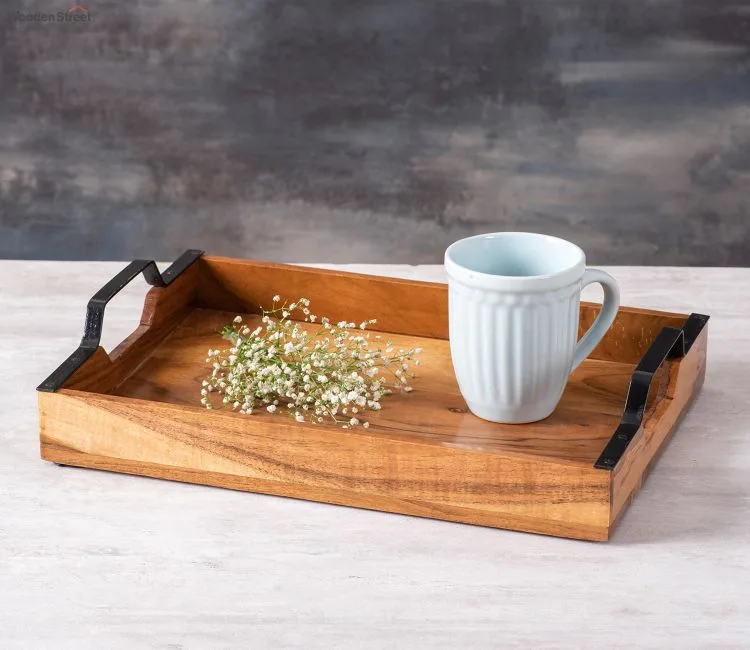
Image source: Bing (Web (fair-use with source credit))
Use this when the load is under five pounds and fits comfortably within your hand span. Perfect for carrying drinks to guests or moving a small plate of appetizers across the room.
Two-Hand Carry
Both hands grip opposite sides of the tray. Fingers wrap underneath the rim while thumbs rest on top. Keep your elbows bent at roughly ninety degrees and hold the tray close to your torso.
This method gives you far more control over wide or heavy loads. It also protects your lower back because you're not compensating for off-center weight.
Use this when the tray exceeds six inches in width on any side, when the total load weighs more than five pounds, or when carrying anything liquid-filled across distance.
Counter Balance Method
Hold the tray flat at waist level with both hands on opposite edges. Instead of lifting, you're supporting and guiding. This method is less about strength and more about steady, controlled movement.
It works well for large rectangular trays that feel unwieldy one-handed. You can shift your weight subtly to correct minor imbalances without stopping.
Use this for buffet-style serving where trays are frequently repositioned on tables. It also pairs well with tableware care outdoors where surfaces may wobble on uneven ground. When in doubt, two hands are always safer than one.
Loading Your Tray Like a Pro: Weight, Order, and Stability
A poorly loaded tray causes more spills than a bad grip ever will. The physics are straightforward but easy to ignore in practice.
Load order matters just as much as placement. Always start with your heaviest, most stable items and build outward from the center point. Lighter items go on top or toward the outer edges where they won't throw off the balance.
Empty space creates voids where items can slide during movement. Fill those gaps strategically with napkins or a silicone tray liner.
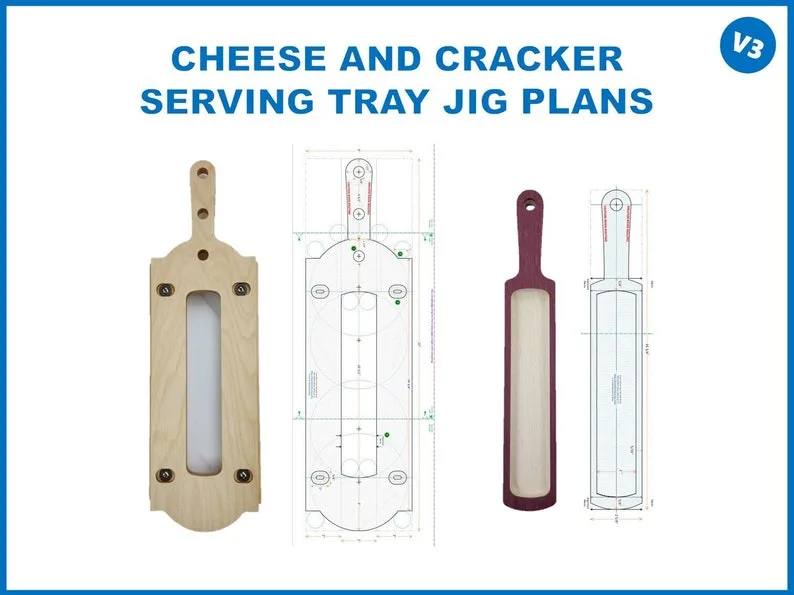
Image source: Web (Bing) / etsy.com (Web image (fair-use with source credit))
Consider these loading rules before every carry:
- Heavy bowls and platters land in the geometric center of the tray
- Glasses and cups sit toward the front or sides, never directly behind heavier items
- Hot dishes always get a folded tea towel underneath them to prevent sliding and protect your hand
- The center of gravity must sit directly above your supporting hand
- Nothing extends beyond the tray rim unless you intend to pick it up with your free hand first
- Liquids go in lidded containers or fill cups only three-quarters full to prevent splash-out during acceleration and deceleration
When stacking plates for a dinner party, place the largest plate at the bottom and work upward in decreasing size. This creates a natural pyramid shape that resists tipping better than equal-sized stacks. Durable dinnerware choices rated for frequent handling hold up better under stacking pressure than thin decorative pieces.
For food contact surface guidance, the FDA Food Code provides standards for materials that touch food during service. Checking that your tray material meets food-safe requirements matters more than aesthetics when serving hot or cold items regularly.
If you're prepping for an event, make sure your silver flatware selection arrives organized and ready before you load the tray. Mixing utensil organization with food prep is a common bottleneck.
Real Scenarios: Breakfast in Bed, Dinner Party, Buffet Line, and Bar Service
Different occasions demand different tray strategies. Here's the breakdown for four common situations most people encounter regularly.
Breakfast in Bed
Small tray. Hot coffee. Delicate pastry.
One slip ruins the gesture.
Use a low-rim wooden or melamine tray sized around ten by fourteen inches. Place the coffee cup in a small saucer first, positioned near the front edge but not hanging over it. Set the plate with food slightly behind and centered.
Add a folded napkin between the cup base and tray surface to catch condensation and reduce sliding. Carry with your stronger hand, moving at slow walking pace. Comfortable outdoor dining sets share the same lightweight tray principles for morning delivery routines.
Dinner Party Service
Multiple courses. Heavier platters. Longer distances across the dining room.
Load a medium rectangular tray with the main serving dish centered and surrounded by side plates arranged radially around it. Keep the heaviest item closest to your body. Use a tray cushion or anti-slip mat underneath.
Switch to a two-hand carry if the tray exceeds twelve inches wide. Set down items in reverse order: lighter plates first, heaviest dish last. This prevents crushing anything already on the surface.
Buffet Line Setup
Self-service means repeated trips and varied loads. Efficiency beats elegance here.
Use a large, sturdy rectangular tray with high rims. Load a variety of serving dishes arranged from heaviest at the back to lightest at the front. Group complementary items together so guests can serve themselves without you rearranging mid-trip.
A reliable pizza oven often feeds a crowd similarly, so bulk-loading strategies apply. Return to the kitchen empty-handed rather than trying to shuffle remaining items.
Bar and Cocktail Service
Speed matters more than presentation. Drinks spill fast.
Use a small high-rim tray, ideally ten to twelve inches square. Place cocktail glasses in a tight cluster with stems facing outward for easy pickup. Keep bottles or shakers at the rear of the tray for weight stability.
Walk briskly but avoid sudden stops. Glassware safety packing methods use the same clustering principle for transport protection.
Common Mistakes That Spill Everything (And How to Avoid Them)
These mistakes show up repeatedly across forums, reviews, and hospitality training materials. Spotting them early saves you embarrassment and cleanup time.
Gripping Too High
Resting the tray on your fingertips with your palm open wastes stabilization. The palm should press against the underside of the tray. This creates a solid platform your wrist can rotate around without losing control.
Overloading One Side
Putting three heavy items on the left and nothing on the right forces your arm to compensate constantly. Either redistribute the load symmetrically or switch to a two-hand carry immediately. Don't power through an unbalanced tray expecting it to behave.
Ignoring Surface Texture
Smooth glass or polished metal trays become ice rinks when wet. Always place a tray liner, silicone mat, or folded tea towel beneath your items before loading. This single step prevents the majority of sliding-related spills reported in casual hosting scenarios.
Carrying Hot Items Without Protection
Never place a hot serving dish directly on your skin or grip a hot tray edge without a cloth barrier. A dry kitchen towel works adequately. A dedicated trivet or heat-resistant pad is safer for sustained carries.
Safe drinkware handling guidelines reinforce this thermal protection principle for both cold and hot items.
Twisting at the Waist
Turning your upper body independently from your feet creates an instant torque imbalance. Pivot your whole body as a single unit. Plant your feet, turn your hips, and move your shoulders together.
This keeps the tray level regardless of which direction you face.
Rushing Through Doorways
Door frames, carpets, and threshold transitions are the enemy of balanced loads. Slow down to half your normal pace when approaching any opening. Reassess your grip before pushing through, then restart normal speed once clear.
If you find yourself frequently dropping items during service, review whether your kitchen gadget maintenance routines include checking tray surface condition. Worn non-slip liners cause more accidents than people realize.
Choosing and Caring for Your Tray: Materials, Sizing, and Maintenance
The tray you choose shapes how easily you can use it. Match the material to your primary situation instead of picking the prettiest option on the shelf.
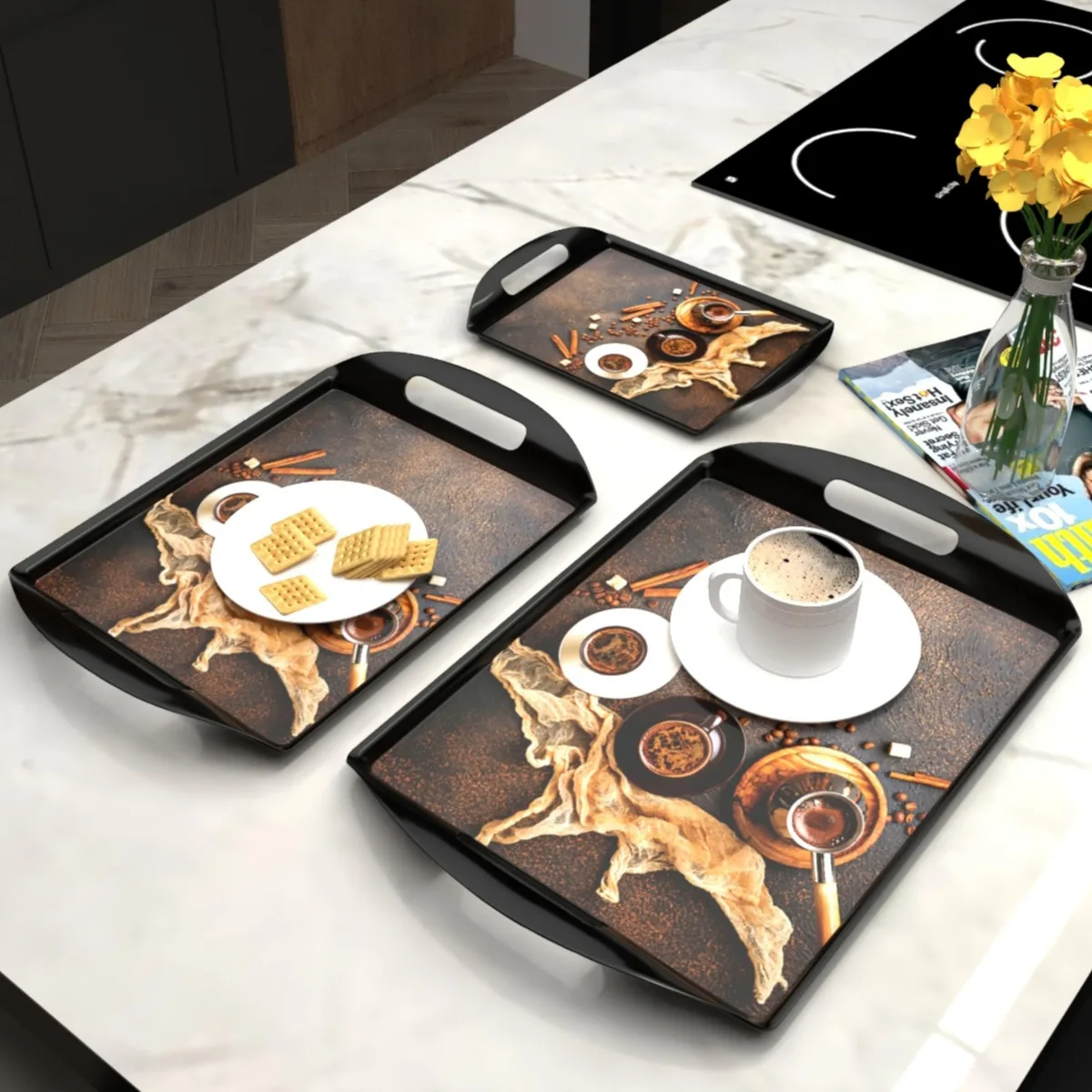
Image source: Web (Bing) / amazon.in (Web image (fair-use with source credit))
| Material | Best For | Weight | Durability | Water Resistance | Maintenance Level |
|---|---|---|---|---|---|
| Wood | Formal dining, breakfast service | Moderate | Good with sealing | Low without finish | High: condition regularly |
| Melamine | Casual indoor/outdoor use | Light | Excellent | Excellent | Low: hand wash only |
| Acrylic | Modern entertaining, outdoor | Very light | Good | Excellent | Low: wipe clean |
| Metal (stainless steel, silver) | Formal service, buffets | Heavy | Excellent | Excellent | Medium: polish periodically |
| Bamboo | Eco-conscious casual use | Light | Good | Moderate | Medium: oil occasionally |
Sizing matters almost as much as material. A tray smaller than ten inches wide struggles to hold more than two items stably. Anything larger than eighteen inches generally requires two hands unless you are experienced with one-hand technique.
Standard dinner parties work well with twelve-by-sixteen inch rectangular trays. Buffet lines benefit from eighteen-by-twenty-four inch versions.
Cleaning and Storage
Always hand wash wooden and bamboo trays unless the manufacturer explicitly states dishwasher safety. Dishwasher heat warps wood faster than any other damage method. Dry immediately after washing and allow to air dry completely before storing.
Never stack wet trays directly against each other.
Metal trays develop water spots if dried improperly. Buff them gently with a soft cloth after washing. Sterling silver requires occasional polishing with a dedicated metal polish cloth to prevent tarnish buildup.
Store trays flat in a dry environment with stable humidity. Vertical storage causes warping over time. Separate stacked trays with soft cloth liners to prevent surface scratching.
For exterior cleaning guidance on outdoor furniture, the same gentle washing principles apply to tray surfaces exposed to the elements.
Maintain wooden trays by applying food-safe mineral oil or beeswax conditioner every three to four months. Heavily used trays may need monthly conditioning during peak seasons as of 2026. Test absorption by sprinkling a few water drops on the surface.
If they soak in quickly rather than beading, recondition immediately.
Frequently Asked Questions
How do you carry a tray so nothing falls off?
Slide your fingers under the rim and press the tray firmly against your palm. Keep your wrist straight and hold the tray at hip level. Load heavy items near the center and place liquids toward the front edge for better visibility.
Walk slowly and turn your entire body when changing direction.
Should you use a liner under tray items?
Yes, especially on smooth or glossy surfaces. A folded tea towel, silicone mat, or specialized tray liner prevents glasses from sliding during movement and protects the tray surface from condensation rings. This is particularly important for wooden trays where moisture causes staining and warping over time.
What size tray is best for a dinner party?
A twelve-by-sixteen inch rectangular tray handles four to six place settings comfortably. For formal plated service, use an eighteen-by-twenty-four inch tray to accommodate multiple dishes per trip. Smaller ten-by-fourteen inch trays work better for individual course delivery or beverage service between meals.
Can you carry a hot serving tray bare-handed?
No. Always use a dry kitchen towel, pot holder, or heat-resistant pad between your hand and a hot tray. Direct skin contact risks burns from heated metal edges or glass surfaces.
Hot dishes also damage unfinished wood trays and should always sit on a barrier cloth or trivet.
How do you prevent drinks from spilling on a tray?
Fill glasses no more than three-quarters full and place them closer to your supporting hand rather than at the far edge. Use coasters or silicone grips under each glass. Avoid sudden stops, starts, or twists while carrying.
When navigating thresholds or uneven flooring, slow to half your normal pace and switch to a two-hand grip if available.
How often should you maintain a wooden serving tray?
Apply food-safe mineral oil or beeswax conditioner every three to four months for frequently used trays. Heavily used entertaining trays may need monthly conditioning during peak seasons. Test absorption by sprinkling a few water drops on the surface.
If they soak in quickly rather than beading, it is time to recondition immediately.