How to Get Rid of Ants in Kitchen Walls: Easy, Effective Solutions
Ants in kitchen walls are frustrating because the ants you see are only part of the problem. A visible trail across the counter often leads back to a hidden nest in a wall void, behind a cabinet, under a sink base, or along a plumbing opening. Treating only the ants on the surface may kill a few workers while the colony keeps sending more.
The goal is simple: remove what is attracting them, trace where they are coming from, treat the colony with the right method, and seal the gaps they used. In practice, the best results come from a combined approach—not from one heavy spray. A common mistake is sealing the wall first, which can push ants to a new route inside the home.
This guide breaks down easy, effective solutions for kitchen wall ants, including natural options, baits, careful spray use, sealing steps, prevention habits, and when to call a professional.
Start With a Fast, Accurate Diagnosis
Before you choose a treatment, spend a few minutes identifying what kind of ant activity you have. Different ants respond differently. Small sweet-feeding ants may follow sugar trails for long distances, while carpenter ants may be nesting in damp wood inside the wall. If you misidentify the problem, you can waste days treating the wrong thing.
A good diagnosis also tells you whether this is a simple kitchen trail or a larger structural issue. Look at size, color, movement, debris, and location. Ants that appear near outlets, sink plumbing, cabinet backs, and baseboard gaps are especially likely to be using the wall as a highway.
Common Kitchen Wall Ants and What Their Signs Mean
| Clue you notice | Likely situation | What it means |
|---|---|---|
| Large black or reddish-brown ants, sometimes with a pinched waist | Carpenter ants | They may nest in moist or softened wood. They do not eat wood like termites; they hollow it out to live in it. |
| Tiny dark ants moving in long lines toward sugar, fruit, syrup, or grease | Sweet-feeding ants, often called “sugar ants” | The nest may be in a wall void, behind tile, or outside near the foundation. Trails are often more important than the individual ants. |
| Small brown ants near cracks by the sink, floor, or baseboards | Pavement ants or other ground-nesting species | They may enter through slab cracks, foundation gaps, or utility openings. |
| Very small pale ants that seem to scatter and re-form | Possible pharaoh ants | Repellent sprays can make them split into new groups. Baits and professional advice are usually better. |
| Winged insects, mud tubes, or discarded wings | Possible termites, not ants | Stop DIY ant treatment and arrange a termite inspection. |
Image source: www.yahoo.com — a steady ant line often reveals the route back to a wall gap.

When Wall Activity Needs Urgent Attention
Most kitchen ants are nuisance pests, but some signs call for faster action. If you find coarse sawdust-like debris near baseboards, hollow-sounding wood, soft drywall, or dark staining around a plumbing penetration, do not treat it like a normal sugar-ant trail. Those clues can point to moisture damage and a nesting site that needs repair.
Also pay attention to ants appearing around electrical outlets, switch plates, or appliance wiring. Never pour liquid pesticide, vinegar, orDIY dust into an outlet or wall electrical box. If ants are coming from wiring areas, use baits and sanitation first, then involve a licensed pest professional when activity continues.
Why Ants Get Into Kitchen Walls
Kitchens give ants four things they want: food, water, warmth, and shelter. A crumb under the toaster, a slow drip under the sink, and a tiny gap behind the backsplash can be enough to support a steady trail. Wall voids are especially useful to ants because they are dark, protected, and often connect multiple rooms and utility spaces.
Common entry points include gaps around plumbing pipes, sink drains, cabinet backs, baseboards, window trim, exterior wall penetrations, loose caulk, and damaged grout. Ants can also enter through small exterior cracks near the foundation and travel inside the wall until they find a kitchen scent trail.
Current university Extension guidance, including information from University of Minnesota Extension, emphasizes identification, sanitation, exclusion, and targeted treatment before or alongside pesticide use. That approach matters in a kitchen because food surfaces, children, pets, and moisture problems all change the safest plan.

Image source: www.simplepest.com — tiny sweet-feeding ants often travel far from a hidden nest.
Trace the Trail and Find the Entry Point
Finding the route is one of the most useful things you can do. Ants move between food and nest using scent trails, so a steady line can lead you to the gap they are using. Work slowly and avoid spraying the trail before you understand where it goes.
- Watch at the right time. Ants are often active when the kitchen is quiet. Check early morning or after dark with a flashlight held low across the counter and floor.
- Use a harmless monitor. Place a small dab of honey, jam, or tuna on a piece of paper near the trail. Once ants gather, watch where they travel when they leave.
- Inspect indoor edges. Check the back of the sink cabinet, under the sink, around pipe openings, toe-kicks, baseboards, window trim, and the sides of wall cabinets.
- Check outside too. Walk along the exterior wall nearest the kitchen. Look for cracked caulk, damaged siding, gaps around hose bibs, utility lines, and foundation seams.
- Confirm with a light tracking surface. A thin dusting of flour or talc across a suspected route can show tiny footprints. Do not put it on food-prep surfaces, and wipe it away afterward.
Chalk is sometimes suggested as a tracking tool, but it is not reliable. Some ants avoid it, and others simply route around it. A flashlight, bait monitor, and patient observation are more useful.
Remove Food, Water, and Harborages
Cleaning is not just a hygiene step; it changes the ants’ map. When food scents and moisture disappear, ants have less reason to keep using the wall route. Focus on the areas people miss: under appliances, behind the trash bin, along cabinet hinges, under pet bowls, and inside the sink cabinet.
| Attractant | Hidden sources in kitchens | What to do |
|---|---|---|
| Grease and oil films | Backsplash, range hood, cabinet fronts, wall near the stove | Wash with a degreasing cleaner, then rinse well so residue does not remain. |
| Crumbs and spills | Toaster tray, coffee station, under cabinets, appliance gaps | Vacuum, wipe, and dry daily during an active trail. |
| Moisture | Sink P-trap, dishwasher connection, dripping faucet, humid wall cavity | Repair leaks, dry surfaces overnight, and improve ventilation. |
| Trash odors | Kitchen bin, recycling, compost caddy | Use a tight lid, take it out often, and wash the bin weekly. |
| Pet food | Bowls, mats, floor corners | Feed at set times, then wash and store bowls. |
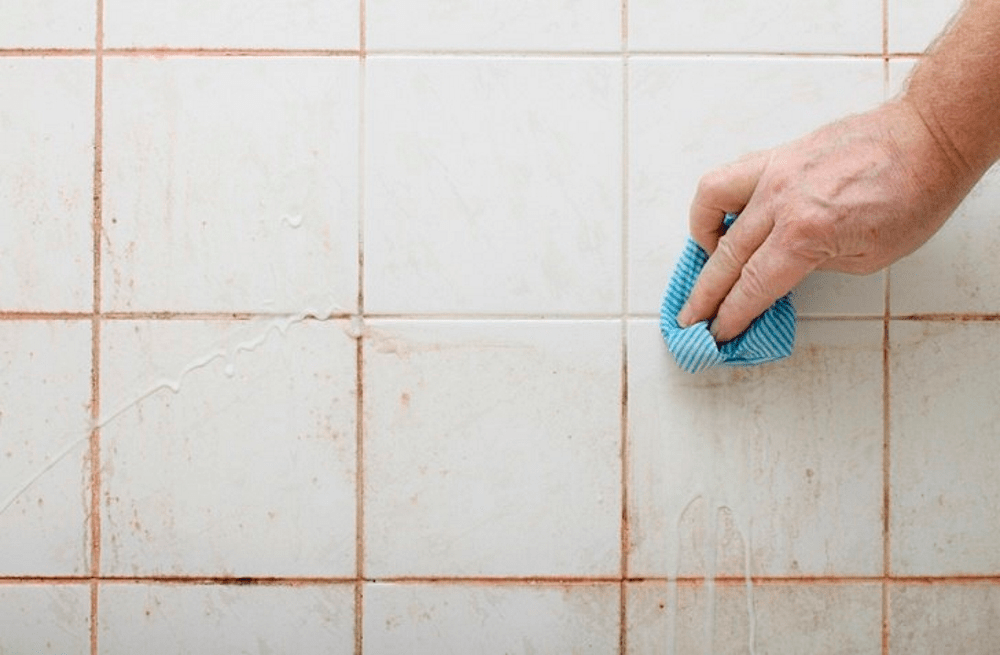
Cooking grease is a major scent magnet. For tiled areas, a tile degreasing routine removes the residue ants investigate. On painted surfaces, oil residue cleanup helps stop repeated wall traffic near the cooking zone.
Moisture matters just as much as food. Because humidity can keep wall voids attractive, include ventilation fan maintenance in your monthly kitchen cleaning. A fan that moves poor airflow can leave walls damp long after cooking ends.

Image source: bestlifeonline.com — countertop traffic shows why trail cleanup matters.
Choose the Right Treatment Method
The right method depends on what you are seeing. A few ants on one counter need a different response than a steady stream from a wall outlet or a carpenter ant nest in damp wood. Match the treatment to the severity, and avoid layering products randomly.
| Method | Best for | Main limitation | Kitchen safety note |
|---|---|---|---|
| Cleaning and trail removal | Light activity, fresh trails, prevention | Does not kill a hidden colony by itself | Safe first step everywhere except electrical areas |
| Ant baits | Hidden nests in walls, repeated trails | Slower than contact sprays | Keep away from food prep zones and pets |
| Natural repellents | Minor trails, entry-point deterrence | Usually short-lived; not colony control | Use sparingly and never in outlets |
| Contact sprays | Quick knockdown of visible ants | Can scatter ants or interfere with baits | Only use products labeled for indoor use and the exact site |
| Dusts in cracks or voids | Hidden void activity when labeled | Hard to place cleanly; inhalation risk | Never apply into outlets or open food areas |
| Professional treatment | Persistent, structural, or hard-to-access nests | Costs more | Best choice when damage or termites are possible |
Current EPA pesticide safety guidance reinforces the basics: choose a product labeled for the pest and site, follow the label exactly, keep children and pets away, and store products safely. Old online recipes and “more is better” dosing are not good guidance in a kitchen.
Try Natural Remedies for Light, Recent Activity
Natural methods can help when you catch the problem early or want to avoid pesticide residue. They are best used as part of a plan: clean first, disrupt trails, reduce access to food and water, then monitor. If ants keep returning for more than a few days, move to baits or professional help rather than endlessly reapplying homemade sprays.
Soap and Water Trail Wiping
Warm water with a few drops of dish soap is one of the safest first tools. It removes grease and food residue while physically wiping away the pheromone trail ants follow. Use a reusable cloth, wring it out well, and work from the counter edge toward the suspected wall gap.
This matters because ants do not “memorize” your kitchen the way people do. They rely heavily on chemical trail markers. If you kill the ants at the end of the trail but leave the trail intact, new workers can still follow the same route.
For painted walls, use a gentle touch and avoid soaking the drywall. If the wall was recently repaired or painted, let it cure fully before scrubbing. A paint-ready wall cleaning routine is useful when grease and ant trails have left marks that need safe pre-treatment care.
Vinegar Solution
Mix equal parts white vinegar and water in a spray bottle, then apply it to a cloth rather than spraying into cracks, outlets, or appliance openings. Wipe ant trails, baseboard edges, cabinet toe-kicks, and the wall section around plumbing penetrations. Vinegar can disrupt scent trails and leave a temporary unpleasant smell for ants.
Do not treat vinegar as a colony killer. It may reduce activity on the surface, but it usually does not reach the nest inside the wall. It also should never be mixed with bleach or other cleaners. On natural stone, waxed wood, or delicate paint, test a hidden spot first.
In practice, vinegar works best when paired with bait placement nearby—but not directly on top of the bait. Strong-smelling cleaners can mask bait or make ants avoid the area.
Essential Oil Sprays
Peppermint, eucalyptus, tea tree, and citrus oils are often used as repellents because their strong scents can interfere with ant trails. Add a small amount of oil to water, shake well before each use, and apply to a cloth for wiping baseboards or window sills. Oil and water separate quickly, so a spray bottle may need frequent shaking.
Use essential oils carefully in kitchens. Keep them off food-contact surfaces, do not soak cabinets, and avoid heavy use around cats, birds, or sensitive pets. A cotton ball with a drop or two of oil placed inside a closed cabinet may be less messy than spraying open areas.
These scents fade, sometimes quickly. Think of them as a temporary deterrent, not a complete solution. If ants are entering from a wall void, oils alone rarely solve the source.
Diatomaceous Earth
Food-grade diatomaceous earth can dry out ants that crawl through it, but it only works when it stays dry. A thin dusting along a wall-floor seam, behind an appliance, or inside a labeled crack-and-crevice site is more useful than a visible pile. Moisture, grease, and airflow reduce its effectiveness.
Do not use pool-grade diatomaceous earth indoors. Even food-grade dust can irritate the lungs and eyes, so wear a mask when applying it, keep children and pets away, and wipe away excess. Never pour it into electrical outlets, switch plates, or open wall cavities where it can spread unseen.
For many kitchens, bait is the cleaner and more reliable choice.
Use Baits to Reach the Nest Inside Walls
Baits are usually the best DIY treatment when ants are coming from inside a wall. Instead of killing only the workers you see, bait relies on ants carrying a slow-acting food source back to the nest. That is especially useful when the nest is behind drywall, tile, cabinets, or insulation where a spray cannot safely reach.
Ants may prefer sweet, greasy, or protein-based bait depending on species, season, and colony needs. A common mistake is offering only sugar bait when the colony is currently seeking protein. If ants ignore one bait type, try another rather than assuming bait does not work.
How to Place Bait Correctly
Place bait stations or small gel dots near the trail, not directly on it. Good locations include the wall edge behind the sink, the side of a cabinet near pipe openings, the corner under the refrigerator, or the baseboard where ants disappear. Keep bait away from washing areas, food prep zones, and pet dishes.
Use several small placements rather than one large blob. This gives ants more chances to find it and reduces the chance of a child or pet contacting it. Label every station if you have other household products nearby.
Do not spray cleaner, vinegar, essential oils, or insecticide around bait. Ants may avoid the area, and some products can contaminate the bait. If you need to wipe trails, do it first, let the surface dry, then place bait several inches away.
What Results to Expect
Bait is not instant. You may see fewer ants within several days, but some colonies take longer, especially if the nest is deep in a wall or the bait is not the food type they want. Check stations every few days and replace dried, dusty, or empty bait.
A temporary increase in ants near the bait can be normal. They are recruiting nestmates. Avoid the urge to spray them. Spraying at this stage often defeats the purpose because it kills the carriers before they return the bait to the colony.
If activity continues after two weeks of correct baiting, the product may be wrong for the species, the nest may be outdoors, or the colony may be large enough to need professional treatment.
Use Sprays Carefully and Only Where Labeled
Contact sprays can kill visible ants quickly, which makes them tempting. In kitchens, though, broad spraying can create more problems than it solves. Spray drift can land on counters, dishes, utensils, or food, and repellent products can split a trail into new routes.
If you use a spray, choose one specifically labeled for indoor use and for ants. Read the entire label, including the site instructions. A product labeled for baseboards may not be labeled for countertops, cabinets, or wall voids.
Remove dishes, food, pet bowls, and utensils from the area before treating. Keep children and pets out until the label says the area is safe. After the required drying time, wipe food-contact surfaces thoroughly.
Sprays are best used for a small number of visible ants or a targeted crack-and-crevice treatment. They are not the best primary tool for ants nesting in walls. If you are also using bait, keep spray and bait zones separate.
Treat Wall Voids and Dusts With Extra Caution
Dust insecticides can be useful in certain cracks, voids, and hidden spaces, but they require restraint. The goal is a small, labeled application where ants travel—not a cloud of powder in the kitchen. Overapplication can spread into living areas and create unnecessary exposure.
Use a hand duster or precision applicator made for labeled crack-and-crevice treatments. Apply only where the product label permits, such as a gap behind a baseboard or a pipe opening that has been confirmed as an ant route. Do not apply dust loosely around counters, open cabinets, food storage areas, or child-height wall spaces.
Never put dust, foam, liquid pesticide, or homemade mixtures into electrical outlets or switch plates. If ants are coming from wiring, appliances, or an inaccessible wall cavity, bait first and call a professional if the trail persists.
Wall voids can also hide moisture problems. If the drywall feels soft, the wood smells musty, or debris keeps reappearing, treatment alone will not fix the cause.
Seal Cracks and Gaps After Activity Drops
Sealing is essential for prevention, but timing matters. If you caulk while ants are actively using a route, they may simply find another opening nearby. First reduce the trail and colony activity with cleaning and bait. Then seal the entry points you confirmed.
Start indoors. Remove loose caulk with a utility knife, vacuum dust, and clean the surface with mild soap. A thorough surface cleanup improves adhesion and helps you see small holes more clearly. Let the area dry fully before sealing.
Check cabinet mounting areas carefully, especially screw holes, rear edges, and spaces where cabinets meet drywall. These spots are easy to miss and often connect to wall voids.
Use flexible silicone or acrylic latex caulk for small gaps around trim, baseboards, pipes, and backsplash edges. Use backer rod for wider gaps before caulking so the sealant does not sink in and crack. For larger holes, use a material suited to the wall type, then patch and paint.
If tile grout or backsplash edges are damaged, review surface preparation steps before applying caulk or patching. A messy seal fails faster than a clean one.
Outside, inspect the wall nearest the kitchen. Repair cracked caulk around windows, utility lines, hose bibs, siding joints, and foundation seams. Trim vegetation that touches the wall, and keep mulch from piling against the foundation.
Recheck sealed areas after a week and again after seasonal temperature changes. Caulk shrinks, drywall moves, and old repairs reopen.
Keep Ants From Returning
Long-term control is mostly routine. Ants are excellent scouts, so a single crumb or damp cabinet corner can restart a trail. The goal is not a perfectly sterile kitchen; it is a kitchen with few rewards and few access points.
Weekly 10-Minute Check
Once a week, walk the kitchen with a flashlight and check:
- Under the sink and around pipe openings
- Behind the trash bin and recycling container
- Along baseboards and cabinet toe-kicks
- Under small appliances and coffee stations
- Around window trim and exterior doors
- Near wall outlets and switch plates, without touching openings
Look for trails, tiny debris, new caulk cracks, and moisture. Early detection is much easier than treating a colony that has settled into a wall.
Daily Cleaning Priorities
During an active problem, wipe counters after cooking, sweep or vacuum the floor, and dry the sink area overnight. Do not leave dirty dishes soaking, and empty the trash before food scraps build up. Store sugar, cereal, flour, snacks, and pet food in sealed containers.
Grease near the stove deserves special attention. A routine that keeps tile bright and residue-free, such as tile shine maintenance, also reduces the food film ants investigate.
Moisture and Ventilation Control
Fix dripping faucets, loose supply lines, and condensation around the dishwasher. Run the range hood during cooking and for a short time afterward when humidity is high. If the sink cabinet stays damp, dry it overnight with the door open and inspect the P-trap and shutoff valves.
Carpenter ants are especially attracted to moisture-softened wood. Keeping a wall dry is not just a cleanliness habit; it removes one of the conditions that makes the wall suitable for nesting.
Common Mistakes to Avoid
- Sealing first. This can redirect ants to a new gap or trap activity behind the wall.
- Spraying the visible trail before tracing it. You lose the best clue to the entry point.
- Using repellent spray near bait. It can stop ants from taking the bait back to the nest.
- Pouring anything into outlets or wall electrical boxes. This is a fire and electrocution risk.
- Mixing cleaners. Never combine vinegar, bleach, ammonia, or pesticides.
- Using pool-grade diatomaceous earth indoors. Only food-grade product is appropriate for home pest use, and even then it should be applied carefully.
- Assuming all small ants are harmless. Very small ants can be difficult to control with repellents and may need bait-focused treatment.
- Treating wings or sawdust like ordinary ants. These can signal termites or nesting insects that need inspection.
When to Call a Professional
Call a licensed pest management professional if ants keep returning after correct baiting and sealing, if you see winged ants indoors in numbers, or if you find sawdust-like debris, hollow wood, soft drywall, or dark moisture stains. These signs can point to a nest that is not safely reachable with DIY methods.
You should also get help if ants are emerging from electrical fixtures, appliance cavities, or large wall voids. A professional can identify the species, locate the nest more accurately, use labeled products for the site, and check for conditions that need repair.
If you suspect termites, do not apply ant spray or disturb the area. Look for discarded wings, mud tubes, and pale insects with equal-sized wings, then arrange a termite inspection.
Frequently Asked Questions
How do ants get inside kitchen walls?
Ants enter through small gaps around pipes, baseboards, cabinet backs, window trim, outlets, exterior cracks, and loose caulk. They follow food scents and moisture into the kitchen, then use the wall void as a protected route. Finding the exact gap is more useful than treating every ant you see.
Can ants live inside kitchen walls?
Yes. Many species nest in wall voids, especially near warm areas, plumbing, or moisture. Others nest outdoors but travel through walls to reach food. Sawdust-like debris, repeated trails, and activity near pipe openings can suggest a nested colony.
Does vinegar kill ants in walls?
Vinegar can wipe out scent trails and repel some ants temporarily, but it usually does not kill a colony hidden inside a wall. Use it as a cleaning step, not as the main treatment. For hidden nests, bait is usually more effective.
What is the safest treatment around food and dishes?
Start with cleaning, sealed food storage, and bait stations placed away from food-prep areas. If you use any pesticide, choose one labeled for indoor use, follow the label exactly, keep it off food-contact surfaces, and wipe treated areas after the label’s drying time.
Should I seal the wall before treating ants?
No. Treat and monitor first, then seal once activity drops. Sealing an active entry point may push ants to another crack or leave the nest undisturbed. Sealing works best as the final prevention step.
How long do ant baits take to work?
Many baits begin reducing activity within several days, but timing varies by species, bait type, and nest location. Check the station every few days, replace dried bait, and avoid spraying nearby. If activity continues after about two weeks, reassess the species or call a professional.
Are essential oils enough to remove ants?
Essential oils may deter ants for a short time, but they rarely eliminate a colony in a wall. They can be useful for wiping trails or treating a narrow edge, but persistent activity needs sanitation, baiting, exclusion, and sometimes professional treatment.
When should I worry about termites instead of ants?
Discarded wings, mud tubes, pale-bodied insects, and swarms indoors can indicate termites. Carpenter ants are larger, usually dark, and leave coarse sawdust-like debris rather than mud tubes. If you are unsure, avoid DIY spraying and request an inspection.
Conclusion
Getting rid of ants in kitchen walls requires more than killing the ants on the surface. Trace the trail, remove food and moisture, choose a treatment that matches the species and severity, then seal the gaps once activity slows. Baits are usually the strongest DIY option for hidden wall nests, while sprays and dusts need careful, label-based use.
Start with a 10-minute flashlight inspection today. Once you know where the trail begins and ends, every cleanup, bait placement, and sealant repair will target the source instead of chasing ants one by one.
Similar Posts