

Are you ready to transform your kitchen and add extra storage space without spending a fortune? Building your own kitchen wall cabinet might seem tricky, but with the right steps, you can create a sturdy, stylish cabinet that fits perfectly in your space.
How to Build a Kitchen Wall Cabinet. Imagine having a custom cabinet that holds your spices, dishes, or cookware exactly where you want them. In this guide, you’ll learn simple, clear instructions to build your kitchen wall cabinet from start to finish. Keep reading, and soon you’ll have a project that not only saves money but also gives your kitchen a fresh new look you’ll be proud of.

Step-by-step process of building a kitchen wall cabinet
Planning Your Cabinet
Planning your kitchen wall cabinet is the key to a smooth build. Careful preparation saves time and avoids costly mistakes. Think about space, materials, and style before starting the project. This helps create a cabinet that fits perfectly and looks great.
Measuring Wall Space
Measure the width, height, and depth of the wall area. Use a tape measure and write down all numbers. Check for any obstacles like light switches or pipes. Note the location of studs for secure cabinet mounting. Accurate measurements ensure the cabinet fits well and functions properly.
Choosing Materials
Select strong, durable materials for your cabinet. Common options include plywood, MDF, and solid wood. Plywood resists warping and lasts long. MDF offers a smooth surface for painting but is less durable. Solid wood gives a classic look but costs more. Consider moisture resistance for kitchen use. Choose materials that match your budget and design needs.
Selecting Cabinet Style
Pick a cabinet style that complements your kitchen design. Popular styles include shaker, flat-panel, and glass-front. Shaker cabinets have simple, clean lines. Flat-panel cabinets offer a modern, sleek look. Glass-front cabinets add display space and lightness. Think about door type, finish, and hardware. The style sets the tone and enhances your kitchen’s overall look.
DIY kitchen wall cabinet construction with tools
Gathering Tools And Supplies
Before you start building your kitchen wall cabinet, gathering the right tools and supplies is crucial. Having everything organized saves time and reduces frustration during the project. It also ensures you won’t have to pause halfway to find a missing item.
Essential Tools List
Make sure you have these tools on hand to make the cabinet assembly smooth and accurate:
- Measuring tape:Accuracy matters when fitting cabinets in tight spaces.
- Power drill and drill bits:For screwing and creating pilot holes quickly.
- Level:To keep your cabinet perfectly straight on the wall.
- Screwdrivers:Both flathead and Phillips for various screws.
- Clamps:To hold pieces together securely while you work.
- Stud finder:Essential for mounting your cabinet safely on wall studs.
- Wood glue:Adds extra strength to joints.
Have you ever started a project only to realize you’re missing a key tool? Avoid that by checking off this list before you begin.
Recommended Materials
Choosing the right materials affects both the durability and look of your cabinet. Opt for quality plywood or solid wood panels for the cabinet body to ensure stability.
Don’t forget screws that match the thickness of your wood to avoid splitting. Also, pick cabinet hinges and handles that suit your kitchen style and handle daily use.
Think about the finish too. A smooth paint or stain not only improves appearance but protects the wood from moisture and wear.
Safety Gear
Protecting yourself is as important as the tools and materials you use. Always wear safety glasses to shield your eyes from sawdust and debris.
Use ear protection if you’re working with power tools for extended periods. Gloves can protect your hands but make sure they don’t interfere with your grip or tool handling.
Have a dust mask nearby if you are sanding or cutting wood to avoid inhaling fine particles. Safety gear might feel like extra hassle, but it keeps you safe and helps you work confidently.
Cutting The Pieces
Cutting the pieces for your kitchen wall cabinet is where your project starts to take shape. This stage requires precision and care to ensure all parts fit together perfectly later on. Getting your cuts right now saves you time and frustration during assembly.
Marking Measurements
Start by measuring your panels carefully. Use a pencil and a straight edge to mark exact cut lines on the wood. Double-check each measurement before marking to avoid costly mistakes.
Consider marking both sides of the panel to guide your cuts clearly. Have you ever experienced having to redo a cut because the line wasn’t visible? Clear markings help you maintain accuracy throughout the process.
Cutting Panels
Use a saw suitable for your panel thickness— a circular saw or a table saw works well for straight cuts. Keep your hand steady and follow the marked lines closely. Don’t rush; a slow, steady cut produces cleaner edges and reduces splintering.
If you’re cutting multiple pieces, clamp them together to cut them all at once. This trick ensures uniformity and saves time. Have you tried this before? It’s a game changer for consistent cabinet parts.
Sanding Edges
After cutting, your panels will have rough edges. Sand these edges with medium-grit sandpaper to smooth out splinters and sharp corners. This simple step improves the cabinet’s final look and safety.
Sand in the direction of the wood grain to avoid scratches. Running your hand over the edges after sanding helps you feel if any spots still need attention. How smooth are your edges right now?
Assembling The Frame
Assembling the frame is a crucial step in building your kitchen wall cabinet. This phase sets the foundation for the entire structure, so accuracy and sturdiness are key. Taking your time here ensures the cabinet will be strong, square, and ready to support shelves and doors.
Joining Side Panels
Start by aligning the side panels vertically, making sure their edges are flush. Check the panels for any warping before proceeding — a slight twist can throw off the whole frame. You might find it helpful to clamp them together to hold the panels steady while you work.
Consider using a biscuit joiner or dowels to connect the panels more securely. These connectors add strength and keep the edges perfectly aligned. Without these, your cabinet could wobble or develop gaps over time.
Attaching Top And Bottom
Next, position the top and bottom pieces between the side panels. These horizontal components should fit snugly to form a solid rectangle. Double-check that the corners form right angles; a carpenter’s square can be a great tool here.
If your top or bottom pieces don’t fit perfectly, don’t force them. Adjust your cuts or sand down the edges slightly to ensure a clean, tight fit. This attention to detail will pay off when you hang the cabinet on the wall.
Securing With Screws And Glue
Apply wood glue along all the joints before fastening them with screws. The glue adds long-lasting strength, while screws hold everything firmly as the glue dries. Use clamps to keep pressure on the joints, preventing any movement during this step.
Choose screws long enough to penetrate both pieces without breaking through the surface. Pre-drill holes to avoid splitting the wood, especially near edges. This combination of glue and screws creates a frame that stands up to daily kitchen use without loosening.
Adding Shelves And Doors
Adding shelves and doors transforms a simple kitchen wall cabinet into a functional and stylish storage solution. Shelves organize your items neatly, while doors protect them from dust and give your kitchen a polished look. Getting these elements right makes a big difference in usability and appearance.
Installing Shelves
Start by deciding how many shelves you need based on what you plan to store. Adjustable shelf pins offer flexibility, allowing you to change shelf heights later if needed. Drill holes evenly spaced on the cabinet sides, then insert the pins to hold each shelf securely.
Use a level to make sure shelves sit perfectly horizontal. This prevents items from sliding or tipping over. If your shelves are heavy or will hold a lot, consider adding support brackets underneath for extra strength.
Hanging Doors
Pick hinges that match your cabinet style and door weight—overlay or inset hinges are common choices. Attach hinges to the doors first, then align and screw them into the cabinet frame. It helps to have a second pair of hands hold the door steady while you fix the screws.
Check the door alignment by opening and closing it several times. The door should move smoothly without rubbing against the cabinet or gaps showing. Small shims can help if the door is slightly off-center.
Adjusting Hinges
Most cabinet hinges have screws that let you adjust the door’s position after installation. You can move the door up and down, left and right, or in and out to get a perfect fit. This is essential for doors to close flush and look professionally installed.
Take your time with adjustments—tighten screws gradually and test the door movement after each tweak. Have you noticed how tiny changes can make a huge difference in door alignment? Getting this right saves frustration and improves your cabinet’s durability.
Finishing Touches
Finishing touches make your kitchen wall cabinet look complete and polished. These final steps protect the wood and add style. Small details like paint, handles, and sealant improve both function and beauty. Take your time to do each part well. The right finish enhances durability and matches your kitchen décor perfectly.
Applying Paint Or Stain
Choose paint or stain based on your kitchen style. Paint offers a smooth, colorful look. Stain shows the natural wood grain. Use a brush or roller for even coverage. Apply thin coats and let each dry fully. Sand lightly between coats for a smooth finish. Use water-based products for easy cleanup and less odor.
Installing Handles
Handles add style and make opening cabinets easy. Measure carefully before drilling holes. Use a template or ruler for accuracy. Choose handles that match your kitchen hardware. Screw them in tightly but avoid overtightening. Test each handle to ensure it feels secure. Handle placement affects cabinet usability, so plan well.
Sealing And Protecting
Seal your cabinet to protect from moisture and dirt. Use a clear polyurethane or varnish for wood protection. Apply with a clean brush in thin, even layers. Let each coat dry before applying the next. Sand lightly between coats to keep the surface smooth. Proper sealing extends cabinet life and keeps it looking new.
Mounting The Cabinet
Mounting the cabinet is a crucial step in your kitchen renovation. It ensures stability and safety for your storage needs. Taking your time here pays off by preventing future repairs and keeping everything aligned perfectly.
Locating Wall Studs
Start by finding the wall studs behind your drywall. These studs are the strong vertical beams that will hold your cabinet’s weight. Use a stud finder for accuracy, moving it slowly across the wall to detect the edges.
Mark the center of each stud with a pencil. If you don’t have a stud finder, tap the wall lightly and listen for a solid sound, or gently knock to find denser areas. Mounting directly into studs is essential—drywall alone won’t support the cabinet’s weight.
Securing Cabinet To Wall
With studs marked, position your cabinet on the wall where it will hang. It helps to have a second person hold the cabinet in place while you work. Use a level to make sure the cabinet is straight before attaching it.
Drive long screws through the cabinet’s back panel and into the studs. Choose screws at least 2.5 inches long to ensure a secure hold. Avoid screws that are too short or too thin—they won’t support the cabinet properly.
- Use a drill with a screwdriver bit for easier installation.
- Pre-drill holes to avoid splitting the wood.
- Check the cabinet for any wobble as you tighten screws.
Leveling And Final Checks
Once secured, check the cabinet’s level both horizontally and vertically. Adjust shims behind the cabinet if necessary to correct any tilt. Even a slight misalignment can affect door operation and aesthetics.
Open and close the cabinet doors to ensure smooth movement. Tighten any loose screws and confirm the cabinet feels firmly attached. Ask yourself: does the cabinet feel sturdy enough to hold heavy dishes and cookware?
Taking these final steps avoids common problems and saves you frustration later. Your kitchen wall cabinet will be both functional and safe to use.

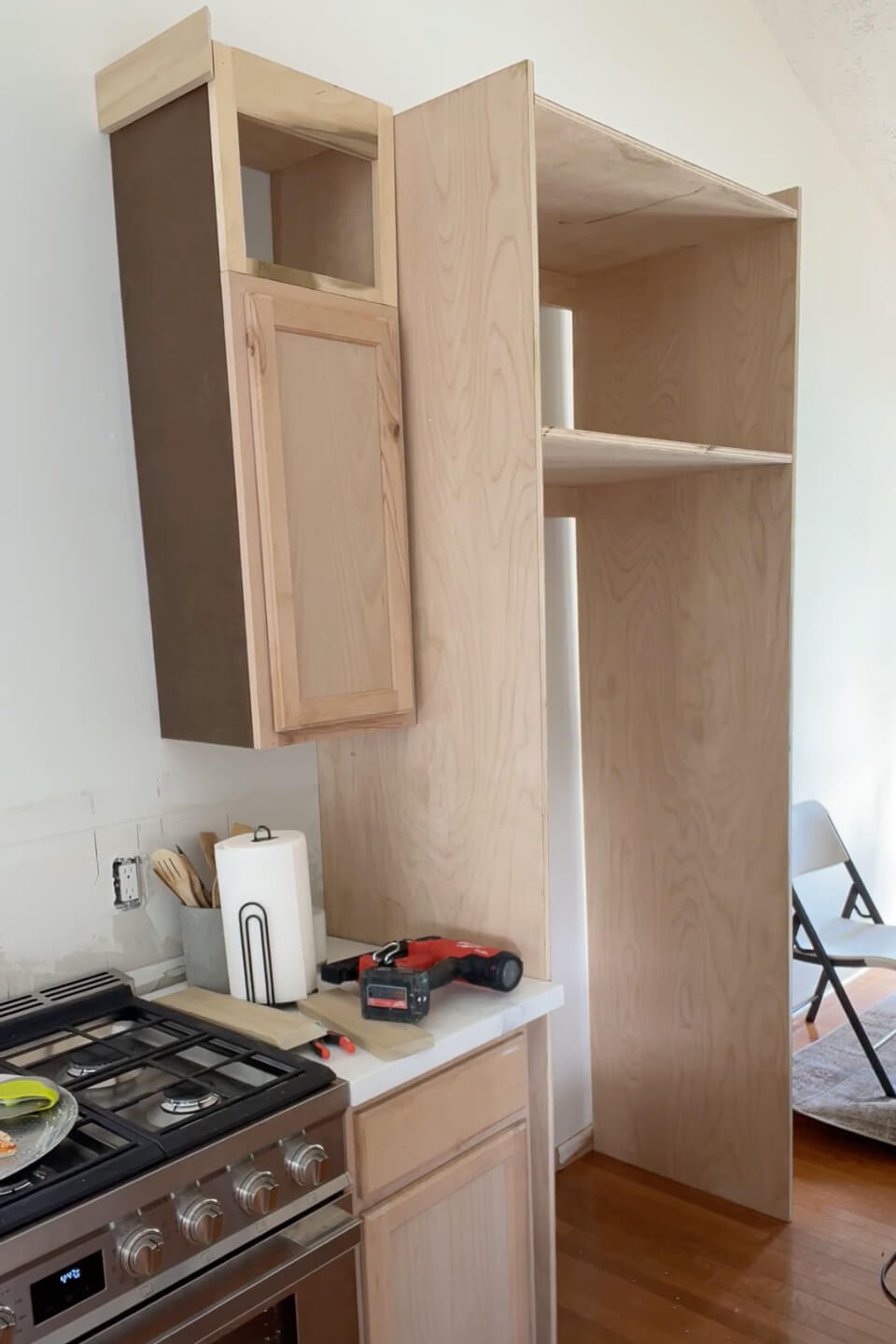
Wooden kitchen wall cabinet being assembled
Frequently Asked Questions
What Tools Are Needed To Build A Kitchen Wall Cabinet?
Basic tools include a drill, screwdriver, tape measure, level, saw, and clamps. These help ensure precise cuts and secure assembly.
How Do You Measure For A Kitchen Wall Cabinet?
Measure the wall height and width, allowing space for appliances and countertops. Accurate measurements prevent fitting issues and wasted materials.
What Materials Are Best For Kitchen Wall Cabinets?
Plywood or MDF with a durable finish are common. They offer strength, smooth surfaces, and resistance to moisture and warping.
How Do You Securely Mount A Kitchen Wall Cabinet?
Locate wall studs using a stud finder. Use strong screws to fasten the cabinet into studs for safe, long-lasting support.
Conclusion
Building a kitchen wall cabinet is a rewarding task. It requires patience and precision. Start with a clear plan and gather your materials. Measure twice, cut once to avoid mistakes. Use strong hinges and brackets for durability. Ensure the cabinet is level for a polished look.
You now have a sturdy and functional kitchen cabinet. Enjoy the satisfaction of a job well done. Your kitchen will look great, and you’ll feel proud. Remember, practice makes perfect. Happy building!

Sophia Martinez is a culinary lifestyle writer and product reviewer for DiningGadgets.com. Passionate about blending style with functionality, she explores the latest dining essentials, kitchen décor, and cleaning hacks that transform everyday cooking spaces. With a background in home organization and design, Sophia brings readers expert advice on creating beautiful, practical kitchens that truly feel like the heart of the home.