Serving Platter Problems & Easy Fixes for Perfect
Your serving platter is supposed to impress guests. Instead, it looks stained, smells weird, or has started to crack. These serving platter problems and solutions are simpler than most people realise.
You just need the right fix for your specific material.
This guide walks you through every major issue by material type. Wood platters warp differently than marble chips. Ceramic scratches differently than steel dents.
We will match your problem to the correct solution so you spend less time troubleshooting and more time hosting confidently.
Why Your Serving Platter Keeps Playing Tricks on You
Understanding why platters fail matters before you attempt any fix. Most damage comes from a mismatch between material and use. A porous wood board soaked in red wine behaves completely differently from a sealed ceramic plate.
The same juice sitting on a marble surface for an hour can etch invisible damage into the stone.
Material science drives every symptom you see. Wood absorbs moisture and releases it unevenly, causing warping when drying happens too fast. Marble reacts chemically to acids, creating cloudy white marks that scrubbing cannot remove.
Glass shatters under thermal shock when a cold board meets hot food. Steel can leach metallic flavours into acidic foods sitting too long.
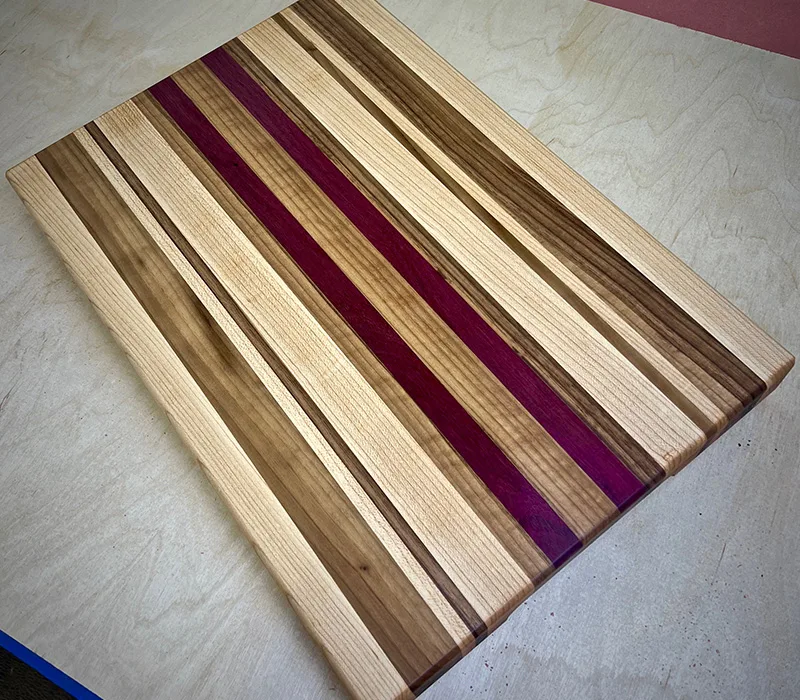
The key insight is simple. Your problem determines your material, and your material determines your solution. Rubbing alcohol kills surface bacteria on non-porous stone but evaporates without sanitising a wood surface that absorbed pathogens hours ago.
Salt draws stains out of timber but grinds scratches deeper into polished ceramic. That is why we need to examine each material family separately before deciding on the right approach.
If you are working with an outdoor dining setup alongside your indoor platters, learning Master Your Outdoor Dining Set: Easy Setup & Use Guide gives you broader context on entertaining surfaces that face different wear patterns from the elements.
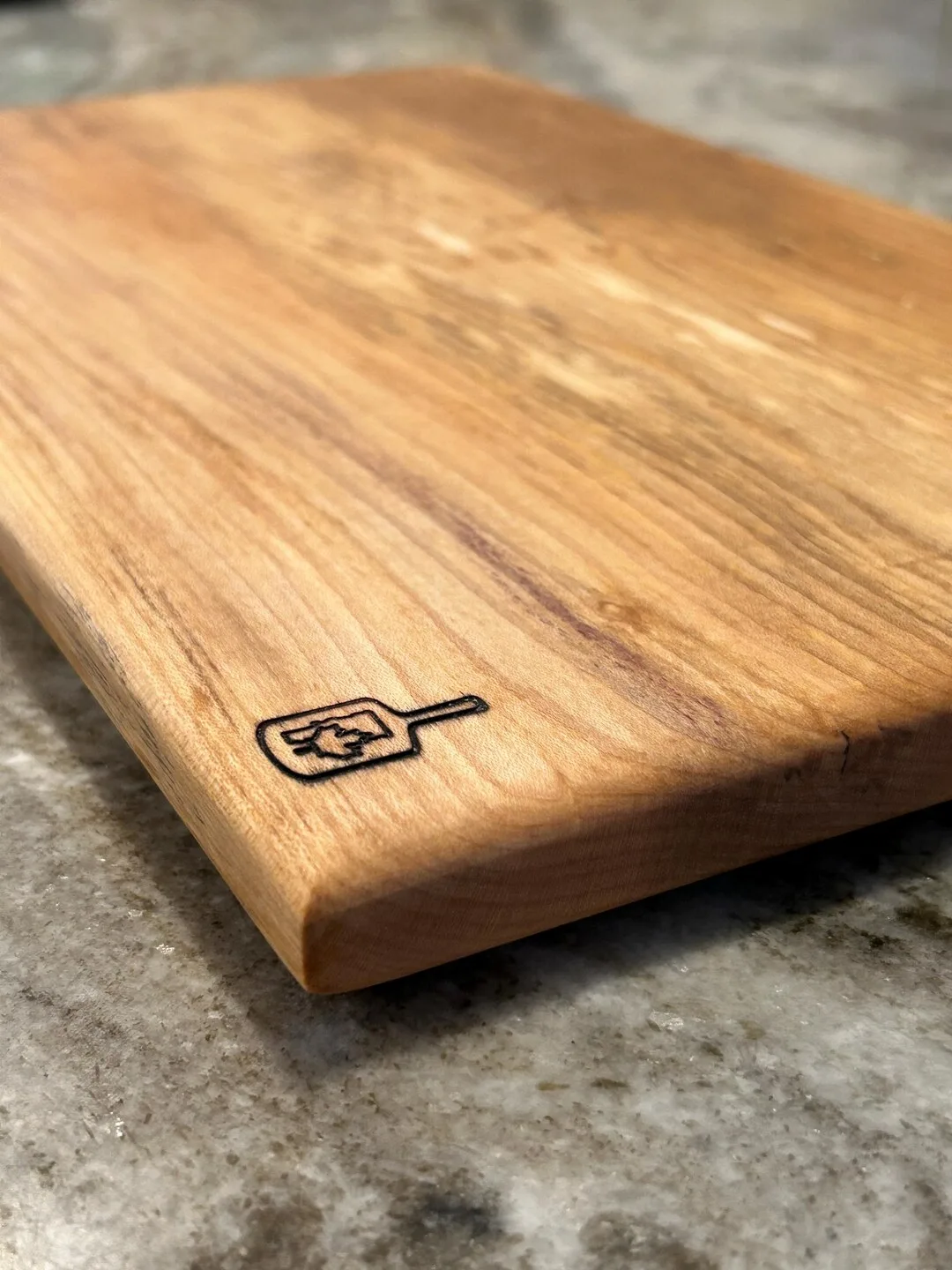
Wooden & Bamboo Platters: Stains, Smells, Warps, and Cracks
Wood and bamboo share similar care requirements despite being different plant structures. Bamboo is technically a grass but handles water the same way dense hardwoods do. Both absorb liquids deeply through their grain.
That absorption is what creates their signature problems.
Deep Stains
Turmeric, beet juice, and tomato-based sauces sink straight into open-grain wood. Surface cleaning never reaches the colour. Try this method: cover the stain generously with coarse kosher salt, squeeze fresh lemon juice over the salt until it forms a wet paste, then leave it undisturbed for at least two hours.
Scrub gently with a sponge along the grain direction, rinse with warm water, and let the board dry completely flat. This process lifts stained molecules without damaging the wood structure.
Lingering Odours
Garlic, onion, and raw fish proteins bond to wood fibers over time. Baking soda paste absorbs odour molecules far better than soap ever could. Sprinkle baking soda over the affected area, add just enough water to form a thick spread, rub it into the cuts and grooves, then leave it for several hours or overnight.
Sweep away the dried paste and wash normally. The powder pulls trapped aromatics out of the microscopic pores.
Warping and Cracking
Warping happens when one side of a wooden platter dries faster than the other. The moisture differential creates tension that bends the board permanently. To flatten a slightly warped board, dampen both sides lightly with a cloth, place the board face-down on a flat surface, then stack heavy books evenly across the entire surface.
Leave it for forty-eight hours in a room-temperature environment with moderate humidity. Never force-dry warped wood near radiators or in direct sunlight.
Cracking occurs from prolonged dryness. If your home runs hot and dry in winter, your wooden platters will split. Repeated oiling with food-grade mineral oil or a beeswax blend fills the tiny gaps and restores flexibility.
Outdoor Dinnerware Features That Actually Matter also highlights how different materials respond to environmental shifts, which applies directly to wooden platters stored near heat sources.
Daily Maintenance Mistakes
Never soak a wooden platter overnight. Never put it in a dishwasher. Hot water and detergent strip the protective oil layer and force moisture deep into the grain, guaranteeing warping within days.
Wash by hand immediately after use, dry upright within thirty minutes, and condition monthly if you entertain regularly.
Marble, Slate, Ceramic, Glass & Metal: Different Problems, Different Fixes
Stone, fired clay, silica, and metal each bring entirely different failure modes to the table. The strategies that rescue a scratched ceramic plate will destroy a polished marble slab. Matching the fix to the material saves both platters and frustration.
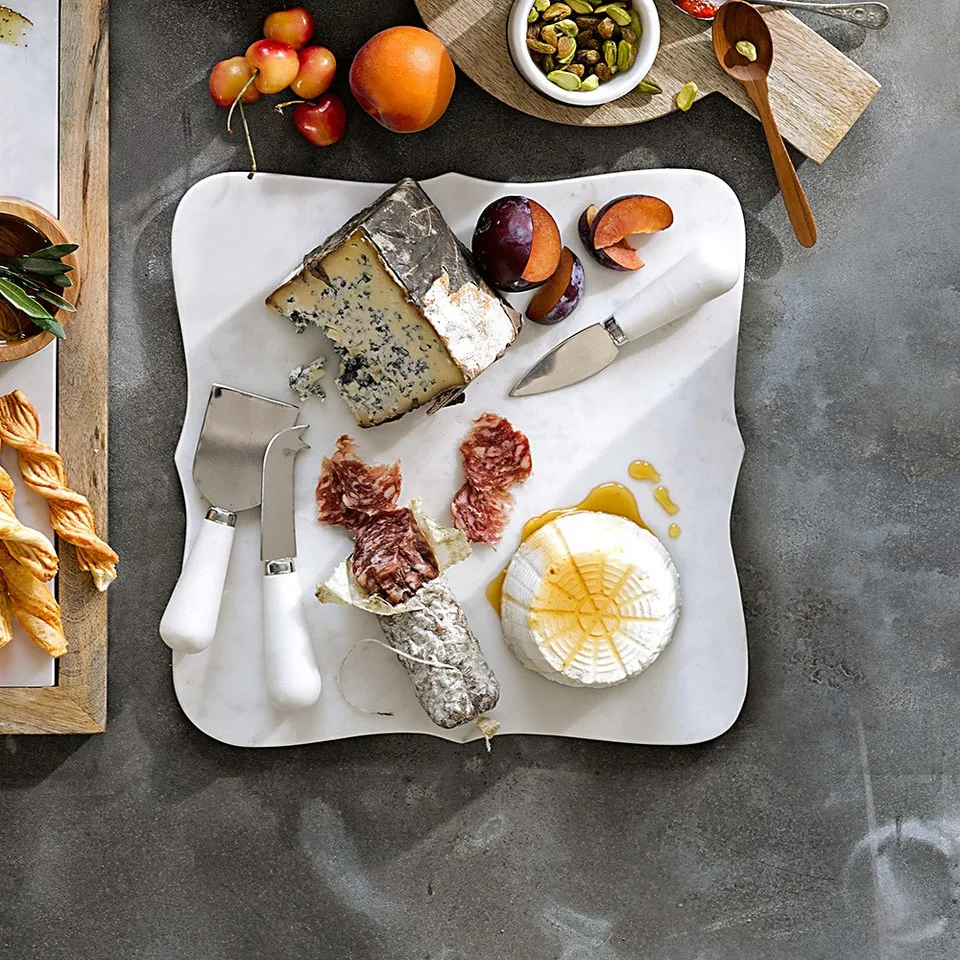
Marble and Etching
Marble is calcium carbonate, which means citrus juice, vinegar, wine, and tomato sauce chemically dissolve the polished surface almost instantly. Those cloudy white spots are not stains. They are physical surface damage.
Prevention is the only real solution. Always place cheese and cured meats on marble. Never set lemon wedges or vinaigrette bowls directly on the stone surface.
If etching already happened, specialised marble polishing powders containing aluminium oxide can restore the shine on light surface damage. Deep etching requires professional stone restoration. No kitchen ingredient reverses real etching.
Slate and Chipping
Slate is a metamorphic rock that splits along natural planes. Heavy boards chip easily along those lines when dropped or banged against hard edges. Once chipped, slate cannot be reliably repaired for food contact.
Minor edge roughness can sometimes be smoothed with a fine diamond hone, but structural chips are permanent. Choose thicker slate platters over thin decorative ones to reduce chip risk significantly.
Ceramic and Porcelain
Glazed ceramic resists stains beautifully because the vitrified surface blocks all absorption. Unglazed or crackled ceramic absorbs everything like a sponge. Chips in the glaze expose porous clay underneath, creating harbours for bacteria that no amount of scrubbing fully removes.
Replace any cracked or heavily chipped ceramic platter. Do not attempt to fill food-contact cracks with epoxy.
Thermal shock cracks ceramic faster than any other single cause. Pouring hot gravy onto a cold ceramic platter straight from a cupboard sends uneven expansion through the clay body. The board splits with an audible pop.
Always warm ceramic gradually or let it sit at room temperature before loading hot food.
Glass and Temperature Risk
Glass shares marble's thermal shock sensitivity. Clear glass platters look stunning for charcuterie spreads but crack catastrophically when temperature changes exceed fifty degrees Fahrenheit in minutes. Wash glass platters in warm rather than hot water to extend their lifespan.
Avoid placing hot dishes directly onto cold glass surfaces.
Stainless Steel and Metallic Tasting
Stainless steel platters resist every stain and odour problem that torments wood or stone. However, acidic foods like citrus or vinegar-based dressings sitting on bare steel for extended periods leach trace metals into the food. That sharp metallic taste signals both flavour damage and potential sensitivity reactions for sensitive eaters.
Line steel platters with parchment paper when serving highly acidic items, or transfer acidic components to small separate bowls placed on top of the board.
The Sanitisation Trap: What Actually Kills Bacteria Without Destroying Your Platter
Bacterial contamination on serving platters follows from one unavoidable fact. Raw meat, poultry, and fish juices carry pathogens that survive on porous surfaces for hours. Sanitising correctly depends entirely on which material your platter is made from.
Wrong sanitisation destroys valuable boards. Correct sanitisation prevents foodborne illness effectively.
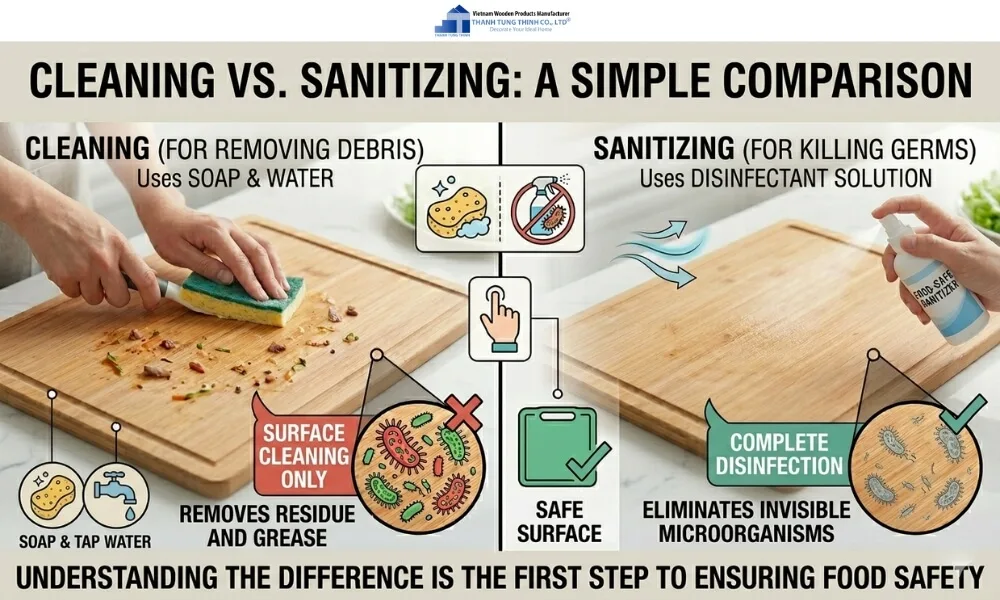
Wood and Bamboo Sanitisation
The USDA Food Safety and Inspection Service recommends sanitising food-contact surfaces after handling raw animal products. For wood, hydrogen peroxide at three percent concentration is the safest effective option. Spray or wipe the solution onto the board surface after cleaning, allow it to sit for several minutes, then rinse with warm water and air-dry upright.
Isopropyl alcohol at seventy percent also works well but evaporates extremely quickly, reducing contact time with any hidden bacteria in deep knife cuts.
Avoid bleach solutions on wood. Bleach damages lignin in the wood fibres over repeated applications and leaves behind residues that eventually migrate into food. Vinegar dilutes nicely in water and works adequately for routine sanitisation but is less reliable against tough pathogens like salmonella.
How to Maintain Your Camping Kitchen Gadgets (Easy Tips) includes sanitisation protocols that apply equally well to wooden serving boards kept outdoors.
Non-Porous Surface Sanitisation
Marble, ceramic, glass, and stainless steel tolerate much harsher treatment because nothing absorbs into the surface. A dilute bleach solution of one tablespoon unscented household bleach per gallon of water stays on the surface and kills virtually all common foodborne bacteria during a two-minute contact period. Rinse thoroughly with clean water and towel dry immediately.
Quaternary ammonium sanitiser wipes work well on all non-porous serving surfaces and require no rinsing when used exactly as the product label directs. These products leave a residual antimicrobial layer that continues inhibiting bacterial growth for some time after application. Follow manufacturer instructions precisely for contact time and dilution ratios.
Cross-Contamination Prevention
Using separate platters for raw proteins and ready-to-eat foods eliminates most contamination risk. Colour-coded boards help professional kitchens track this practice. Home entertainers can adopt a simple rule: one board exclusively for raw meat handling, another dedicated entirely to cheese, bread, and vegetables.
Never serve cooked food on a board that previously held raw meat without thorough sanitisation between uses.
Common Mistakes That Guarantee Your Platter Will Fail
Certain habits guarantee premature platter death regardless of quality or price. Recognising these mistakes early protects your investment and keeps your food safe. Most homeowners repeat the same errors season after season without realising why their expensive boards deteriorate so quickly.
- Dishwasher destruction: Heat, prolonged water exposure, and aggressive detergent strip wood finishes and force moisture deep into grain. Even dishwasher-safe labelled ceramics develop dulling and glaze microfractures over repeated cycles. Hand-wash everything you value.
- Soaking overnight: Submerging wooden boards encourages water absorption into end grain faster than side grain. The resulting uneven swelling guarantees warping. Soaked boards develop odours as trapped moisture stagnates inside the structure.
- Using the wrong cleaner: Abrasive scouring pads scratch wood surfaces deeply, creating new harbours for bacteria and stain penetration. Steel wool shreds finish off glossy ceramic and marble equally well. Soft sponges and cloth towels handle daily cleaning adequately.
- Ignoring juice grooves: Deep channels around board edges trap moisture and food particles when neglected. Mold grows silently inside these protected spaces. Clean grooves thoroughly every time after use with a small brush or cotton swab dipped in sanitising solution.
- Skipping conditioning on wood: Dry wood cracks faster than properly oiled wood. Boards left untreated for months in dry environments develop checking along the grain. Monthly mineral oil application prevents this damage almost entirely.
- Stacking heavy items on platters: Storage cabinets full of stacked heavy boards create pressure points that warp lighter pieces over time. Store platters vertically when possible or separate each with a soft cloth layer.
These mistakes compound slowly. One mistake rarely ruins a platter immediately. Repeating the same error across multiple gatherings accelerates deterioration dramatically.
Learning Best Watch Spring Bar Tool for Easy Band Repair and Replacement may seem unrelated, but understanding tool maintenance builds the same careful attitude that prevents serving ware neglect.
Quick Decision Guide: Match Your Problem to the Right Fix
This decision framework helps you move quickly from diagnosis to solution without flipping through multiple pages. Identify your platter material first, then locate your specific problem in the matching row. Each cell points to the appropriate corrective action.
| Material | Staining | Odours | Warping | Cracking | Bacterial Concerns |
|---|---|---|---|---|---|
| Wood/Bamboo | Salt and lemon paste, wait two hours, scrub along grain | Baking soda paste overnight, sweep and wash | Dampen both sides, weight flat for forty-eight hours | Condition frequently with food-grade mineral oil | Three percent hydrogen peroxide, air dry upright |
| Marble | Impossible to stain, but watch for chemical etching | Baking soda paste works safely on sealed marble | Not applicable | Professional polish for deep scratches | Dilute bleach solution or quats, rinse well |
| Ceramic | Glazed surfaces resist stains entirely | Baking soda paste, gentle scrub | Not applicable | Replace if chipped on food surface | Dishwasher safe for thorough sanitisation |
| Glass | Resists all staining perfectly | Resists all odours perfectly | Not applicable | Replace if cracked from thermal shock | Dishwasher or bleach solution, dry thoroughly |
| Stainless Steel | Resists staining and odor absorption | Resists both perfectly | Not applicable | Dent repair possible, replacement rarely needed | Bleach solution acceptable, rinse completely |
Use this chart alongside How to Use an Outdoor Serving Tray: Tips & Tricks when managing multiple serving surfaces for large gatherings. Outdoor conditions accelerate certain damage types, particularly warping from sun exposure and cracking from temperature swings.
Start by examining your platter under good light. Look for the telltale signs described in each category above before reaching for any cleaning product. Wrong treatments compound damage faster than doing nothing at all.
A marble board treated with lemon juice to remove a stain ends up with both the original stain and new chemical etching across the entire surface. Speed matters less than accuracy in these moments.
FAQs: Serving Platter Problems You're Probably Worried About
Can I put a wooden serving platter in the dishwasher?
No. The combination of prolonged water exposure, extreme heat, and harsh detergents destroys wood platters every time. Dishwashers force moisture into the grain faster than the board can release it, causing immediate warping and eventual cracking.
Hand-wash wooden boards only and dry them within thirty minutes of contact with water.
How do I remove red wine stains from a white marble platter?
Wipe the spill immediately with a damp cloth. Red wine on marble causes chemical etching rather than true staining because the pigments react with calcium carbonate in the stone. If a purple mark remains after gentle cleaning, it is likely etching rather than a surface stain, and no home remedy reverses that damage.
Professional marble polishing may help with persistent cases.
Why does my bamboo board smell like garlic even after washing?
Bamboo contains natural sugars and starches that bond with strong food aromatics over time. Baking soda absorbs those odour molecules far more effectively than soap alone. Create a thick paste, spread it generously over the affected area, leave it overnight, then rinse and dry thoroughly.
Repeat the process if the smell persists after the first attempt.
What is the best way to sanitise a marble cheese board between uses?
Marble tolerates a dilute bleach solution better than any other natural stone. Mix one tablespoon of unscented household bleach per gallon of cool water, apply to the surface, let it sit for two minutes, then rinse thoroughly with clean water and towel dry. Quaternary ammonium sanitizer wipes work equally well and skip the rinsing step when used exactly as directed.
Should I replace a wooden platter with deep knife cuts?
Deep cuts harbour bacteria that sanitising solutions cannot reach effectively. If the grooves are deeper than a quarter inch or feel rough to the touch, replacement is the safest option. Light surface scratches are normal wear and do not require discarding the board.
Condition deeply cut boards monthly to slow further deterioration while you plan the replacement.
Can I use coconut oil to condition a wooden serving platter?
Coconut oil becomes rancid at room temperature and leaves an unpleasant taste on food-contact surfaces. Food-grade mineral oil never goes rancid and is the standard recommendation from board manufacturers worldwide. Beeswax blends offer longer-lasting protection but still rely on mineral oil as their base ingredient.
Avoid olive oil, vegetable oil, and any cooking oil that polymerises or oxidises over time.
How often should I oil my wooden platter?
Monthly conditioning works adequately for regular home use. Heavy entertainers who host weekly should condition every two weeks during peak seasons. A simple test determines whether oiling is needed.
Sprinkle a few drops of water on the surface. If the droplets bead up, the finish is intact. If the water soaks in within seconds, the board needs immediate conditioning.