What Color White for Kitchen Walls: Brighten Your Space Instantly
Standing in the paint aisle staring at 18 nearly identical white swatches can feel overwhelming, especially when you know the wrong choice will leave your kitchen feeling either cold and sterile or dim and outdated, no matter how much natural light it gets. The right white wall color does more than just look clean: it amplifies available light, makes small galley kitchens feel significantly more open, complements your existing cabinets and countertops, and creates a space that feels welcoming for both quick weeknight meals and weekend gatherings. This guide breaks down undertones, lighting considerations, style pairings, and maintenance hacks to help you pick the perfect white for your kitchen and keep it looking bright for years.
Understanding White Undertones: The Foundation of a Good Choice
All white paint has hidden undertones, even the shades that look perfectly neutral in the store. These subtle color casts are the difference between a white wall that feels warm and inviting, and one that looks blue, yellow, or pink depending on the time of day. For more on this, see our guide on what color to paint my kitchen walls with.
Warm whites have faint hints of yellow, red, beige, or brown. They feel cozy and soft, making them ideal for north-facing kitchens with limited natural light, or homes with warm wood cabinetry, farmhouse decor, or rustic design elements. A common mistake homeowners make is choosing a warm white for a south-facing kitchen with harsh afternoon sun; the yellow undertones can amplify glare and make the space feel overly warm during peak sun hours.
Cool whites have subtle blue, gray, or green undertones. They feel crisp, clean, and modern, making them perfect for south or west-facing kitchens with lots of bright natural light, modern minimalist designs, or spaces with stainless steel appliances and gray cabinetry. The only downside is that cool whites can feel stark and sterile in dim, north-facing kitchens, especially when paired with warm incandescent lighting. For more on this, see our guide on what color walls go with white kitchen cabinets.
Neutral whites have balanced undertones with no strong warm or cool cast. They are the most versatile option, working with almost any cabinet color, lighting scenario, or design style. For homeowners who want a fail-safe pick that won’t clash with future decor updates, a neutral white is the best choice.
For a deeper dive into how paint undertones interact with home lighting, the University of Minnesota Extension offers evidence-based guidance for homeowners to help you make informed selections.
How to Test White Paint Like a Pro
The #1 mistake people make when picking white paint is judging the swatch solely under the store’s bright fluorescent lighting, which hides undertones and makes every white look perfectly neutral. To avoid a costly repaint, follow these simple steps:
- Buy 2-3 small sample pots of your top contender shades, including one warm, one cool, and one neutral option if you’re unsure of your kitchen’s lighting.
- Paint 2×2 foot sections on at least two different walls in your kitchen (light hits each wall differently, so a single test spot won’t give you the full picture).
- Let the paint cure for 24 hours—wet paint often dries lighter or darker than its wet appearance, especially with matte and eggshell finishes.
- Observe the samples at 7am, noon, 7pm, and under your kitchen’s artificial lighting (overhead, under-cabinet, and any pendant lights) to see how the undertone shifts throughout the day.
Best White Paint Shades for Every Kitchen Style (2026 Guidance)
Gone are the days when high-gloss white was the only recommended finish for kitchens. In 2026, matte, eggshell, and satin finishes are trending for low-sheen, washable whites that hide minor wall imperfections and reduce glare, while still holding up to daily wear and tear. Below are the most popular, widely available white shades for kitchens, categorized by their ideal use case:
| Paint Brand & Shade | Undertone | Best For | Why It Works |
|---|---|---|---|
| Benjamin Moore Simply White | Warm neutral | All kitchen styles, homes with mixed lighting | No strong undertone, so it looks balanced in both natural and artificial light, and pairs with both warm and cool fixtures |
| Sherwin-Williams Alabaster | Warm | North-facing kitchens, farmhouse, cottage styles | Soft creamy tone adds coziness to dim spaces, and complements warm wood cabinets without looking yellow |
| Behr Ultra Pure White | Cool neutral | Modern kitchens, small galley kitchens | Highest light reflectance value (LRV) of the group, bouncing maximum light to make small spaces feel open |
| Farrow & Ball All White | Neutral | Minimalist, historic, or Scandinavian kitchens | No blue, yellow, or green cast, so it looks perfectly balanced in any lighting scenario |
| Valspar Swiss Coffee | Warm beige | Rustic, cottage, or traditional kitchens | Subtle beige undertone adds depth and warmth without feeling dark, perfect for spaces with exposed wood beams |
If you’re working with bold cabinet colors, check out our tips for pairing wall colors with brown cabinets to create a cohesive, balanced look.
Pairing White Walls With Your Existing Kitchen Elements
White walls act as a blank canvas that makes your kitchen’s key features pop, but only if you coordinate undertones and finishes correctly to avoid clashing.
Cabinet Pairings That Work
Your cabinet color is the biggest factor in choosing the right white wall shade:
- Warm wood cabinets (oak, maple, walnut, cherry): Pair with warm or neutral whites to complement the wood’s natural golden tones. Cool whites will make warm wood look orange and dated by contrast.
- Gray, blue, or black cabinets: Pair with cool or neutral whites to create a sleek, monochromatic look. Warm whites will clash with cool-toned cabinets, making the space feel mismatched.
- White cabinets: Choose a white with a slightly different undertone than your cabinets to avoid the walls and cabinets blending together. For example, pair warm white cabinets with a cool neutral white wall, or cool white cabinets with a warm off-white wall.
- Bold green or navy cabinets: A crisp neutral white will make the dark or saturated cabinet color the focal point of the room, without making the space feel cramped.
For more inspiration working with statement cabinetry, see our guide to coordinating wall colors with green cabinets.
Countertop, Backsplash & Flooring Harmony
Your hard surfaces should tie the whole space together, not compete with your white walls:
- If you have warm-toned countertops (butcher block, marble with beige veins, terrazzo with warm chips), choose a warm or neutral white to create a cohesive, cozy feel.
- If you have cool countertops (quartz with gray veins, concrete, black granite), cool or neutral whites will keep the space feeling sleek and modern.
- For backsplashes, match your grout tone to your wall’s undertone: warm grout pairs with warm white walls, cool grout pairs with cool white walls, for a seamless look.
- Light hardwood or luxury vinyl plank (LVP) flooring pairs with all white undertones, while dark tile or hardwood floors benefit from a high-LRV neutral white to bounce light and balance the dark flooring.
How White Walls Impact Kitchen Lighting: Brighten Your Space Instantly
White paint has the highest light reflectance value (LRV) of any common interior color, with most white shades ranging from 80 to 100 on the LRV scale. This means they bounce 80-100% of the light that hits them back into the room, eliminating dark corners and making even the smallest kitchens feel open and airy.
Maximizing Natural Light
For north-facing kitchens that get limited direct sunlight, a high-LRV cool or neutral white will bounce the available daylight around the room, reducing shadows and making the space feel significantly larger. For south or west-facing kitchens that get harsh, direct afternoon sun, a warm white will soften the glare instead of reflecting it back as a harsh, cool blue cast that can feel blinding while you’re prepping meals.
Complementing Artificial Lighting
White walls work with all kitchen bulb temperatures to create even, shadow-free lighting:
- If you use warm 2700K LED bulbs (the soft, yellow-toned bulbs popular for ambient kitchen lighting), a warm white wall will enhance the cozy glow, avoiding the mismatch that makes walls look blue and dingy.
- If you use cool 4000K bulbs (the bright, white-toned bulbs popular for task lighting over countertops and stovetops), a cool or neutral white will reflect the light evenly, eliminating dark spots where you chop vegetables or read recipes.
A common mistake is pairing a warm white wall with cool task lighting, which creates an unflattering yellow cast on food and surfaces, or a cool white wall with warm ambient lighting, which makes the walls look blue and unwelcoming.
Maintaining Bright White Kitchen Walls Long-Term
Kitchens are high-moisture, high-traffic areas, so even the highest-quality white paint will yellow, stain, or fade without proper care. Follow these tips to keep your walls looking bright for years:
Choose the Right Paint Finish
For most kitchens, a satin finish is the ideal sweet spot: it’s 30% more washable than flat or eggshell finishes, resists moisture and grease splatters, and doesn’t show wall imperfections as much as semi-gloss. If you have a heavily used kitchen with kids or frequent home cooks, opt for a semi-gloss finish on walls behind the stove and sink, as it holds up to heavy scrubbing without fading. Avoid flat finishes entirely in kitchens, as they absorb grease and are impossible to clean without stripping the paint. For health and safety guidance on low-VOC paint options for high-moisture kitchen spaces, the EPA provides clear standards for homeowners to minimize indoor air pollution.
Daily & Weekly Maintenance Hacks
- Wipe up cooking splatters (grease, sauce, coffee) as soon as they happen with a damp microfiber cloth and mild dish soap. Grease left on white paint for more than 24 hours will set into the surface, leaving a permanent yellow stain that’s impossible to remove without repainting.
- For weekly cleaning, use a non-abrasive all-purpose cleaner (avoid bleach, which can yellow white paint over time) and a soft sponge to wipe down walls, especially around the stove and sink.
- Run your exhaust fan for 10-15 minutes after every cooking session to reduce airborne grease and humidity, the top cause of yellowing and mildew on kitchen walls.
- For tough, set-in stains, make a paste of baking soda and water, apply it to the stain, let it sit for 10 minutes, then gently rub with a soft cloth before wiping clean.
Touch-Ups and Repainting
Even with perfect maintenance, high-traffic kitchen walls will need a touch-up every 2-3 years, and a full repaint every 5-7 years. When touching up, use the exact same paint brand, shade, and finish as your original coat, and blend the edges with a damp sponge to avoid visible patch marks. If you’re also refreshing your kitchen hardware, our guide to removing a wall-mounted kitchen faucet will help you upgrade your sink area in an afternoon.
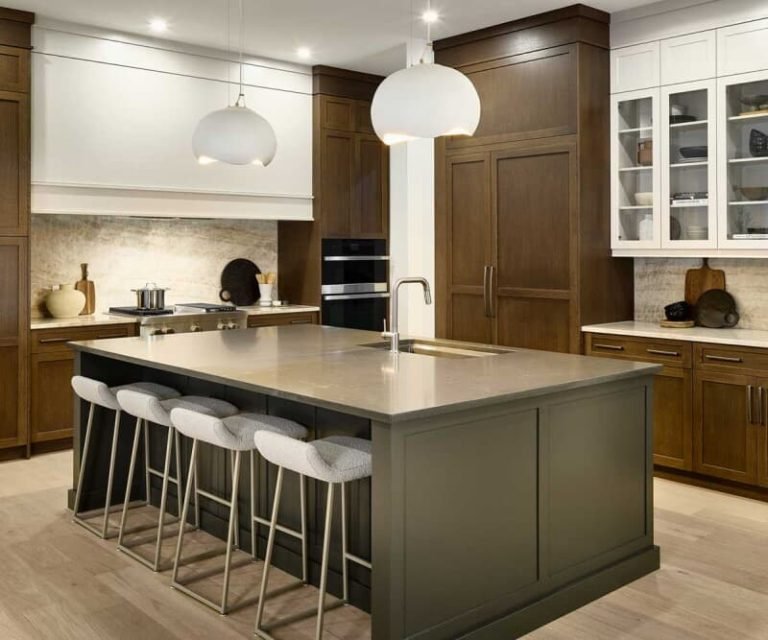
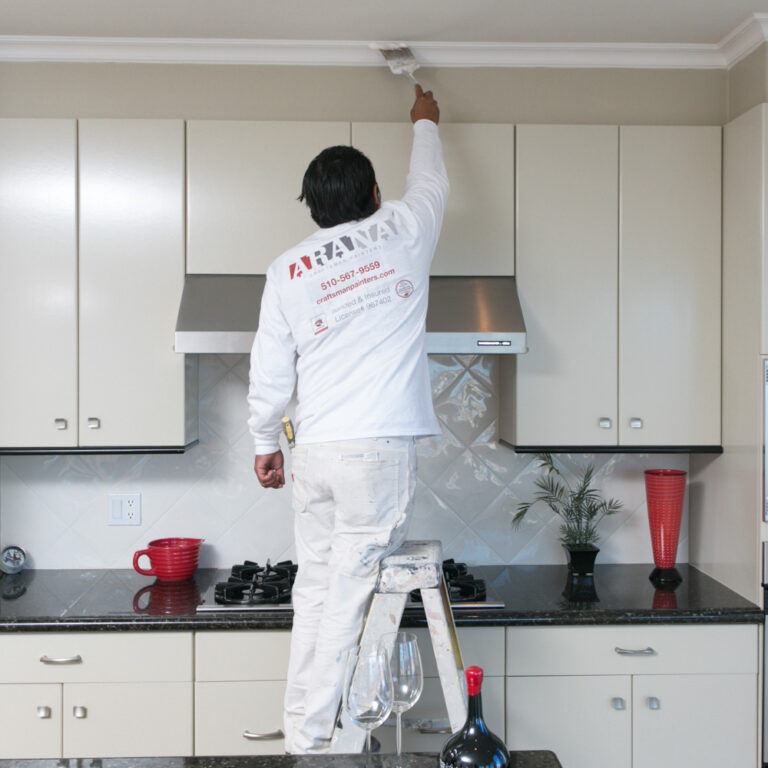 Warm white walls amplify natural light in a modern kitchen with light wood cabinetry.
Credit: www.craftsmanpainters.com
Warm white walls amplify natural light in a modern kitchen with light wood cabinetry.
Credit: www.craftsmanpainters.com
Frequently Asked Questions
What is the best white paint for a small, dark kitchen?
A high-LRV cool neutral white like Behr Ultra Pure White will reflect the most available light, making the space feel larger and brighter. Avoid warm whites with yellow undertones, as they can absorb light and make dim kitchens feel even more cramped.
Will white kitchen walls make my space feel too sterile?
Not if you pick the right undertone. Warm whites with subtle beige or yellow undertones feel cozy and inviting, not hospital-like. Pair them with natural wood cabinets, woven textiles, and potted plants to add warmth and personality.
How do I match white wall paint to my existing cabinets?
Hold paint swatches up next to your cabinet doors in natural light, not store lighting. If your cabinets are warm-toned (oak, maple, cherry), choose a white with yellow, beige, or red undertones. If your cabinets are cool-toned (gray, blue, black), choose a white with blue or gray undertones. If you’re unsure, a neutral white with no strong undertone will work with almost any cabinet color.
Can I use the same white paint for walls and cabinets?
Yes, but make sure the paint is rated for both trim and wall surfaces to avoid peeling or chipping over time. Use a satin or semi-gloss finish for both to ensure easy cleaning and durability in high-traffic areas.
Do white kitchen walls show dirt more easily than darker colors?
Yes, but only if you use a flat or low-quality finish. A high-quality satin or semi-gloss white paint is highly washable, and minor splatters can be wiped away with a damp cloth in seconds. Darker paint colors often show grease and dust more obviously than you’d expect, so white walls are no higher maintenance than other shades if you use the right finish.
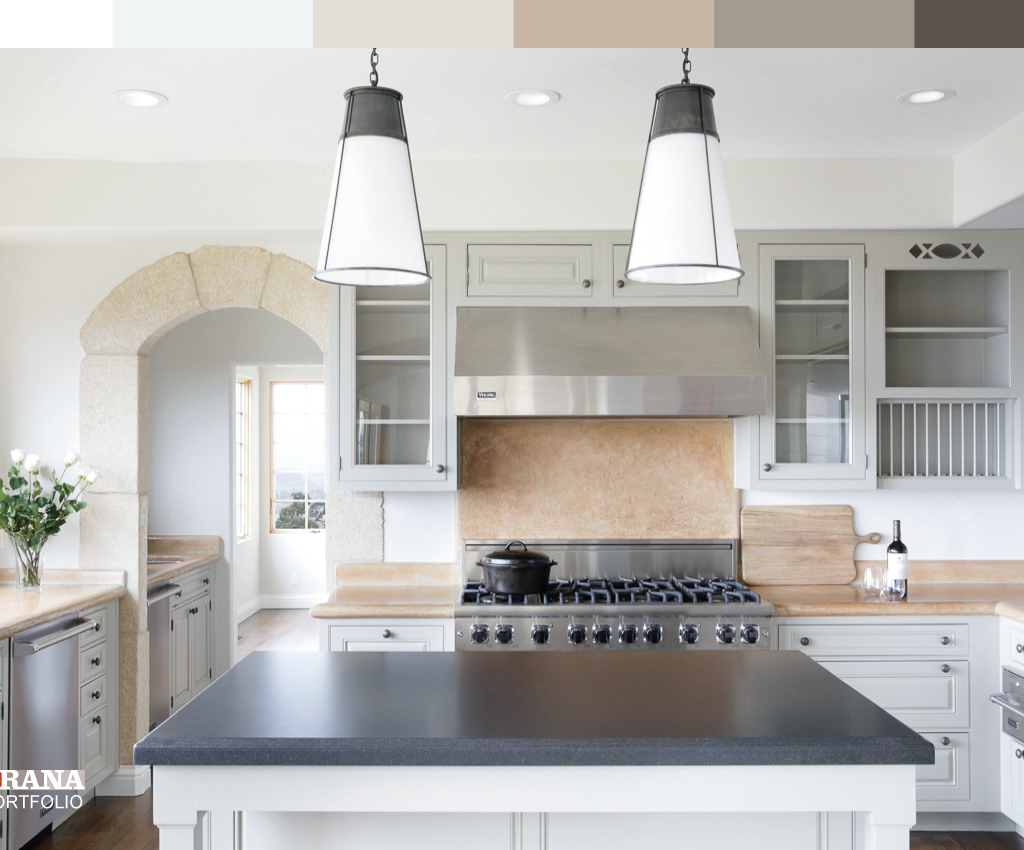
 Off-white walls with subtle warm undertones complement traditional Tuscan kitchen cabinetry and stone countertops.
Credit: www.kylieminteriors.ca
Off-white walls with subtle warm undertones complement traditional Tuscan kitchen cabinetry and stone countertops.
Credit: www.kylieminteriors.ca
 Warm white shiplap walls create a cozy, inviting backdrop for a rustic farmhouse kitchen with open wood shelving.
Credit: www.greenbayremodeling.com
Warm white shiplap walls create a cozy, inviting backdrop for a rustic farmhouse kitchen with open wood shelving.
Credit: www.greenbayremodeling.com
Conclusion
Choosing the right white for your kitchen walls doesn’t have to be a guessing game. By understanding undertones, testing samples in your actual lighting, and pairing the shade with your existing cabinets and fixtures, you can pick a white that brightens your space instantly, complements your style, and stays looking fresh for years. Warm whites bring coziness to dim, north-facing kitchens, cool whites feel sleek and modern in bright, sunlit spaces, and neutral whites offer fail-proof versatility for any home. With the right finish and simple maintenance routine, your white kitchen walls will be a timeless, functional backdrop for every meal, memory, and design update you make in the years to come.