Kitchen Tools in Spanish: Essential Names for Every Cook
Have you ever found yourself struggling to name common kitchen tools in Spanish? Whether you’re learning the language or planning a trip to a Spanish-speaking country, knowing these words can make a big difference.
Imagine confidently asking for a spatula or identifying a cutting board without hesitation. This guide will help you master the essential kitchen tools in Spanish, making your cooking experience smoother and more enjoyable. Keep reading, and soon you’ll speak the language of your kitchen like a pro!

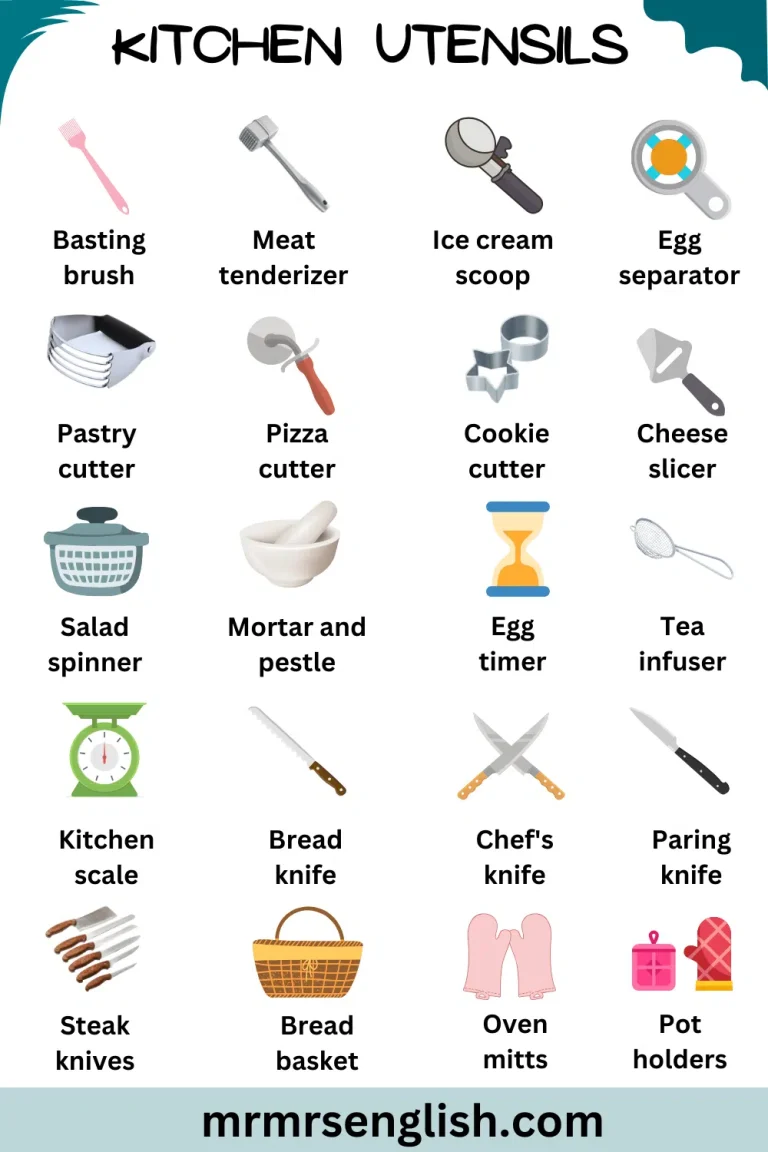
Credit: mrmrsenglish.com
Basic Kitchen Tools
Basic kitchen tools form the foundation of every cooking space. These tools help prepare food quickly and safely. Having the right tools improves efficiency and enjoyment in the kitchen. This section explores essential items every kitchen should have.
Knives And Cutting Tools
Sharp knives are key for food preparation. A chef’s knife, paring knife, and serrated knife cover most tasks. Cutting boards protect surfaces and keep knives sharp longer. Peeling and grating tools add versatility to cutting tasks.
Measuring Instruments
Accurate measuring instruments ensure recipes turn out well. Measuring cups and spoons handle dry and liquid ingredients. A kitchen scale offers precise weight measurements. These tools help maintain consistency in cooking and baking.
Mixing And Stirring Utensils
Mixing bowls come in various sizes for different recipes. Wooden spoons and spatulas gently mix ingredients without scratching cookware. Whisks add air to mixtures, creating light and fluffy textures. These utensils support a wide range of cooking methods.
Cooking Equipment
Cooking equipment forms the backbone of any kitchen, shaping how you prepare your meals and impacting your overall cooking experience. Having the right tools can turn a simple recipe into a delicious success. What cooking gear do you rely on daily to make your kitchen tasks easier?
Pots And Pans
Pots and pans are essential for nearly every cooking task. Choosing the right material—whether stainless steel, cast iron, or non-stick—affects heat distribution and the flavor of your food.
Think about the last time you cooked a sauce that stuck to your pan. A well-chosen non-stick pan or a heavy-bottomed pot might have saved you from scrubbing. Do you have a set that suits all your cooking styles?
Ovens And Stoves
Your oven and stove are the heart of your kitchen. Whether gas, electric, or induction, each type has unique benefits that influence cooking times and temperature control.
If you’ve ever baked a cake that came out uneven, it might be time to check your oven’s calibration. Consider how your current stove supports your cooking habits—does it inspire creativity or limit you?
Small Appliances
Small appliances like blenders, mixers, and food processors save time and effort. They help you prepare ingredients faster, so you can focus more on flavor and presentation.
Have you noticed how a good blender can transform a simple smoothie or sauce into something special? Investing in quality small appliances can make a big difference in your kitchen efficiency.
Serving And Storage Items
Serving and storage items are essential in any kitchen. They help keep your food fresh and make mealtime enjoyable. Choosing the right pieces can improve your daily routine and save you time.
Plates And Bowls
Your choice of plates and bowls affects how your food looks and feels. Durable materials like ceramic or tempered glass last longer and are easier to clean. Think about sizes too: having a mix of small and large plates fits different meals perfectly.
Do you prefer stackable designs? They save space and make your kitchen look tidy. I once switched to simple white plates, and it made serving food feel more elegant without extra effort.
Containers And Jars
Containers keep your ingredients organized and fresh. Opt for airtight lids to prevent spills and extend shelf life. Clear containers help you see what’s inside without opening them.
Glass jars with labels can turn your pantry into a functional display. Have you tried using containers that fit inside each other? It maximizes your storage space and keeps things neat.
Serving Utensils
Serving utensils make your meals easier to share and enjoy. Choose sturdy spoons, tongs, and ladles that fit comfortably in your hand. Materials like bamboo or stainless steel offer both style and durability.
Consider utensils with long handles for deep pots or bowls. What’s your go-to utensil for serving salads or pasta? Having the right tool can change how smoothly your meal comes together.

Credit: www.freepik.com
Specialty Tools
Specialty kitchen tools make cooking tasks easier and more precise. They help with specific food types and cooking methods. Using the right tool improves the result and saves time. These tools are essential for those who enjoy cooking diverse dishes.
Baking Tools
Baking tools include items for measuring, mixing, and shaping dough or batter. Common tools are measuring cups, rolling pins, and pastry brushes. A good set of baking tools helps create perfect cakes, cookies, and bread. Silicone mats and cooling racks protect surfaces and allow even cooling.
Grilling Accessories
Grilling accessories enhance outdoor cooking and food flavor. Essential items include grill tongs, spatulas, and brushes for cleaning. Thermometers ensure meat is cooked safely and to the right temperature. Skewers and grill baskets help cook vegetables and small pieces evenly.
Tools For Preparing Fruits And Vegetables
Special tools make fruit and vegetable prep faster and safer. Peelers, corers, and slicers help remove skins and seeds easily. Mandolines create uniform slices for salads or cooking. A good knife set is crucial for chopping and dicing with precision.
Tips For Learning Kitchen Vocabulary
Learning kitchen vocabulary helps you communicate better in the kitchen. It makes cooking easier and more fun. Knowing the right words helps you follow recipes and share tips with others. Use simple methods to build your vocabulary every day.
Common Phrases And Usage
Start with basic kitchen words like “knife,” “pan,” and “spoon.” Learn phrases used often, such as “chop the vegetables” or “boil the water.” Practice saying these out loud to remember them. Use flashcards or lists to review daily. Focus on words related to actions and tools.
Practice With Recipes
Read simple recipes in Spanish to see vocabulary in context. Follow the steps while cooking to connect words with actions. Write down new words and their meanings. Try cooking the same recipe several times to reinforce learning. Use videos with subtitles to hear pronunciation and see the process.
Cultural Insights
Explore kitchen vocabulary linked to Spanish-speaking cultures. Learn names of traditional dishes and their ingredients. Understand how kitchen tools differ in different countries. Knowing cultural words adds interest and depth to your learning. It also helps you appreciate the food and cooking styles better.

Credit: mrmrsenglish.com
Frequently Asked Questions
What Are Common Kitchen Tools In Spanish?
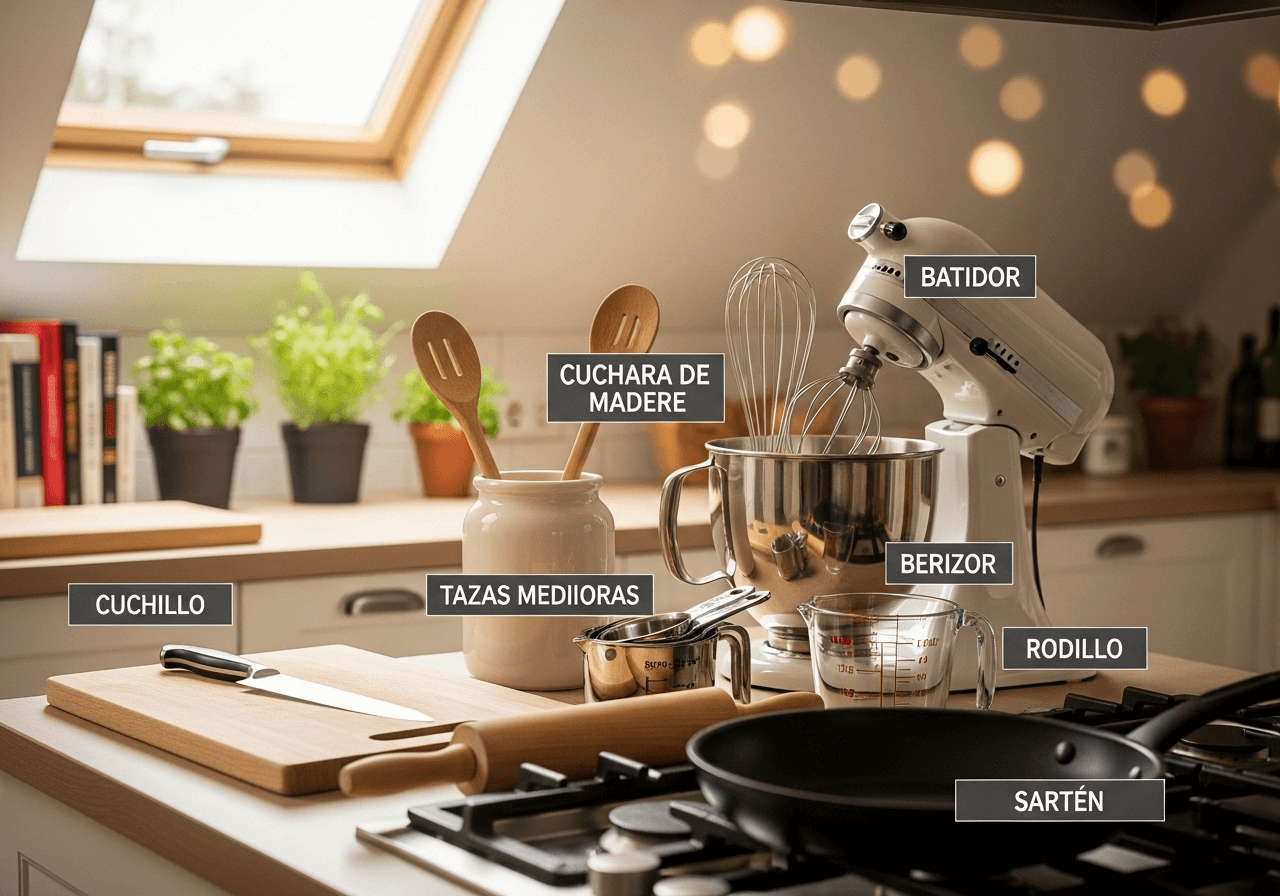
Common kitchen tools in Spanish include cuchillo (knife), cuchara (spoon), tenedor (fork), sartén (pan), and olla (pot). Learning these terms helps in cooking and shopping in Spanish-speaking countries.
How Do You Say “kitchen Utensils” In Spanish?
“Kitchen utensils” in Spanish is “utensilios de cocina. ” This term covers all tools used for cooking and food preparation.
Which Spanish Words Describe Cutting Tools In The Kitchen?
Cutting tools in Spanish include cuchillo (knife), tijeras (scissors), and pelador (peeler). These are essential for chopping, slicing, and peeling.
How To Say “measuring Tools” In Spanish Kitchen?
Measuring tools in Spanish are called “herramientas de medición. ” Examples are taza medidora (measuring cup) and cucharas medidoras (measuring spoons).
Conclusion
Exploring kitchen tools in Spanish enhances your culinary vocabulary. It adds cultural depth to cooking experiences. You can impress friends with new terms. Learning these words also aids in traveling. Spanish-speaking countries offer rich culinary traditions. Understanding kitchen terms helps in markets and restaurants.
Knowledge of these tools bridges language gaps. It enhances communication with Spanish speakers. This learning journey is both fun and practical. Keep practicing these words. Soon, they will become second nature. Enjoy your time in the kitchen with these new terms!

Sophia Martinez is a culinary lifestyle writer and product reviewer for DiningGadgets.com. Passionate about blending style with functionality, she explores the latest dining essentials, kitchen décor, and cleaning hacks that transform everyday cooking spaces. With a background in home organization and design, Sophia brings readers expert advice on creating beautiful, practical kitchens that truly feel like the heart of the home.