

Are you ready to transform your kitchen with a fresh, stylish look? Installing tile on your kitchen wall is a simple way to add personality and protect your space from spills and stains.
But if you’ve never done it before, the thought of cutting tiles and applying grout might feel overwhelming. Don’t worry—this guide breaks down every step clearly, so you can confidently tackle the project yourself. Keep reading, and you’ll discover how easy it is to create a beautiful, durable kitchen wall that will impress everyone who walks in.
Preparing The Wall Surface
Preparing the wall surface is essential for a successful kitchen tile installation. A clean, smooth, and well-marked wall ensures tiles stick properly and look great. Taking time to prepare the wall avoids future problems like tiles falling off or uneven surfaces.
Cleaning And Repairing
Start by removing grease, dirt, and dust from the wall. Use a mild detergent and warm water to wash the surface. Let it dry completely before proceeding.
Check for holes, cracks, or loose plaster. Fill small holes with spackling paste and smooth it out. For larger damage, use a patch or replace the damaged drywall section. Sand rough spots until the surface feels even and smooth.
Measuring And Marking
Measure the wall height and width to know how many tiles you need. Mark a level starting line using a pencil and a spirit level. This line will guide the first row of tiles.
Mark vertical and horizontal reference lines to keep tiles straight. Use a tape measure and level to ensure accuracy. These lines help maintain even spacing and alignment during installation.
Gathering Tools And Materials
Collect all necessary tools before starting. Common tools include:
- Tile adhesive or thin-set mortar
- Notched trowel
- Tile spacers
- Tile cutter or wet saw
- Spirit level
- Pencil and tape measure
- Rubber grout float
- Sponge and bucket
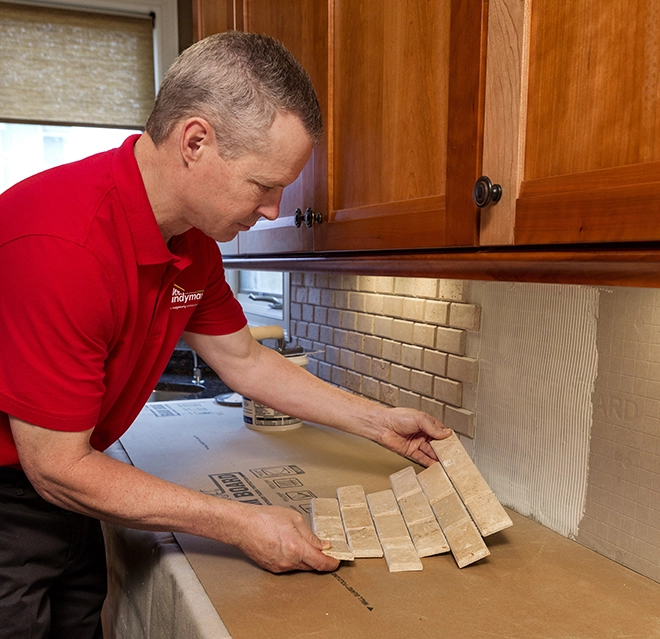
Choose tiles suitable for kitchen walls, considering size, material, and style. Having everything ready speeds up the installation and keeps the process smooth.
Credit: www.mrhandyman.com
Choosing The Right Tiles
Choosing the right tiles for your kitchen wall is a crucial step that affects both the look and durability of your space. The tiles you pick should not only match your style but also stand up to daily kitchen use. Think about how often you cook, clean, and how much moisture your walls face.
Tile Types For Kitchen Walls
Not all tiles are created equal, especially for kitchen walls. Ceramic and porcelain tiles are popular because they resist water and stains well. Glass tiles add a modern touch and are easy to wipe clean but can be more fragile.
Natural stone tiles like marble or slate offer a unique look but need sealing to prevent stains. If you want something budget-friendly and durable, vinyl tiles can also work. Consider the maintenance each tile type requires and how it fits your lifestyle.
Selecting Colors And Patterns
Your tile color and pattern set the tone of your kitchen. Lighter tiles can make a small kitchen feel bigger and brighter, while darker tiles add warmth and hide dirt better. Think about the colors of your cabinets, countertops, and appliances.
Patterns can be simple, like subway tiles for a classic look, or bold, like geometric shapes that stand out. Would you prefer a uniform look or a mix of colors and shapes to create an eye-catching backsplash? Your choice here can either make your kitchen feel calm or energizing.
Applying Adhesive
Applying adhesive is a key part of installing tile on a kitchen wall. It holds the tiles firmly in place and ensures they last a long time. The right adhesive and proper application prevent tiles from slipping or falling off. Taking time to prepare and spread the adhesive carefully leads to a smooth and even surface for the tiles.
Mixing The Adhesive
Start by reading the adhesive package instructions. Use clean water and a clean bucket for mixing. Add the powder slowly to the water while stirring. Mix until the adhesive becomes smooth and lump-free. Let it rest for a few minutes. Stir again before using to keep the consistency even.
Spreading Techniques
Use a notched trowel to spread the adhesive on the wall. Hold the trowel at a 45-degree angle for best results. Apply the adhesive in small sections. This keeps it fresh and sticky when placing tiles. Move the trowel in straight lines to create grooves. These grooves help the tiles stick better.

Credit: www.create-enjoy.com
Laying The Tiles
Laying tile on your kitchen wall requires careful attention to detail. How you start and maintain alignment can make or break the entire look. Small mistakes early on can cause big headaches later, so getting these basics right is crucial.
Starting Point And Alignment
Choose a starting point that is visible and easy to work from, usually the center of the wall or above the sink. Mark a straight line using a level to keep your tiles perfectly aligned horizontally. This line acts as your guide, helping you avoid a crooked tile layout that’s hard to fix once the adhesive sets.
Try to work from the bottom up, especially if your wall isn’t perfectly flat. This technique keeps gravity on your side, preventing tiles from sliding down. Ask yourself: Does this starting point minimize awkward cuts on edges or corners? Adjust if necessary.
Spacing And Using Tile Spacers
Consistent spacing between tiles is key to a professional finish. Use tile spacers to keep gaps uniform and ensure grout lines look clean and even. Without spacers, it’s easy for gaps to become uneven, making the wall look messy.
Spacers come in different sizes, so pick one that matches the grout width you want—usually 1/8 or 1/4 inch for kitchen walls. After laying a few tiles, double-check the spacing before the adhesive dries. This simple step saves time on rework and grout application.
Cutting Tiles For Edges
Tiles rarely fit perfectly at edges and corners. You’ll need to cut tiles to size using a tile cutter or wet saw. Measure twice and cut once—accurate measurements prevent wasted tiles and frustration.
Don’t rush the cutting process. Smooth the cut edges with a tile file to avoid sharp corners that could cause injury or damage the grout lines. Wondering how to handle awkward shapes around outlets or switches? Use a tile nipper for small adjustments after the main cut.
Grouting The Tiles
Grouting the tiles is a key step in finishing your kitchen wall tile installation. Grout fills gaps between tiles, securing them and preventing water from seeping behind. It also gives the wall a clean, polished look. Proper grouting ensures durability and enhances the tile’s appearance.
Choosing The Right Grout
Select grout based on your tile type and wall conditions. There are two main types:
- Sanded grout:Best for gaps wider than 1/8 inch. It contains sand for strength.
- Unsanded grout:Ideal for narrow gaps under 1/8 inch. It is smooth and easy to apply.
Consider grout color carefully. Choose a shade that complements or contrasts your tiles for style. Also, pick grout with mold and stain resistance for kitchen walls.
Applying And Cleaning Grout
Spread grout using a rubber float. Hold it at a 45-degree angle and press grout into gaps. Move diagonally across tiles to avoid pulling grout out.
Remove excess grout by holding the float at a sharp angle. Wipe tiles gently with a damp sponge. Rinse sponge often to keep it clean.
Allow grout to set for about 10 to 15 minutes. Then, polish the tiles with a dry cloth to remove grout haze. Let grout cure fully before exposing it to moisture or heavy use.
Finishing Touches
Finishing touches are what truly bring your kitchen wall tile project to life. These final steps protect your work and enhance its appearance, making your kitchen look polished and professional. Paying attention to these details ensures your tiles stay beautiful and durable for years.
Sealing The Grout
Sealing grout is essential to prevent stains and moisture from seeping in. After the grout has fully dried, apply a grout sealer using a small brush or applicator. Make sure to cover all grout lines evenly, and wipe off any excess sealer promptly.
Have you noticed how unsealed grout can discolor quickly in busy kitchens? Taking the time to seal it properly saves you from tough cleaning later. Reapply the sealer every year or two to maintain the protection.
Cleaning And Polishing
Once your grout is sealed, clean the tiles with a gentle cleaner to remove any haze or residue. Use a soft cloth or sponge to avoid scratching the tile surface. Polishing tiles with a microfiber cloth can enhance their shine and make your kitchen walls pop.
Try to avoid abrasive cleaners; they can dull your tiles and damage grout. Instead, a mix of warm water and mild dish soap usually does the trick. How much better does your kitchen look after just a quick polish?
Maintaining Your Kitchen Wall Tiles
Regular maintenance keeps your kitchen tiles looking fresh and extends their lifespan. Wipe down the tiles daily or weekly to prevent grease and dirt buildup. For grout, use a grout brush and mild cleaner to keep it bright without harsh scrubbing.
Consider setting a simple routine for tile care—small efforts over time prevent costly repairs. What’s your plan to keep your kitchen wall tiles looking great long-term?

Credit: stoneandtileprojects.com.au
Frequently Asked Questions
How Do I Prepare The Kitchen Wall For Tiling?
To prepare your kitchen wall, clean the surface thoroughly. Remove any grease, dust, or old adhesives. Patch up any holes or cracks with filler. Ensure the wall is dry and even. Apply a suitable primer to enhance tile adhesion. This preparation ensures tiles stick well and last longer.
What Tools Are Needed To Install Kitchen Tiles?
You’ll need a tile cutter, notched trowel, spirit level, and spacers. Use a grout float for grouting and a sponge for cleaning. A tile adhesive, measuring tape, and safety gear are also essential. These tools ensure precise installation and professional results.
How Long Does It Take To Tile A Kitchen Wall?
Tiling a kitchen wall typically takes one to three days. The duration depends on wall size and complexity. Preparation and drying time are crucial factors. Rushing can lead to poor results. Allow time for adhesive and grout to cure properly for lasting durability.
Can I Tile Over Existing Kitchen Tiles?
Yes, you can tile over existing tiles if they’re in good condition. Ensure the surface is clean, dry, and even. Remove any loose tiles and repair them. Use a suitable adhesive for tile-on-tile installation. This method saves time and avoids messy demolition.
Conclusion
Installing tile on your kitchen wall is a simple and rewarding task. Take your time to measure and plan carefully. Use the right tools and materials for the best results. Clean the surface well before starting to stick the tiles.
Work in small sections to keep everything neat. Once done, grout the tiles and wipe off the extra. Enjoy the fresh look and easy-to-clean surface. With patience and care, anyone can do this project well. Why wait? Transform your kitchen wall today!
