

Have you ever noticed a row of buttons or icons at the top or side of your screen when using software or a website? That’s called a toolbar, and it’s designed to make your life easier.
But what exactly is a toolbar, and why should you care about it? Understanding this simple tool can save you time and frustration every day. Keep reading, and you’ll discover how toolbars work and how they can help you get things done faster and smarter.

Credit: www.reddit.com
What A Tool Bar Does
A tool bar is a small area on a computer screen that holds buttons and icons. It helps users quickly access important features or tools in software. Tool bars make using programs faster and easier. They keep useful commands visible and ready to use.
Users can click buttons on the tool bar to perform tasks without opening menus. This saves time and reduces the number of steps needed to complete an action. Tool bars also organize tools in a clear and simple way. This improves the overall user experience.
Key Features Of A Tool Bar
- Contains icons or buttons for quick access
- Usually found at the top or side of a window
- Shows shortcuts to common commands
- Can be customized by adding or removing tools
- Helps users work faster and more efficiently
- Easy to use, even for beginners
Common Tool Bar Functions
- Opening, saving, and printing documents
- Copying, cutting, and pasting text or objects
- Undoing and redoing recent actions
- Changing font style, size, or color
- Zooming in and out of content
- Accessing help or settings quickly
Types Of Tool Bars
Tool bars appear in many software and apps. They help users work faster by offering quick access to tools. Different types of tool bars serve different purposes. Understanding these types helps you use software more efficiently.
Standard Tool Bars
Standard tool bars include common commands like save, open, and print. They are found in almost all programs. These tool bars make basic tasks easy and quick. Icons are clear and simple to understand.
Formatting Tool Bars
Formatting tool bars allow users to change text style and layout. You can bold, italicize, or underline text quickly. They also let you change font size and color. These tool bars help create neat and readable documents.
Custom Tool Bars
Custom tool bars can be created by users to fit their needs. You choose which tools appear on the bar. This makes your work faster by keeping favorite tools nearby. Custom tool bars improve productivity and comfort.
Where To Find Tool Bars
Tool bars are easy to spot once you know where to look. They appear in many places to help users perform tasks quickly. Finding tool bars saves time and makes using software or websites simpler.
Tool Bars In Software Applications
Most software programs show tool bars near the top of the window. They contain buttons and icons for common actions. For example, word processors have tool bars with options like save, print, and font style.
Tool bars may also appear on the side or bottom, depending on the software. Some programs allow users to customize or move tool bars. This helps users keep their favorite tools within easy reach.
Tool Bars On Websites
Websites often use tool bars to organize navigation links and features. These tool bars usually appear at the top or side of the page. They help visitors find pages like home, about, contact, or shop.
Some websites include tool bars with social media buttons, search fields, or user menus. These tool bars improve browsing and make site features easy to access. They often stay visible while scrolling for convenience.
Credit: techterms.com
How To Customize A Tool Bar
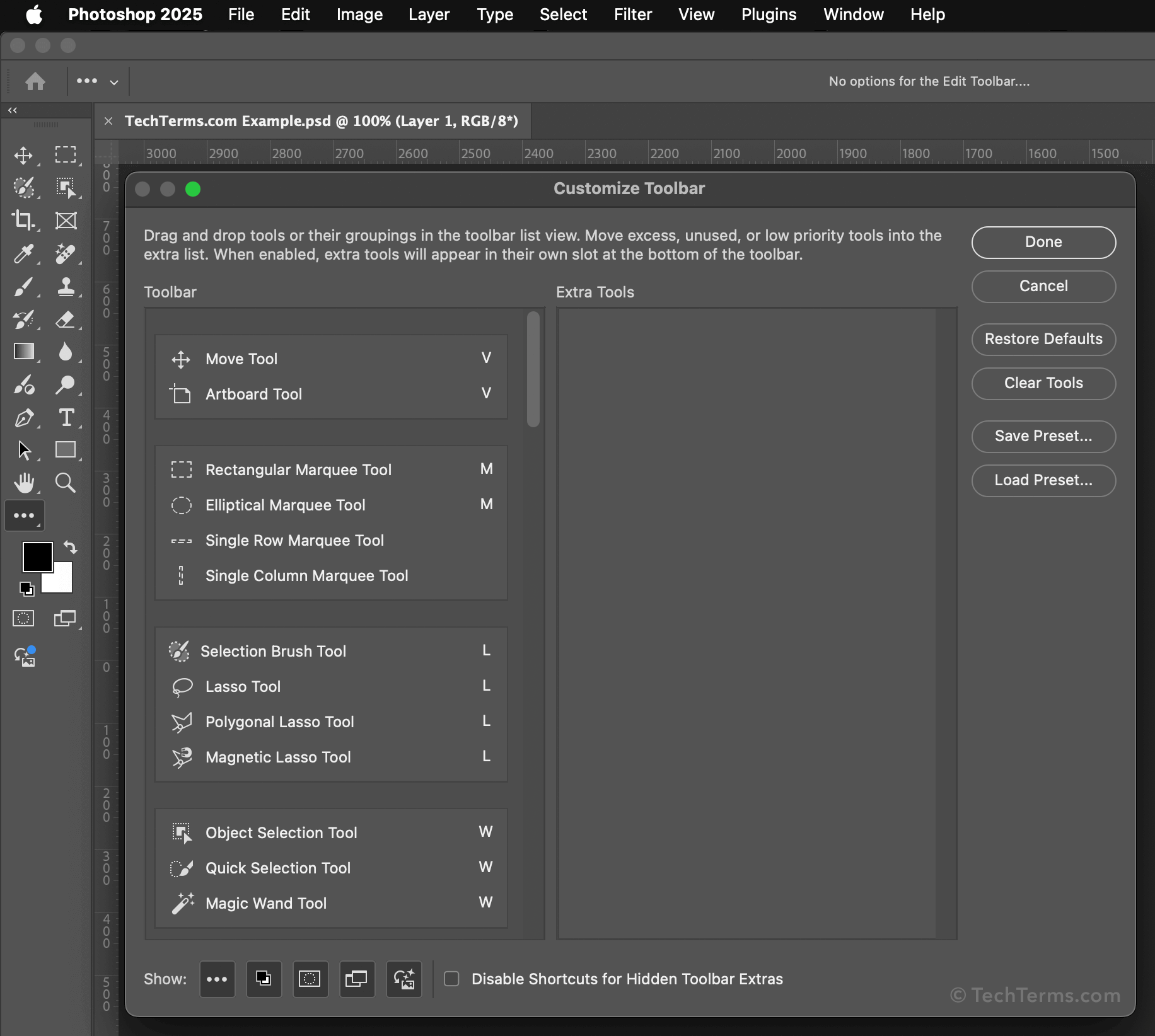
Customizing a tool bar helps you work faster and easier. It lets you keep the tools you use most often close at hand. Changing the tool bar can make your computer or software feel more personal. You decide what buttons to show and where they sit.
Adding And Removing Buttons
To add buttons, open the tool bar settings or customization menu. Look for an option like “Add buttons” or “Customize toolbar.” A list of available buttons appears. Click on the buttons you want to add. They will appear on your tool bar immediately.
Removing buttons is just as simple. Select the button on the tool bar. Then click “Remove” or drag it off the tool bar area. This clears space and keeps your tool bar tidy. Only keep the buttons you need.
Rearranging Tool Bar Items
Rearranging items lets you place buttons in an order that fits your workflow. Click and hold the button you want to move. Drag it to the new spot on the tool bar. Release the mouse button to drop it there.
This method works on most software and operating systems. You can group similar tools together. Or put the most used buttons near the left or right edge. Make your tool bar simple and easy to use.
Benefits Of Using A Tool Bar
Using a tool bar can significantly enhance the way you interact with software or websites. It organizes essential functions in a compact space, making your tasks smoother and faster. Understanding the benefits of a tool bar helps you decide how to customize your workspace for better results.
Improving Workflow Efficiency
A tool bar groups frequently used commands, so you don’t waste time searching through menus. Imagine working on a project where you need to switch between tools often; having them all visible speeds up your process.
It reduces distractions by keeping your focus on the task instead of on finding options. Have you noticed how much longer it takes when you have to hunt for a function every time? A tool bar eliminates that delay, letting you stay in the flow.
Quick Access To Tools
Tool bars provide instant access to the tools you use most. This convenience saves you from multiple clicks and page loads, which can quickly add up during a busy day.
You can often customize tool bars to fit your personal preferences, meaning the tools you need are always at your fingertips. Think about the last time you struggled to find a setting buried deep in menus — a tool bar could have prevented that frustration.
Common Issues And Fixes
Tool bars help users access features quickly. Sometimes, they stop working properly. Common problems include the tool bar not showing or buttons not responding. These issues can disrupt your workflow and cause frustration. Fixing them usually involves simple steps anyone can follow.
Tool Bar Not Showing
The tool bar might disappear due to software glitches or incorrect settings. Check if the tool bar is hidden or minimized. Look for options like “View” or “Settings” in the program menu. Sometimes, restarting the application or computer solves the issue. Make sure the software is updated to the latest version. Outdated programs can cause display problems.
Buttons Not Responding
Buttons on the tool bar may stop working due to frozen software or conflicts. Try closing and reopening the program. Clear the program’s cache or temporary files, which can slow down response. Disable any recently added plugins or extensions, as they may interfere. If the problem continues, reinstalling the software can help restore button functions.

Credit: en.wikipedia.org
Frequently Asked Questions
What Is A Toolbar In Software Applications?
A toolbar is a user interface element with clickable icons or buttons. It provides quick access to common functions and tools. Toolbars improve efficiency by allowing users to perform actions without navigating menus. They are customizable and found in most software applications for easier navigation.
How Does A Toolbar Improve User Experience?
A toolbar enhances usability by offering immediate access to frequently used commands. It reduces the need to search through menus, saving time. Toolbars also help users learn software faster by displaying important functions upfront. Overall, they streamline workflows and increase productivity in digital environments.
Can Toolbars Be Customized By Users?
Yes, many toolbars allow customization. Users can add, remove, or rearrange buttons based on preferences. Customizable toolbars help tailor the interface to specific tasks or workflows. This flexibility increases user satisfaction and efficiency by providing relevant tools at hand.
What Are Common Types Of Toolbars?
Common toolbar types include standard, formatting, and navigation toolbars. Standard toolbars contain basic functions like save and print. Formatting toolbars offer text styling options. Navigation toolbars assist in browsing or moving through content. Each type serves a specific purpose to aid user tasks.
Conclusion
A toolbar helps you find tools quickly on your screen. It saves time and makes tasks easier. You can customize it to fit your needs. Many programs use toolbars for quick access. Knowing what a toolbar is helps you work better on a computer.
It is a simple but useful part of software. Try using a toolbar to see how it helps you. Simple and handy. That is what a toolbar is all about.

Sophia Martinez is a culinary lifestyle writer and product reviewer for DiningGadgets.com. Passionate about blending style with functionality, she explores the latest dining essentials, kitchen décor, and cleaning hacks that transform everyday cooking spaces. With a background in home organization and design, Sophia brings readers expert advice on creating beautiful, practical kitchens that truly feel like the heart of the home.