

Silver flatware is beautiful and often used for special meals. But not all silver flatware is the same. Some are made of solid silver, called sterling. Others are made by covering a cheaper metal with a thin layer of silver. This is called silver plate.
It is important to know the difference. Sterling flatware usually costs more. Silver plate can look like sterling but it is less valuable. This guide will help you tell silver plate from sterling flatware easily.
Credit: www.silver-collector.com
What is Sterling Flatware?
Sterling flatware is made from 92.5% pure silver. The rest is usually copper or another metal. This mix makes the silver stronger.
Sterling silver is solid silver all the way through. It does not have another metal under the surface.
Because it is mostly silver, sterling flatware is heavier. It is also more expensive and lasts longer.
What is Silver Plate Flatware?
Silver plate flatware is made by putting a thin layer of silver on top of a cheaper metal. This cheaper metal is often nickel, copper, or steel.
The silver layer on silver plate flatware is very thin. It can wear off over time and show the metal underneath.
Silver plate flatware is lighter and costs less than sterling.
How to Tell the Difference Between Silver Plate and Sterling
Here are some easy ways to tell silver plate from sterling flatware.
1. Look For Markings On The Flatware
Most sterling flatware has marks that show it is real silver. These marks are called hallmarks or stamps.
Common sterling marks include:
- “Sterling” – means 92.5% silver
- “925” – means 925 parts silver out of 1000
- “Ster” – short for sterling
If you see these marks, the flatware is sterling silver.
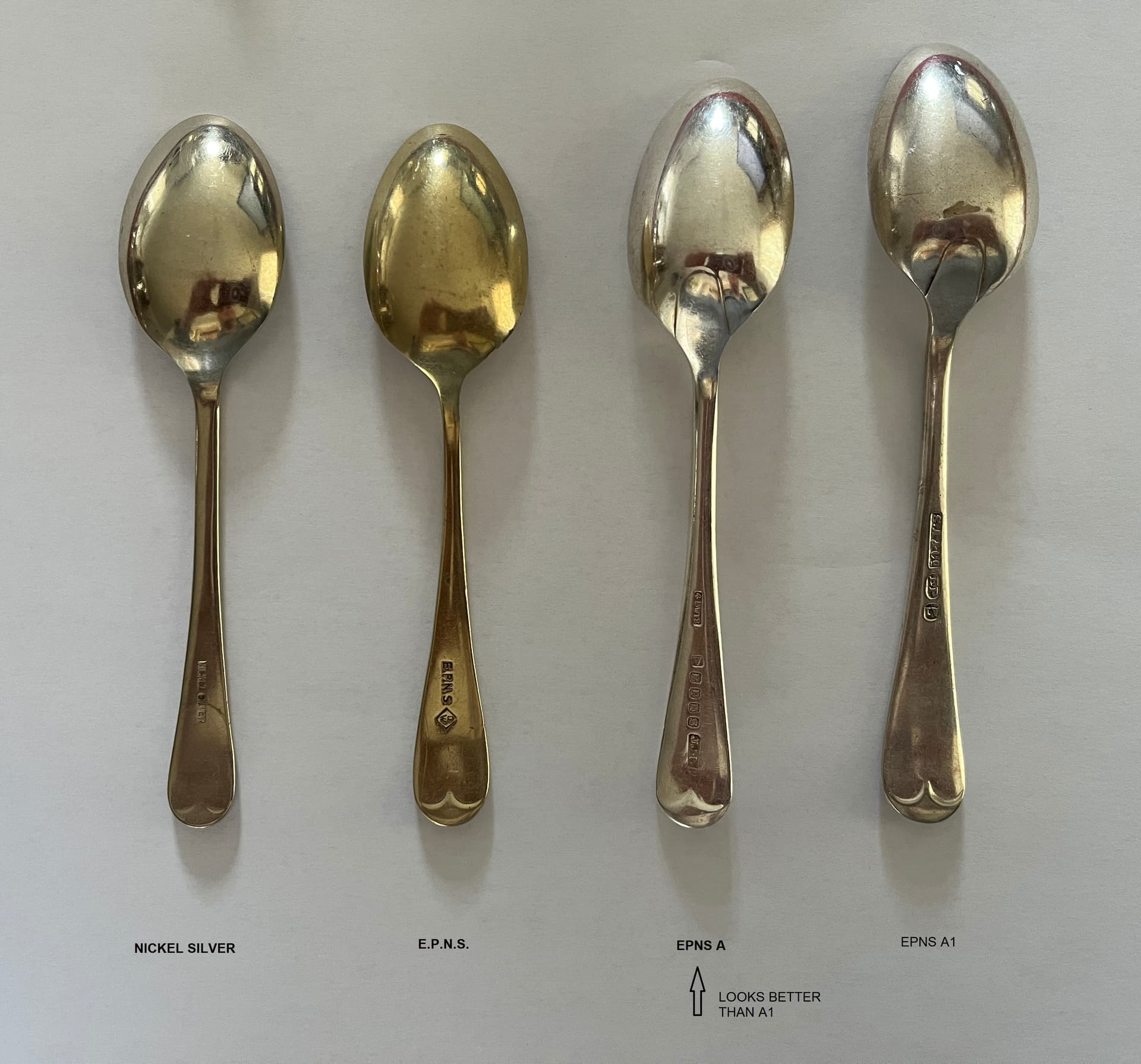
Silver plate flatware usually has different marks like:
- “EPNS” – Electro Plated Nickel Silver
- “EP” – Electro Plated
- “Silver Plate”
These marks show the flatware is silver plated, not solid silver.
2. Check The Weight
Sterling silver flatware feels heavier. It is solid silver and dense.
Silver plated flatware is lighter. The base metal is usually lighter than silver.
Hold the piece in your hand. Does it feel heavy? It might be sterling. Light? It is likely silver plate.
3. Look At The Color
Sterling silver has a soft, shiny white color. It does not look too bright or too dull.
Silver plate can sometimes look brighter or shinier because of the silver layer.
Over time, silver plate may show the metal underneath. This can look darker or different in color.
Check the edges and places that touch the table. If you see a different color, it is probably silver plate.
4. Test For Tarnish
Both sterling and silver plate can tarnish. Tarnish is a dark layer that forms on silver.
Tarnish on sterling silver looks smooth and even. It can be cleaned easily.
Tarnish on silver plate can look patchy. Sometimes the base metal may show through after cleaning.
5. Use A Magnet
Silver is not magnetic. If a magnet sticks to your flatware, it is not sterling silver.
Silver plate often has a base metal that a magnet will attract.
This test is quick and easy. But not 100% sure because some base metals are not magnetic.
6. Try The Sound Test
Tap the flatware gently. Sterling silver makes a clear, ringing sound.
Silver plate often sounds dull or flat because of the base metal inside.
This test can help but needs practice to hear the difference.
7. Check For Wear Or Damage
Silver plate can wear off over time. Look for spots where silver is missing.
If you see a different metal under the silver, it is silver plate.
Sterling flatware will not show a different metal under the surface.

Credit: aupreciousmetals.com
Table Summary: Sterling vs Silver Plate
| Feature | Sterling Silver | Silver Plate |
|---|---|---|
| Silver Content | 92.5% pure silver | Thin layer of silver on base metal |
| Markings | “Sterling,” “925,” “Ster” | “EPNS,” “EP,” “Silver Plate” |
| Weight | Heavier | Lighter |
| Color | Soft white shine | Brighter or dull; may show base metal |
| Tarnish | Even, smooth, easy to clean | Patchy, may reveal base metal |
| Magnet Test | No magnetic attraction | Often magnetic |
| Sound | Clear ringing | Dull or flat |
| Wear | No silver wear off | Silver layer may wear off |
Why Does It Matter?
Knowing if your flatware is sterling or silver plate helps you understand its value.
Sterling silver flatware is often worth more money. It can also last for many years.
Silver plate flatware looks nice but is less expensive. It may need replacing after some time.
If you want to sell or buy silver flatware, knowing the difference is important.
Tips for Care
Take care of your silver flatware to keep it beautiful.
- Wash flatware by hand with mild soap.
- Dry with a soft cloth right after washing.
- Store silver flatware in dry places.
- Use a silver polish to clean tarnish.
- Avoid harsh chemicals or dishwasher use.
Summary
Telling silver plate from sterling flatware is easy when you know what to look for.
Check the markings first. Look for “Sterling” or “925” for real silver.
Use weight, color, magnet test, and sound to help.
Watch for wear and tarnish to tell if silver is only a thin layer.
With these tips, you can tell your flatware’s true type.
Frequently Asked Questions
How Can I Identify Silver Plate From Sterling Flatware?
Look for stamps: “925” or “Sterling” means sterling; “EPNS” or no mark means silver plate.
What Marks Show Sterling Silver Flatware?
Sterling silver flatware usually has “925,” “Sterling,” or a lion passant mark.
Does Silver Plate Wear Off Over Time?
Yes, silver plate can wear off, showing the base metal underneath.
Can A Magnet Test Distinguish Silver Plate From Sterling?
Yes, sterling silver is not magnetic; some base metals under silver plate may be.

Ethan Cole is a kitchen innovation enthusiast and food technology writer at DiningGadgets.com. With over 8 years of experience reviewing cookware, smart kitchen tools, and design trends, he helps readers discover gadgets that make cooking easier and dining more enjoyable. When he’s not testing the latest kitchen appliances, Ethan enjoys experimenting with recipes and sharing practical tips for modern homes.