

Are you ready to give your kitchen a fresh, stylish look without hiring a pro? Installing a wall tile kitchen backsplash is easier than you might think.
With the right steps, you can transform your space and add a splash of personality that makes cooking and cleaning more enjoyable. In this guide, you’ll discover simple, clear instructions to help you tackle the job confidently. Keep reading, and by the end, you’ll know exactly how to create a beautiful backsplash that fits your style and budget.
Your kitchen makeover starts here!

Credit: stoneandtileprojects.com.au
Gathering Materials
Gathering the right materials is the first step in installing a kitchen backsplash. Having everything ready makes the process smooth and efficient. This section helps you understand the tools and supplies you need. It also guides you in selecting the right tiles, adhesive, and grout for your kitchen.
Essential Tools
Having the proper tools helps you work safely and accurately. Basic tools include:
- Measuring tape
- Level
- Tile cutter or wet saw
- Notched trowel
- Rubber grout float
- Sponges and buckets
- Safety goggles and gloves
- Painter’s tape
Each tool has a specific job to make tile installation easier.
Choosing The Right Tiles
Pick tiles that match your kitchen’s style and function. Consider size, color, and texture. Ceramic and porcelain tiles are popular for backsplashes. They resist water and stains. Glass tiles add shine and brightness. Make sure tiles are easy to clean and durable. Buy extra tiles to cover mistakes and future repairs.
Selecting Adhesive And Grout
Choose adhesive that works with your tile type and wall surface. Thin-set mortar suits most ceramic and porcelain tiles. Mastic adhesive works well for dry, smooth walls. For grout, pick a color that complements your tile. Sanded grout fits wider joints. Unsanded grout is best for narrow gaps. Seal grout after installation to prevent stains and moisture damage.
Preparing The Wall
Preparing the wall is a crucial step before installing your kitchen backsplash tiles. A well-prepared surface ensures the tiles stick properly and look great for years. It helps avoid common problems like peeling or uneven tiles. Start by cleaning and smoothing the wall. Then measure and mark the layout to guide your tile placement. Lastly, protect the surrounding areas to keep your kitchen clean and damage-free.
Cleaning And Smoothing Surface
Clean the wall thoroughly to remove grease, dust, and dirt. Use a mild detergent and water. Rinse well and let it dry completely. Check for bumps, holes, or cracks. Fill any holes with spackle or wall filler. Sand the surface smooth after it dries. A flat, clean wall helps the tile adhesive stick better.
Measuring And Marking Layout
Measure the area where you will install the backsplash. Use a tape measure for accuracy. Mark the center point of the wall with a pencil. Draw horizontal and vertical guidelines using a level. These lines help keep your tiles straight. Plan the tile layout to avoid small cuts at edges. Mark tile positions lightly to guide your work.
Protecting Surrounding Areas
Cover countertops and cabinets with plastic sheets or drop cloths. Tape the edges to keep dust and adhesive off surfaces. Remove or cover electrical outlet covers. Protect the floor with cardboard or old towels. This step saves time cleaning after installation. Keeping the area protected prevents damage and mess.
Cutting Tiles
Cutting tiles is a crucial part of installing a kitchen backsplash. It allows you to fit tiles perfectly around outlets, corners, and edges, ensuring a professional finish. Handling this step carefully will save you time and prevent costly mistakes.
Measuring For Cuts
Accuracy is key when measuring tiles for cuts. Use a tape measure or a ruler to mark the exact spot where the tile needs to be trimmed. Double-check your measurements before making any cuts to avoid wasting tiles.
Mark the cutting line clearly with a pencil or a washable marker. Think about the grout space too—usually, you need to leave a small gap between tiles. Have you ever measured twice and still ended up with a tile that didn’t fit? Taking your time here pays off.
Using Tile Cutters
Manual tile cutters are great for straight cuts on ceramic or porcelain tiles. Place the tile on the cutter, align the scoring wheel with your mark, and apply steady pressure to score the surface. Then snap the tile along the scored line by pressing down on the breaker bar.
For irregular or curved cuts, a wet saw is a better tool. It uses a diamond blade and water to cool the tile and reduce dust. If you haven’t used one before, practice on spare tiles to get comfortable with controlling the saw. Safety glasses and gloves are must-haves here.
Handling Corner And Edge Tiles
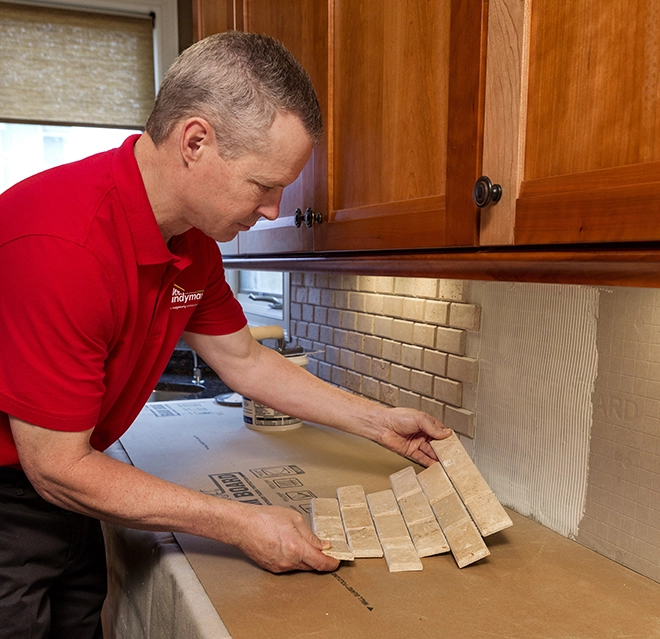
Corner and edge tiles often require not just straight cuts but also notches or complex shapes to fit around outlets or cabinets. Use a tile nipper to carefully chip away small sections where needed. This tool gives you more control on detailed cuts.
Edge tiles might also need smoothing after cutting. Use a rubbing stone or sandpaper to soften sharp edges and avoid injury. Have you noticed how a clean edge makes the entire backsplash look more polished? Paying attention to these details makes a big difference.
Credit: www.mrhandyman.com
Applying Adhesive
Applying adhesive correctly is key to a durable and beautiful kitchen backsplash. It ensures your tiles stay put and look great for years. Let’s break down how to handle this crucial step with confidence and ease.
Choosing The Right Adhesive
Not all adhesives are built the same. For kitchen backsplashes, look for a high-quality thin-set mortar or mastic designed for wall tiles.
Thin-set mortar works well with ceramic, porcelain, and natural stone tiles, especially in moist areas. Mastic can be easier to use but may not hold up as well in humid or hot environments.
Ask yourself: Does your backsplash face steam or water often? If yes, opt for a waterproof adhesive to avoid future peeling or mold.
Spreading Technique
Use a notched trowel to spread your adhesive evenly. The size of the notches depends on your tile size—larger tiles need deeper notches for better coverage.
Hold the trowel at a 45-degree angle to create ridges that help the tile grip the wall. Don’t spread too much adhesive at once; it can dry before you place the tiles.
I’ve learned that smooth, consistent ridges make a big difference. Uneven adhesive leads to loose tiles and a bumpy surface.
Working In Small Sections
Apply adhesive in small, manageable sections—around 2 to 3 square feet at a time. This keeps the adhesive fresh and sticky when you press the tiles in place.
Trying to cover a large area at once often results in dried adhesive and poor tile adhesion. You want the tiles to bond firmly right away.
Think about your pace: How quickly can you lay tiles before the adhesive starts to skin over? Adjust your section size accordingly to stay ahead.
Setting Tiles
Setting tiles for your kitchen backsplash is a crucial stage that shapes the final look of your space. It requires precision and patience to ensure that every tile fits perfectly and looks professional. How you handle alignment and spacing can make the difference between a sleek finish and a chaotic mess.
Aligning And Spacing Tiles
Start by placing your first tile at the center of the backsplash area or along a guideline you’ve marked. Keeping tiles aligned means paying attention to both horizontal and vertical lines. A small misalignment early on can throw off the entire layout, so take your time to position the first few tiles carefully.
Consistent spacing between tiles is key to achieving a uniform look. This space will later hold the grout, so think about how wide or narrow you want the grout lines to be. Are you aiming for a modern thin grout line, or something more traditional and wider?
Using Spacers
Tile spacers are simple plastic tools that help keep your grout lines even. Insert them between tiles as you set each one. This prevents uneven gaps and saves you the hassle of adjusting tiles repeatedly.
If you’ve ever tried to eyeball the spacing without spacers, you know how quickly things can get uneven. Using spacers feels like having a built-in ruler that guarantees consistency. Keep a supply of various sizes handy, so you can choose the perfect spacing for your tiles.
Checking Level And Adjustments
After setting a few tiles, grab a level to check if your tiles are flat and even. Even a slight tilt can be noticeable once the backsplash is complete. Place the level across the tiles horizontally and vertically to spot any unevenness.
Don’t hesitate to make small adjustments before the adhesive sets. Pushing or pulling tiles gently can fix minor misalignments early. Have you ever noticed how a perfectly level backsplash can elevate the entire kitchen’s appearance?

Credit: www.youtube.com
Grouting Tiles
Grouting tiles is a crucial step that transforms your backsplash from a simple arrangement of tiles into a polished, professional-looking surface. It fills the gaps between tiles, providing stability and preventing dirt or moisture from seeping behind. Done right, grouting enhances the overall appearance and durability of your kitchen backsplash.
Mixing Grout
Start by choosing the right grout for your tile type and color preference. Powdered grout needs to be mixed with water to create a smooth, peanut butter-like consistency.
Use a clean bucket and stir thoroughly to avoid lumps. Let the mixture sit for about 5 minutes, then stir again before applying.
Applying And Filling Gaps
Use a rubber grout float to spread the grout diagonally across the tiles. This angle helps push grout deep into the gaps rather than just sitting on top.
Apply firm pressure to ensure all spaces are completely filled. Don’t rush—missing even small gaps can lead to water damage later.
Cleaning Excess Grout
After about 15-30 minutes, use a damp sponge to gently wipe away excess grout from the tile surfaces. Be careful not to pull grout from the gaps.
Rinse your sponge frequently and change the water as needed to avoid smearing grout back onto the tiles.
Have you noticed how a clean grout line instantly makes the whole backsplash pop? Taking the time to clean carefully really pays off in the final look.
Sealing And Finishing
Sealing and finishing your kitchen backsplash is a crucial step that protects your tiles and grout from stains, moisture, and everyday wear. It also enhances the overall look, making your backsplash shine and last longer. Taking your time here ensures your hard work stays beautiful for years.
When To Seal
You should seal your backsplash once the grout has fully dried. This usually takes about 48 to 72 hours, but always check the grout manufacturer’s instructions. Sealing too early can trap moisture inside, which might cause damage over time.
Ask yourself: is your grout dry to the touch and not crumbly? If yes, it’s time to seal. Waiting might feel frustrating, but patience pays off with a stronger, more durable backsplash.
Applying Sealant
Use a high-quality grout sealant designed for kitchen use. Apply it evenly with a small brush or a sponge applicator, making sure to cover all grout lines thoroughly. Avoid pooling by wiping off any excess sealant within a few minutes.
Work in small sections so the sealant doesn’t dry before you wipe it. Remember, a thin, even layer works best — too much sealant can leave a sticky residue. Don’t forget to open windows or use a fan to ventilate the area while applying.
Final Touches And Cleanup
Once the sealant is dry, give your tiles a good wipe with a soft cloth to remove any haze. Check for any missed spots in the grout and reapply sealant if necessary. This step ensures your backsplash looks clean and polished.
Clean your tools immediately after use to avoid hardened sealant buildup. Take a moment to admire your work—your kitchen now has a backsplash that’s both beautiful and protected.
Common Mistakes To Avoid
Installing a kitchen backsplash looks easy, but many make common errors. These mistakes can cause delays, extra costs, and a poor finish. Avoiding these errors helps keep your project smooth and your backsplash beautiful.
Incorrect Measurements
Measuring wrong leads to wasted tiles and uneven layouts. Always measure the wall space carefully before buying tiles. Double-check the height and width, including outlets and corners. Cutting tiles without exact sizes causes gaps or overlaps.
Uneven Adhesive Application
Applying adhesive unevenly causes tiles to stick poorly or fall off. Spread the glue smoothly with a notched trowel. Avoid thick blobs or thin spots. Press tiles firmly to ensure good contact with the wall surface.
Skipping Sealing Step
Not sealing grout leaves it open to stains and moisture damage. Use a grout sealer after the grout dries completely. This protects your backsplash and keeps it clean longer. Skipping sealing shortens the life of your backsplash.
Maintenance Tips
Maintaining your kitchen backsplash keeps it looking fresh and new. Regular care prevents damage and stains. Small repairs stop bigger problems later. Follow simple tips to extend your backsplash’s life.
Cleaning Methods
Use a soft cloth or sponge with mild soap and warm water. Avoid abrasive cleaners that can scratch tiles. For tough spots, try a mixture of baking soda and water. Rinse well and dry with a clean towel. Clean spills quickly to avoid stains.
Preventing Stains And Damage
Wipe the backsplash after cooking to remove grease and food splashes. Use a sealant on grout lines to block moisture and dirt. Avoid sharp objects that can chip the tiles. Keep heat sources away to prevent discoloration. Regularly check for loose tiles or grout cracks.
Repairing Minor Issues
Fix small cracks with tile adhesive or grout filler. Replace broken tiles by carefully removing and installing new ones. Clean grout lines with a toothbrush and mild cleaner to remove mold or stains. Act quickly on damage to avoid costly repairs. Keep repair tools handy for quick fixes.
Frequently Asked Questions
What Tools Are Needed To Install Kitchen Backsplash Tiles?
You need a tile cutter, notched trowel, tile spacers, level, adhesive, grout, sponge, and safety gear. These tools ensure precise cuts, proper alignment, and secure installation.
How Do I Prepare The Wall For Tile Backsplash?
Clean the wall thoroughly and remove grease or dirt. Repair any holes or uneven spots. Apply a primer or backer board for better tile adhesion.
How Long Does It Take To Install A Kitchen Backsplash?
Installation typically takes 1 to 3 days, depending on tile size and area. Drying time for adhesive and grout is crucial for durability.
Can I Install Backsplash Tiles Myself Without Professional Help?
Yes, with proper tools, patience, and step-by-step guidance, DIY backsplash installation is doable. Start with small areas to build confidence and skills.
Conclusion
Completing a wall tile kitchen backsplash can be easy and rewarding. With patience, you can transform your kitchen space. Follow the steps outlined, and you’ll see great results. Remember to measure carefully and choose the right tiles. Use the proper tools for a smooth installation.
Enjoy the fresh look your new backsplash brings. It adds both style and function to your kitchen. Take pride in your new handiwork. Your effort will enhance your cooking area. Now, relish the beauty and practicality of your kitchen’s new look.
