

Drawing a kitchen design is fun. It helps you plan your space. You can decide where things go. You do not need to be an artist. Anyone can do it with practice.
Why Draw a Kitchen Design?
Designing helps you see the future kitchen. You avoid mistakes. You save money. You know what to buy. You can change things on paper. Better than changing them later.
Tools You Need
You need some tools to start. Here is a list:
- Pencil
- Eraser
- Ruler
- Graph paper
- Colored pencils (optional)
These tools help you draw better. They make lines straight. They help you erase mistakes. Graph paper is special. It has small squares. It helps you draw to scale.
Understanding the Kitchen Layout
Kitchens have different shapes. Here are some common ones:
| Layout Type | Description |
|---|---|
| One-Wall | All items on one wall. Simple and space-saving. |
| Galley | Two walls facing each other. Like a hallway. |
| U-Shape | Three walls form a “U”. Lots of counter space. |
| L-Shape | Two walls form an “L”. Open and flexible. |
| Island | Extra counter space in the middle. Great for cooking. |
Pick the layout that fits your space. Think about how you work in the kitchen. Do you cook a lot? Do you need more counter space? Choose wisely.
Step-by-Step Guide to Draw Your Kitchen
Step 1: Measure Your Space
Use a ruler or tape measure. Measure the kitchen walls. Write down the numbers. Measure doors and windows too. This helps you know the real size.
Step 2: Draw The Basic Shape
Use graph paper. Draw the kitchen’s shape using your measurements. Use a pencil. Draw lightly. This way, you can erase if needed.
Step 3: Add Doors And Windows
Draw doors and windows. Use your measurements. Make sure they are in the right places. This helps plan the layout.
Step 4: Plan The Work Triangle
The work triangle is important. It includes the stove, sink, and refrigerator. They should be close. It makes cooking easier.
- Stove: Where you cook
- Sink: Where you wash
- Refrigerator: Where you store food
Draw lines to connect them. Make sure the triangle is not too big. It should fit your kitchen size.
Step 5: Add Cabinets And Counters
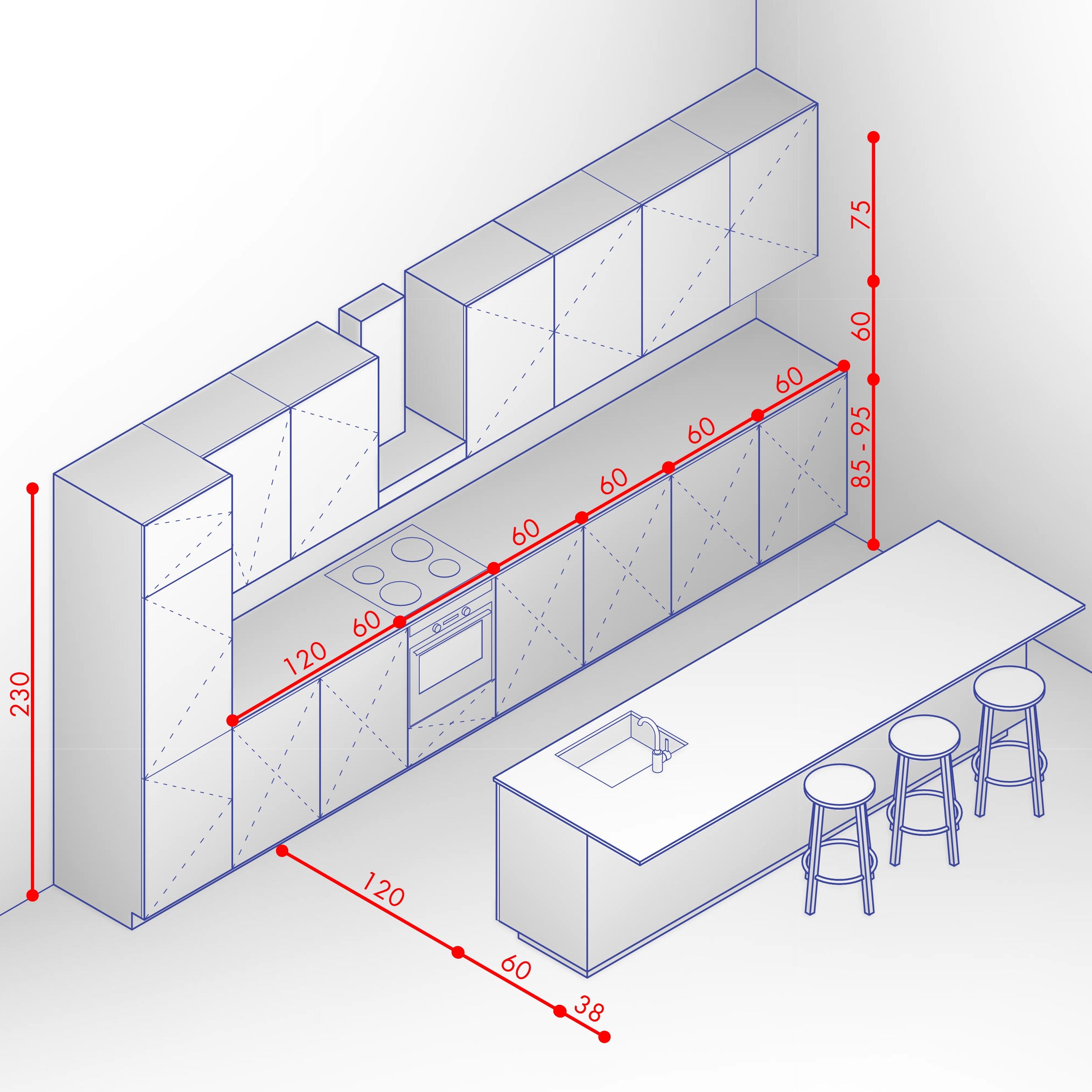
Draw cabinets along the walls. Use the space wisely. Add counters where you need them. Think about what you use most.
Step 6: Add Appliances
Add the stove, refrigerator, and dishwasher. Place them in the right spots. Make sure there is space around them.
Step 7: Review And Adjust
Look at your design. Is everything in the right place? Make changes if needed. Use an eraser to fix mistakes. Ask someone for feedback. They might see things you miss.
Tips for a Great Kitchen Design
Here are some tips:
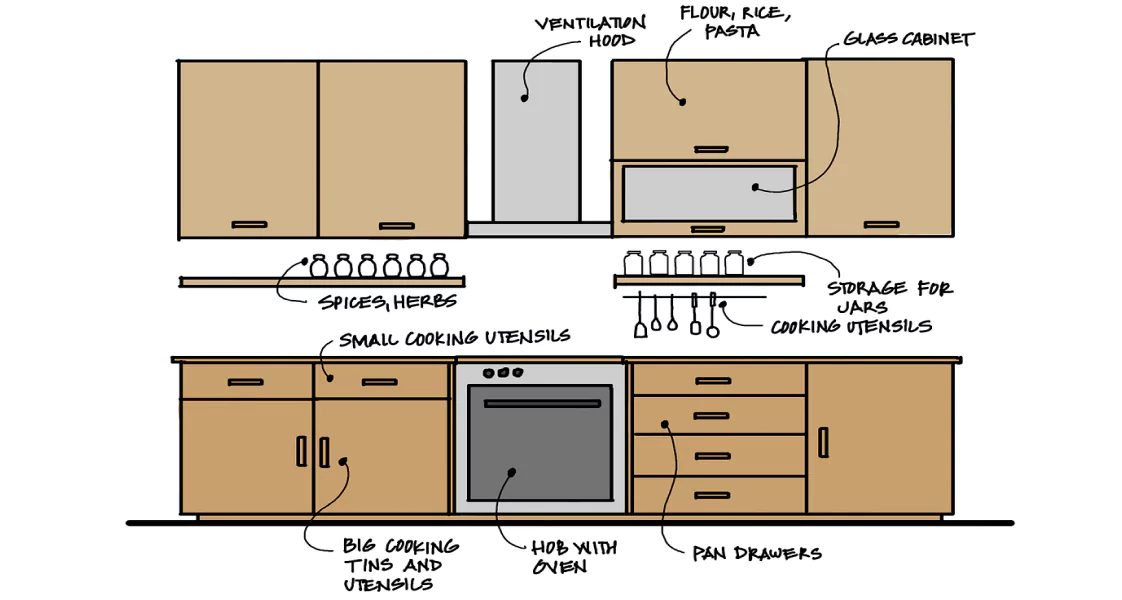
- Use open shelves for easy access.
- Add lights under cabinets for better visibility.
- Use corner space for storage.
- Keep the sink near the dishwasher.
- Consider a pull-out pantry for more space.
These tips help you make a better kitchen. They make cooking easy. They also make cleaning faster.
Credit: foyr.com
Color and Style
Think about colors. Light colors make a space look bigger. Dark colors make it cozy. Choose a style you like. Modern, traditional, or rustic. Match the design with your home.
Credit: postdigitalarchitecture.com
Frequently Asked Questions
What Tools Do I Need To Draw A Kitchen Design?
You need graph paper, pencils, ruler, eraser, and a measuring tape.
How Do I Measure My Kitchen Space Accurately?
Measure walls, doors, windows, and appliances. Write down all numbers clearly.
What Scale Should I Use For Kitchen Design Drawings?
Use a scale like 1:50 or 1:100 for easy and clear drawings.
How To Plan Kitchen Layout For Better Space Use?
Place the sink, stove, and fridge in a triangle for easy movement.
Conclusion
Drawing a kitchen design is easy. You just need practice. Use the tools and steps. Plan your space well. Make your kitchen beautiful and functional. Enjoy creating your dream kitchen!

Ethan Cole is a kitchen innovation enthusiast and food technology writer at DiningGadgets.com. With over 8 years of experience reviewing cookware, smart kitchen tools, and design trends, he helps readers discover gadgets that make cooking easier and dining more enjoyable. When he’s not testing the latest kitchen appliances, Ethan enjoys experimenting with recipes and sharing practical tips for modern homes.