

Lab glassware is an important tool in science. Clean glassware helps scientists get good results. Dirty glassware can cause mistakes. It is very important to clean lab glassware well. This guide will show you how to clean it step by step. The instructions are easy to follow. Anyone can do it.
Why Clean Lab Glassware?
Clean glassware keeps your work safe. It stops chemicals from mixing with old substances. If glassware is not clean, your test results can be wrong. Cleaning also stops bacteria and germs from growing. This is very important for safety.

Credit: pobel.com
Types of Lab Glassware
Before cleaning, know what kind of glassware you have. Common types include:
- Beakers
- Test tubes
- Flasks (like Erlenmeyer flasks)
- Graduated cylinders
- Pipettes
- Petri dishes
Different glassware shapes need different cleaning methods sometimes. But the main steps are similar.
Basic Tools for Cleaning Lab Glassware
Here are the tools you need to clean glassware:
- Detergent (soap made for lab use)
- Warm water
- Brushes of different sizes
- Distilled water
- Gloves to protect your hands
- Drying rack or clean cloth
Step-by-Step Guide to Clean Lab Glassware
Step 1: Rinse With Water
First, rinse the glassware with tap water. This removes loose dirt and chemicals. Use warm water if possible. Rinse until you see no big pieces of dirt.
Step 2: Use Detergent And Brush
Add a small amount of detergent inside the glassware. Use a brush to clean the inside well. For narrow glassware like test tubes, use a thin brush. Clean all surfaces carefully.
Step 3: Rinse Again
Rinse the glassware with tap water again. Make sure to remove all soap. Soap left on glassware can affect experiments.
Step 4: Rinse With Distilled Water
After tap water, rinse with distilled water. Distilled water does not have minerals or chemicals. This helps remove any leftover dirt or soap.
Step 5: Dry The Glassware
Let the glassware dry in the air on a drying rack. Or dry it with a clean cloth or paper towel. Make sure it is fully dry before use.
Special Cleaning Tips
Some chemicals are hard to clean. Here are special tips for tough stains or residues.
For Greasy Or Oily Residues
Use a solvent like acetone or ethanol to clean oily stains. Use in a well-ventilated area. Wear gloves and safety glasses.
For Acid Or Base Residues
Rinse glassware with plenty of water first. Then soak it in a weak acid or base solution, opposite of the chemical residue. For example, use a weak acid to clean base residues.
For Protein Or Biological Material
Use an enzyme cleaner or soak in warm detergent water. Scrub gently with a brush. Then rinse well.
Using Acid Baths (dangerous)
Sometimes, acid baths clean glassware well. Use only if trained. Wear full safety gear. Use in a fume hood. Follow lab safety rules.
How to Handle Glassware Safely
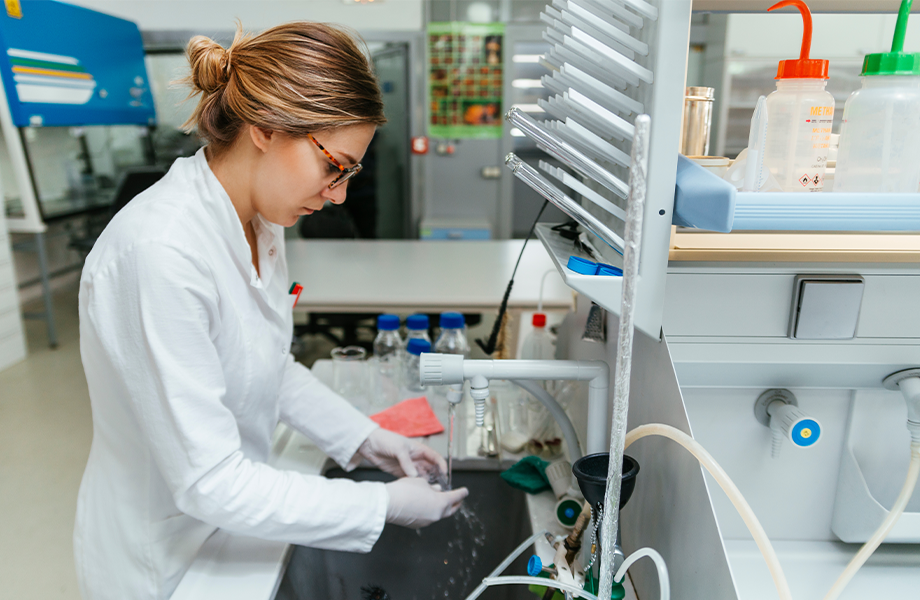
Always wear gloves when cleaning. Glassware can break easily. Broken glass can hurt you. Handle glassware with care. Use brushes and tools to avoid cuts.
Cleaning Glassware After Use
Clean glassware immediately after use. It is easier to remove chemicals when fresh. Do not let substances dry inside. This saves time and effort.
Summary of Cleaning Process
| Step | Action | Reason |
|---|---|---|
| 1 | Rinse with warm water | Remove loose dirt and chemicals |
| 2 | Use detergent and brush | Clean all surfaces well |
| 3 | Rinse with tap water | Remove soap and dirt |
| 4 | Rinse with distilled water | Remove any leftover impurities |
| 5 | Dry completely | Prevent contamination and damage |
Tips to Keep Lab Glassware Clean Longer
- Use glassware only for its intended use.
- Label glassware to avoid mixing chemicals.
- Rinse glassware immediately after use.
- Store glassware in a clean place.
- Inspect glassware for cracks or damage before use.
Common Mistakes to Avoid
- Do not use harsh brushes that can scratch glass.
- Never mix chemicals during cleaning.
- Do not skip the distilled water rinse.
- Avoid using dirty cloths to dry glassware.
- Never use hot water on cold glass suddenly; it may break.
Credit: www.borer.swiss
Final Thoughts
Cleaning lab glassware is simple but very important. Following these steps keeps your experiments safe and accurate. Take your time and be careful. Clean glassware helps you do good science. Remember safety first. Wear gloves and protect your eyes. Keep your lab clean and organized. Clean glassware is ready glassware.
Frequently Asked Questions
How Do I Remove Stains From Lab Glassware?
Use a mild detergent and warm water. Scrub gently with a soft brush.
Can I Clean Lab Glassware With Bleach?
Bleach can be used but rinse thoroughly to avoid contamination.
What Is The Best Way To Dry Lab Glassware?
Air drying is best. Use a drying rack to avoid spots.
How Often Should Lab Glassware Be Cleaned?
Clean glassware right after use to prevent residue buildup.

Sophia Martinez is a culinary lifestyle writer and product reviewer for DiningGadgets.com. Passionate about blending style with functionality, she explores the latest dining essentials, kitchen décor, and cleaning hacks that transform everyday cooking spaces. With a background in home organization and design, Sophia brings readers expert advice on creating beautiful, practical kitchens that truly feel like the heart of the home.