

Are you tired of battling stubborn grease stains on your kitchen walls? Do you find yourself scrubbing endlessly without seeing any real results?
You’re not alone. Grease buildup is a common problem in many households, and it can make your kitchen feel less inviting. But don’t worry—there’s hope. With the right techniques and a little elbow grease, you can restore your walls to their original, clean state.
In this guide, we’ll reveal simple yet effective methods to banish that sticky residue for good. Stick around to discover how you can transform your kitchen into a spotless haven once again.

Credit: www.youtube.com
Causes Of Grease Buildup
Grease buildup on kitchen walls happens over time. Cooking releases oils and fats that float in the air. These tiny grease particles settle on surfaces, especially walls near the stove. Without cleaning, grease layers grow thicker and become sticky. Understanding what causes this buildup helps prevent and clean it effectively.
Common Kitchen Grease Sources
- Frying and sautéing foods in oil or butter
- Grilling or broiling meat and vegetables
- Boiling or simmering fatty soups and sauces
- Using deep fryers or open flames
- Cooking with sprays or oils that vaporize easily
These activities release fine droplets of grease into the air. The grease then clings to nearby walls, cabinets, and surfaces.
How Grease Adheres To Walls
Grease particles are sticky by nature. They attach to smooth wall surfaces quickly. Warm air from cooking helps grease spread and stick. Over time, layers build up and trap dust and dirt. This makes the walls look dull and grimy.
Porous or textured walls hold grease more tightly. Painted walls with a glossy finish are slightly easier to clean. Without regular wiping, grease hardens and becomes tough to remove.
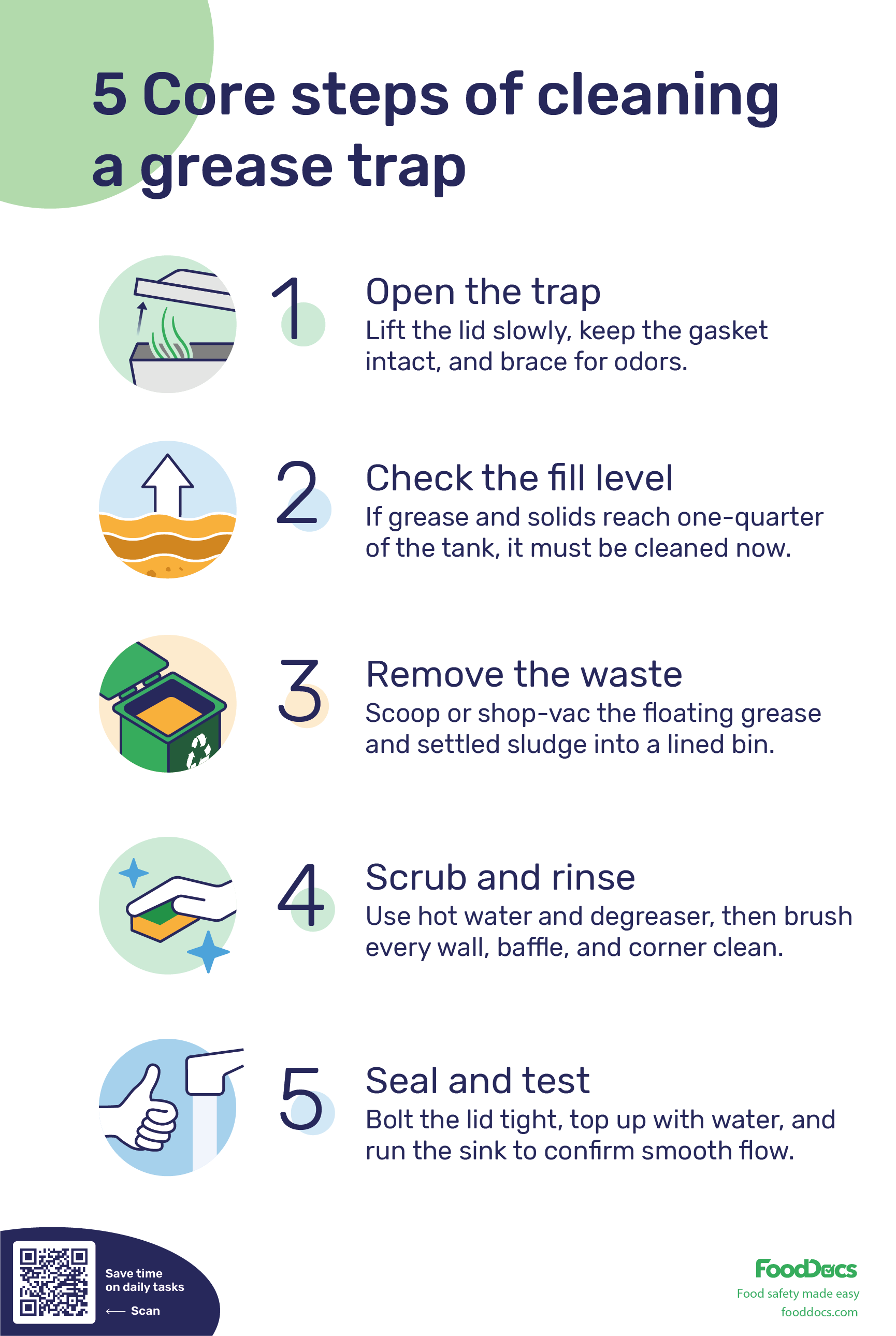
Credit: www.fooddocs.com
Essential Cleaning Tools
Cleaning grease off kitchen walls needs the right tools. Using proper equipment makes the job easier. It helps remove tough grease without damaging surfaces. Having essential tools saves time and effort. Here are the key cleaning tools to prepare.
Best Cloths And Sponges
Soft microfiber cloths work well for wiping grease. They trap dirt and absorb grease without scratching. Use non-abrasive sponges with a smooth side for gentle cleaning. Scrubbing sides help remove stuck-on grease. Replace cloths and sponges regularly for hygiene.
Effective Brushes And Scrapers
Small brushes with stiff bristles reach into corners and grooves. They clean textured or patterned wall surfaces effectively. Plastic scrapers remove thick grease layers without harming paint. Avoid metal scrapers to protect wall finish. Brushes and scrapers help tackle stubborn grease spots.
Protective Gear
Wear rubber gloves to protect skin from harsh cleaners. Goggles shield eyes from splashes and sprays. Use old clothes or aprons to avoid stains on clothing. Proper protective gear keeps cleaning safe and comfortable. It prevents irritation from chemicals and grease dirt.
Natural Cleaning Solutions
Natural cleaning solutions offer a safe and effective way to tackle grease on your kitchen walls without harsh chemicals. These ingredients are often already in your pantry, making them convenient and budget-friendly. Plus, they leave your kitchen smelling fresh and clean, not overwhelmed by artificial scents.
Vinegar And Baking Soda Mix
Vinegar’s acidity breaks down grease, while baking soda acts as a gentle abrasive to lift grime. Combine half a cup of vinegar with two tablespoons of baking soda in a spray bottle filled with warm water. Spray the mixture onto greasy spots, let it sit for a few minutes, then wipe clean with a soft cloth.
This combo works well on painted walls and tiles, but test a small area first to avoid damage. Have you ever noticed how this mixture fizzes up? That reaction helps loosen stubborn grease, making your job easier.
Lemon Juice Uses
Lemon juice contains natural acids that cut through grease and leave a pleasant scent behind. Simply squeeze fresh lemon juice onto a damp cloth or mix it with a little water for a gentle cleaning solution. Rub the greasy areas gently, then wipe with a clean, damp cloth.
Besides cleaning, lemon juice also helps disinfect surfaces. If you want a kitchen that smells like a sunny day, this is a great choice.
Castile Soap Benefits
Castile soap is a plant-based, biodegradable soap that effectively removes grease without harsh chemicals. Mix a few drops of liquid Castile soap with warm water in a spray bottle. Spray the solution on greasy walls, scrub lightly with a sponge, then rinse with a damp cloth.
This soap is safe for most wall surfaces and gentle enough for frequent use. Have you tried switching to Castile soap for your kitchen cleaning? It might surprise you how well it works with just a tiny amount.
Commercial Cleaners To Try
Choosing the right commercial cleaner can make a big difference when tackling grease on your kitchen walls. The market offers many options designed specifically for heavy-duty cleaning, but not all are created equal. Knowing which products work best and how to use them safely will save you time and effort.
Degreasers For Kitchen Walls
Degreasers are powerful products made to break down stubborn grease quickly. Look for ones labeled for kitchen use, as they are formulated to handle oil and food residues without damaging paint or wallpaper.
Some popular choices include:
- Krud Kutter– effective on baked-on grease and easy to rinse off
- Zep Heavy-Duty Citrus Degreaser– uses natural citrus oils to cut through grime
- Simple Green All-Purpose Cleaner– versatile and safe for various surfaces
Always test a small hidden area first. Have you ever ruined a wall by using a cleaner that was too harsh? Avoid that by checking product instructions carefully.
Safe Chemical Options
If you prefer chemical cleaners but worry about harsh ingredients, several safer options exist. These cleaners balance effectiveness with reduced toxicity and lower fumes, making your cleaning session less stressful.
Look for products that are:
- Non-toxic and biodegradable
- Free of ammonia and bleach
- Approved for indoor air quality
Brands like Method and Seventh Generation offer kitchen degreasers that fit these criteria. Using safer chemicals protects your family and keeps your kitchen environment healthier. How much does cleaner safety matter in your home?
Eco-friendly Products
Eco-friendly cleaners are increasingly popular for their environmental benefits and gentle formulas. These products often use plant-based ingredients and avoid synthetic fragrances or dyes.
Some eco-friendly degreasers to consider:
- Ecover Kitchen Degreaser– biodegradable and effective on grease
- Better Life Natural Kitchen Cleaner– free from harsh chemicals and safe for pets
- Mrs. Meyer’s Clean Day Multi-Surface Cleaner– uses essential oils for a fresh scent
Besides cleaning power, these products contribute to reducing your household’s environmental footprint. Would you try an eco-friendly cleaner if it made your kitchen shine just as well?
Step-by-step Cleaning Process
Cleaning grease off kitchen walls can feel like a tough job, but breaking it down into clear steps makes it manageable. Each stage plays a key role in getting your walls spotless without damage. Let’s go through a detailed process that helps you tackle grease effectively, saving both time and effort.
Preparing The Area
Start by clearing the kitchen space around the greasy walls. Remove any nearby furniture, decorations, or appliances that could get splattered or damaged. Cover the floor and countertops with old towels or plastic sheets to catch drips and protect surfaces.
Next, gather all cleaning supplies—gloves, a sponge or soft cloth, a bucket, and your chosen cleaner. Having everything ready prevents interruptions and keeps the process smooth. Do you have a spray bottle for easy application? It can make a big difference.
Applying The Cleaner
Choose a cleaner suitable for grease removal, such as a mixture of warm water, dish soap, and a bit of vinegar or baking soda. Spray or gently dab the cleaner onto the greasy spots, focusing on the most soiled areas first. Avoid soaking the wall to prevent damage, especially if it’s painted or wallpapered.
Let the cleaner sit for a few minutes to break down the grease. This short wait time is crucial—it softens the grime, making it easier to wipe away. Have you noticed how some stains seem stubborn until given a moment to loosen?
Scrubbing Techniques
Use a soft sponge or cloth to scrub the wall in circular motions. Apply gentle pressure to avoid damaging the paint or wallpaper. For tougher grease, try a soft-bristled brush to reach into textured surfaces or corners.
Be patient and consistent. Scrubbing too hard might strip paint, while too light may leave residue. Adjust your pressure based on how the wall responds. What’s your experience with cleaning delicate surfaces?
Rinsing And Drying
After scrubbing, rinse the sponge or cloth with clean water and wipe the wall to remove any leftover cleaner and grease. Repeat rinsing if necessary to avoid sticky residue. Then, use a dry towel to pat the wall dry, preventing water marks and mold growth.
Allow the wall to air dry fully before moving items back or touching the surface. This final step keeps your kitchen fresh and ready for the next meal prep. How often do you clean your kitchen walls to keep grease at bay?
Preventing Future Grease Buildup
Grease buildup on kitchen walls can quickly turn a clean cooking space into a sticky, unpleasant mess. Preventing this buildup not only saves you time but also keeps your kitchen looking fresh and hygienic. Small, consistent actions can make a big difference in stopping grease from taking hold.
Regular Maintenance Tips
Wiping down your kitchen walls regularly with a mild detergent can prevent grease from settling. Try to clean any splatters right after cooking; the longer grease sits, the harder it is to remove. Using a microfiber cloth can help trap grease without spreading it around.
Set a weekly reminder to do a quick wall wipe. This habit keeps grease at bay and reduces the need for heavy scrubbing later. Have you noticed how a quick clean feels less overwhelming than tackling months of buildup?
Using Kitchen Ventilation
Proper ventilation is your best defense against grease accumulation. Using an exhaust fan or range hood while cooking pulls grease particles out of the air before they land on your walls. Make sure your ventilation system is clean and functioning well for maximum effect.
If you don’t have a range hood, opening windows or using portable fans can also help. Ask yourself: are you letting the steam and smoke escape quickly, or are they lingering and settling on your walls?
Protective Wall Coatings
Applying a washable, grease-resistant paint or coating to your kitchen walls adds an extra layer of protection. These coatings make cleaning easier and prevent grease from sticking deeply. Look for products labeled as easy-clean or kitchen-friendly for the best results.
Consider repainting your kitchen walls with a semi-gloss or satin finish since these surfaces repel grease better than matte paints. How often do you think about the type of paint on your kitchen walls and its impact on cleanliness?
Handling Stubborn Grease Stains
Stubborn grease stains on kitchen walls need extra care. Simple cleaning may not remove them fully. These marks often build up over time and become hard to clean. Handling them requires stronger treatments and sometimes more effort. Understanding how to treat these tough stains helps keep your kitchen fresh and clean.
Intensive Spot Treatments
Use a mixture of baking soda and water to form a thick paste. Apply this paste directly on the grease stain. Let it sit for 10 to 15 minutes before scrubbing gently with a sponge. For tougher stains, try white vinegar diluted with water. Spray it on the stain and wipe with a cloth. Commercial degreasers can also work well. Always test on a small hidden area first to avoid damage.
- Apply baking soda paste to the stain.
- Let it sit for 10-15 minutes.
- Scrub gently with a soft sponge.
- Use diluted white vinegar for extra cleaning power.
- Test commercial degreasers on a hidden spot.
When To Repaint Or Replace
Sometimes grease stains soak deep into the paint or wall surface. Cleaning might not restore the wall’s look completely. Check if the wall looks dull or uneven after cleaning. Paint may peel or discolor from repeated grease exposure. In these cases, repainting is a good option. Choose a washable, grease-resistant paint for the kitchen. If the wall surface is damaged or stained beyond repair, replacing the wall panel might be necessary.
Credit: www.realhomes.com
Frequently Asked Questions
How Do I Remove Grease Stains From Kitchen Walls?
Use a mixture of warm water, dish soap, and vinegar. Apply with a sponge, scrub gently, then rinse and dry.
What Household Items Clean Grease Off Walls Effectively?
White vinegar, baking soda, and dish soap are great for removing grease. These items are safe and eco-friendly.
Can I Use Commercial Cleaners On Greasy Kitchen Walls?
Yes, commercial degreasers work well. Always follow label instructions and test on a small area first.
How Often Should I Clean Grease Off Kitchen Walls?
Clean greasy walls weekly to prevent buildup. Regular cleaning keeps walls fresh and easier to maintain.
Conclusion
Cleaning grease off kitchen walls is easier than you think. Use gentle cleaners and soft cloths to protect surfaces. Regular wiping keeps grease from building up. Act quickly to stop stains from setting. Simple steps save time and effort later.
Your kitchen will look fresh and clean again. Keep these tips in mind for a spotless space. Easy care makes cooking areas more pleasant. Try these methods and enjoy a brighter kitchen.
