

Are you planning a kitchen makeover and wondering whether to tile your walls before or after fitting your cabinets? This simple decision can save you time, money, and a lot of hassle.
Choosing the right order affects not just the look of your kitchen but also how easy the whole process will be. You’ll discover the best approach to tiling your kitchen walls that professionals swear by. Keep reading to avoid common mistakes and make your kitchen renovation smoother and more satisfying.

Credit: www.create-enjoy.com
Tiling Before Cabinets
Tiling your kitchen walls before installing cabinets is a choice that can shape the entire renovation process. It allows you to create a seamless, clean backdrop without worrying about cutting tiles around cabinet edges later. But is it the right move for your project? Let’s break down what you gain, what to watch out for, and how to prepare your space effectively.
Benefits Of Early Tiling
Tiling before cabinets gives you full access to the walls, making it easier to achieve a precise and even finish. You avoid the tricky tile cuts needed around cabinet edges, which often lead to uneven grout lines or awkward gaps.
It also protects your walls early on, especially if you’re dealing with moisture-prone areas. Once tiles are in place, you can install cabinets without worrying about damaging the wall surface.
Plus, this approach can speed up the overall project timeline since tiling and cabinetry installation become two distinct phases.
Challenges To Anticipate
Tiling first means you must be very accurate with measurements. Cabinets need to fit perfectly over the tiled surface, so any errors in tile thickness or placement can cause alignment problems.
There’s also a risk of tile damage during cabinet installation. You’ll need to handle heavy units carefully to avoid chipping or cracking tiles that are already fixed in place.
Another challenge is planning for plumbing and electrical outlets. These need to be precisely marked and cut out before tiling to avoid costly adjustments later.
Best Practices For Preparation
- Measure carefully:Check cabinet dimensions and tile thickness multiple times before starting.
- Protect your tiles:Use protective coverings during cabinet installation to prevent damage.
- Mark outlet positions:Clearly mark where all fixtures will be to ensure accurate tile cuts.
- Choose the right adhesive:Use a strong adhesive that can handle the weight and stress around cabinets.
- Plan for expansion:Leave small gaps at tile edges to allow for natural movement without cracking.
Have you ever tried tiling before cabinets? What unexpected issues did you face? Sharing your experience could help others decide the best approach for their kitchen makeover.
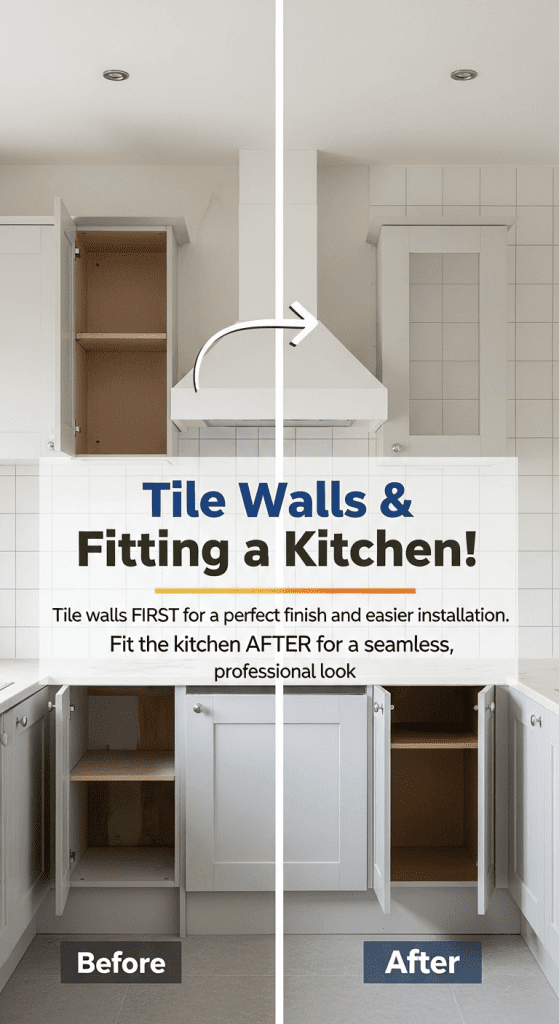
Tiling After Cabinets
Tiling after fitting your kitchen cabinets might seem like the less common approach, but it has distinct benefits that many homeowners overlook. This method allows you to tailor your tile layout specifically to the installed cabinets, ensuring a perfect fit and cleaner edges. However, it also presents challenges that require careful planning and execution to avoid costly mistakes.
Advantages Of Late Tiling
Tiling after cabinets gives you a clear view of the exact space you need to cover. This means you can avoid cutting tiles to awkward sizes behind cabinets, which often leads to wasted material and uneven finishes.
You can create neat tile edges that meet the cabinets perfectly, enhancing the overall look of your kitchen. Plus, this method reduces the risk of tile damage during cabinet installation.
Have you ever noticed how tiles sometimes crack or chip when cabinets are installed on top? Tiling last prevents this issue and keeps your walls looking flawless.
Common Issues And Solutions
One common problem is limited access to the wall behind cabinets, making it tricky to get tiles perfectly aligned. Using tile spacers and laser levels can help maintain straight lines and even spacing despite tight spots.
Another challenge is protecting cabinet surfaces from adhesive and grout splashes. Covering cabinets thoroughly with plastic sheets and painter’s tape prevents damage and simplifies cleanup.
Sometimes, the gap between the cabinet and wall isn’t uniform, causing uneven tile edges. You can fix this by using flexible grout or caulk to fill small gaps, creating a smooth transition.
Key Steps For Accurate Tiling
- Measure the space around the cabinets carefully before buying tiles to ensure you have the right amount and sizes.
- Start tiling from the visible edges of the cabinets and work your way outward to keep the layout clean and precise.
- Use a level frequently during installation to avoid tiles slipping or becoming uneven, especially near cabinet edges.
- Apply grout carefully and remove excess promptly to prevent staining cabinet surfaces.
- Allow tiles to set properly before removing any protective coverings from the cabinets to avoid accidental damage.
Factors Influencing Timing
Deciding whether to tile your kitchen walls before or after fitting cabinets and appliances depends on several key factors. Understanding these can save you time, money, and frustration during your renovation. Let’s break down what influences the best timing for your tiling project.
Kitchen Layout Considerations
The design and flow of your kitchen play a big role in timing the tiling. If your layout includes full-height cabinets or large appliances, tiling beforehand might mean covering areas that will be hidden later.
On the other hand, tiling after fitting allows you to focus only on visible surfaces, but it requires careful measurements and can be trickier around edges. Have you checked whether your kitchen design has tight corners or unusual shapes that might complicate tiling after installation?
Material Types And Durability
The type of tile you choose affects when you should install it. Porcelain and ceramic tiles are tough and can handle worksite wear, making early tiling possible.
However, delicate materials like glass or natural stone tiles might be better installed after cabinets to prevent damage. Also, some grout types require specific drying conditions that are easier to control before appliances are in place.
Budget And Time Constraints
Your budget can push the timing one way or the other. Tiling before fitting may mean fewer adjustments and less labor, potentially lowering costs.
But if you’re on a tight schedule, fitting cabinets first and then tiling small, focused areas might speed up the overall project. Which is more important to you: saving money or finishing quickly?
Expert Tips For Smooth Installation
Expert tips make tile installation easier and more efficient. Proper planning and care prevent costly mistakes. These tips help keep your kitchen project on track.
Coordinating With Contractors
Clear communication with all contractors is essential. Share your tile plans early to avoid conflicts. Schedule work so tile and cabinetry teams do not overlap. Confirm timelines for tile delivery and installation. Keep everyone informed about changes to avoid delays.
Protecting Surfaces During Work
Cover countertops and cabinets before tiling begins. Use thick drop cloths or plastic sheets to shield surfaces. Clean spills and debris promptly to prevent damage. Avoid stepping on freshly laid tiles to keep them stable. Use caution when moving tools and materials around.
Ensuring Long-term Tile Stability
Choose quality adhesive suited for kitchen walls and moisture. Allow adhesive to cure fully before installing cabinets. Use proper grout to seal gaps and prevent water damage. Inspect tiles regularly for cracks or loosening. Address any issues early to maintain a strong, lasting finish.
Case Studies And Real-life Examples
Looking at real-life examples can help you decide whether to tile your kitchen walls before or after fitting cabinets. Actual projects reveal the pros and cons that theory might miss. These case studies highlight what worked well, what didn’t, and what you can learn to make your kitchen project smoother.
Successful Early Tiling Projects
One homeowner tiled their kitchen walls before installing cabinets and saw clear benefits. The seamless tile surface extended behind the cabinets, making cleaning easier and preventing moisture damage. Plus, they avoided the hassle of cutting tiles to fit around cabinet edges, saving time and reducing errors.
Another case involved a small kitchen where early tiling helped align the cabinet layout perfectly. The tiled walls acted as a precise guide, ensuring cabinets were level and evenly spaced. This approach reduced adjustments during installation and gave a polished look from the start.
Benefits Seen In Post-cabinet Tiling
In contrast, a couple who tiled after fitting cabinets enjoyed better control over tile placement and design. They tailored tile cuts to fit around cabinet shapes and appliances, creating a custom finish. This flexibility allowed for creative patterns and accent tiles that enhanced the kitchen’s style.
Post-cabinet tiling also helped avoid tile damage during cabinet installation. One contractor shared how tiling after cabinets reduced chip and crack repairs, which often happen when heavy cabinets are moved around. Would you rather protect your tiles or risk costly fixes?
Lessons Learned From Mistakes
Some projects reveal what to avoid. One example involved tiling too early without proper wall preparation, resulting in tiles loosening after cabinet installation. This showed the importance of ensuring walls are perfectly smooth and dry before tiling.
Another homeowner tiled after fitting cabinets but didn’t leave enough space for grout lines near edges. The grout cracked quickly, causing water damage. This highlights the need to plan grout spacing carefully when tiling post-cabinet.
These experiences show your choice impacts not only aesthetics but also long-term durability. What challenges might you face with each approach in your kitchen?

Credit: www.diychatroom.com
Frequently Asked Questions
Should I Tile Kitchen Walls Before Or After Fitting Cabinets?
Tiling before fitting cabinets protects walls and ensures a seamless look. It prevents damage during installation. However, tiling after can allow precise fitting around cabinets. The best choice depends on your project’s complexity and personal preference.
What Are Benefits Of Tiling Walls Before Kitchen Installation?
Tiling walls first saves time and reduces cabinet damage risks. It creates a uniform backsplash and protects plaster from moisture. Early tiling allows better alignment and cleaner edges, enhancing the kitchen’s overall finish and durability.
Can Tiling Walls After Kitchen Fitting Cause Problems?
Yes, tiling after fitting cabinets may cause uneven edges or gaps. It can be harder to reach some areas, risking damage to cabinets. However, it allows custom tile cuts for precise fitting around appliances and fixtures.
How Does Tiling Order Affect Kitchen Renovation Cost?
Tiling before cabinets may reduce labor costs by simplifying the process. Tiling after can increase costs due to extra care and adjustments needed. Planning the order carefully helps control budget and avoid rework expenses.
Conclusion
Deciding when to tile your kitchen walls can be challenging. Tiling before fitting cabinets offers a seamless look. It provides a clean finish. On the other hand, tiling after installation can save time and materials. It also allows for easier adjustments.
Consider your kitchen layout and budget. Both methods have their pros and cons. Choose what best fits your needs. Plan ahead for a smooth renovation process. Consult with professionals if unsure. They can provide useful guidance. Your choice will impact the final kitchen look.
Make an informed decision for a beautiful kitchen transformation.
