7 Must-Have Features to Look for in an Outdoor Pizza Oven
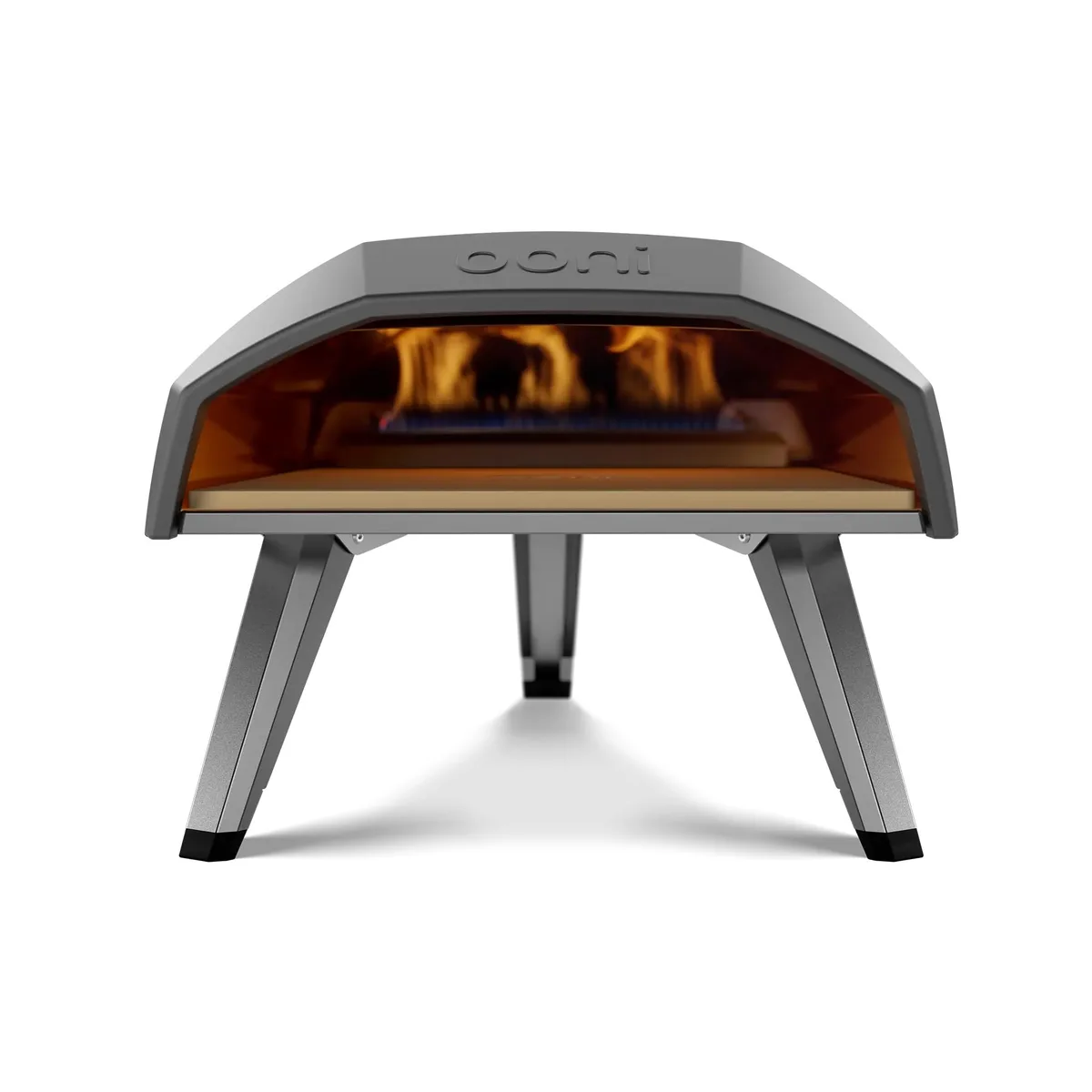
Choosing outdoor pizza oven features to look for can feel like a guessing game. Manufacturers pack spec sheets with numbers and buzzwords, but only a handful actually change how your pizzas turn out. Most buyers regret skipping the details that matter most.
A quality unit reaches 800 to 950 degrees Fahrenheit and holds that heat evenly across the cooking floor. That is the sweet spot for authentic Neapolitan-style crust. Let us break down which specs separate a disappointment from a backyard showstopper.
Why Picking the Right Outdoor Pizza Oven Feels Overwhelming
The outdoor pizza oven market has exploded in recent years, and that abundance creates real confusion. Five years ago you had maybe three credible choices. Today, dozens of brands compete for attention with wildly different claims about heat output, cooking speed, and build quality.
Aggregate reviews across multiple platforms consistently show one recurring complaint: buyers pick the wrong oven for their actual lifestyle.
The frustration comes from mismatched expectations versus reality. A spec sheet might boast 950-degree capability, but that does not tell you how long preheating takes, whether the heat stays consistent, or if the door seals properly in wind. You are essentially making a $500 to $1,500 decision based on marketing copy and star ratings from people who used it once.
Manufacturer specifications and verified buyer feedback reveal a clearer picture beneath the noise. The challenge is knowing which details to trust.
Many buyers zero in on one flashy feature and ignore everything else. They see a stainless steel exterior and assume durability. They read BTU numbers and assume performance.
But pizza ovens live in unpredictable outdoor environments, and the features that survive real-world use look very different from promotional photography.
The good news is that once you understand which specifications actually predict cooking results, the overwhelm fades fast. You stop reading the fine print and start looking at the right fine print. That shift changes everything.
The Features That Actually Impact Your Pizza (Not the Catalog Specs)
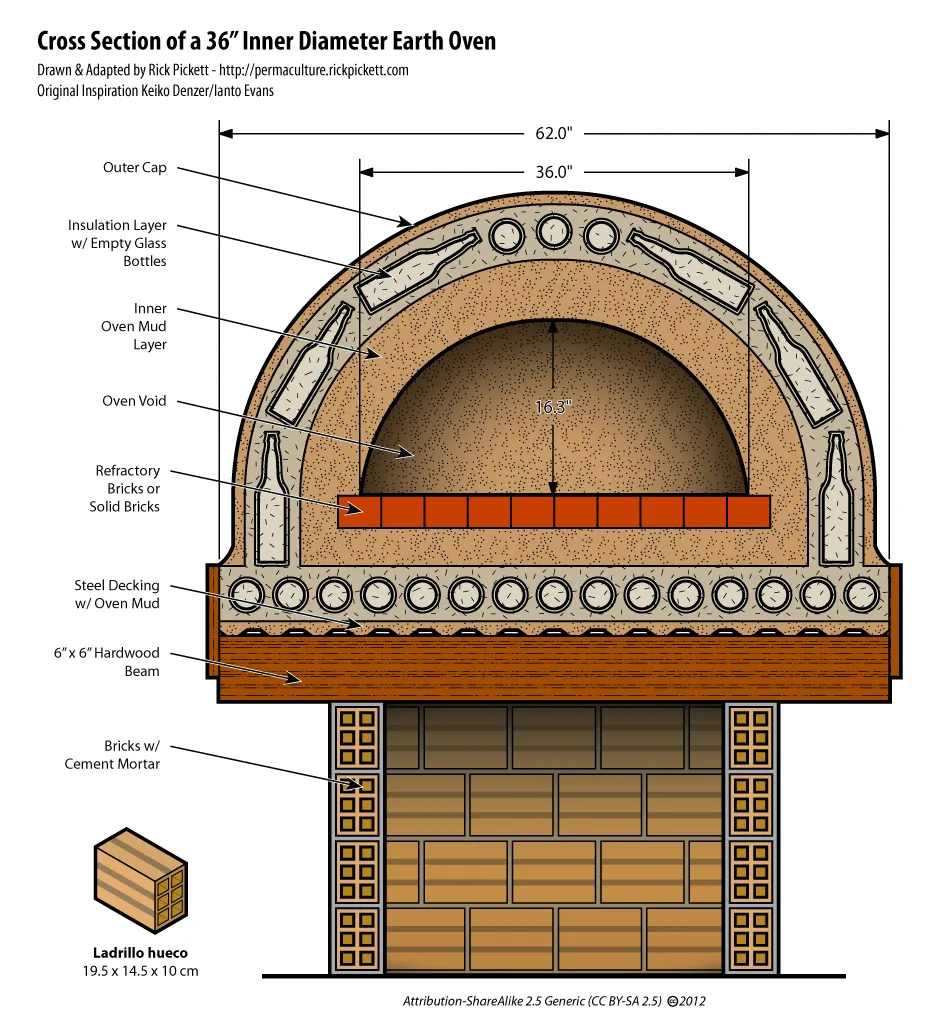
Most catalog specs sound impressive until you hold the oven in your hands. Thermal mass matters far more than maximum temperature ratings. A thin-walled oven might hit 900 degrees, but that heat vanishes the moment you slide a cold pizza inside.
A thick refractory brick floor retains energy through dozens of consecutive pies without dropping below 700 degrees. That retention is what creates blistered, evenly cooked crusts night after night, not a single blazing-hot moment.
Insulation quality separates budget models from serious equipment. Double-wall construction with mineral wool or ceramic fiber keeps exterior surfaces cool enough to touch while trapping heat where it counts. Per NFPA guidelines on outdoor cooking appliance safety, adequate insulation also reduces burn risk during extended use.
You should always check the manufacturer's clearance recommendations before placing your oven near walls or combustible surfaces.
Airflow control deserves equal attention. Proper convection design draws heat across the entire cooking surface instead of pooling near the flame source. Look for adjustable dampers, not just a fixed exhaust hole.
Models with both top and bottom temperature regulation give you genuine control over browning patterns. A cheese melt on the bottom and a leopard-spotted crust on top requires independent heat management, not guesswork.
Door seal integrity is another silent performance factor. A poorly gasketed door leaks thermal energy and destabilizes your cooking environment. Run your hand near the closed door after twenty minutes of operation.
If you feel a strong draft escaping, the seal needs improvement or the model may have manufacturing tolerances worth avoiding.
Cooking surface material deserves careful consideration too. Cordierite stone handles rapid temperature shifts without cracking. Natural soapstone distributes heat evenly but requires longer preheats.
Steel decks heat fastest but can create hot spots unless engineered with thermal bridges. Each material shapes your cooking experience differently. There is no universal winner beyond matching the material to your pizza style.
| Cooking Floor Material | Heat Recovery | Durability | Best For |
|---|---|---|---|
| Refractory brick | Excellent | High | Traditional Neapolitan |
| Cordierite stone | Very good | Moderate | Balanced home use |
| Steel deck | Fast | Good | Quick weeknight pizzas |
Wood-Fired vs. Gas vs. Electric: Which One Matches Your Lifestyle?
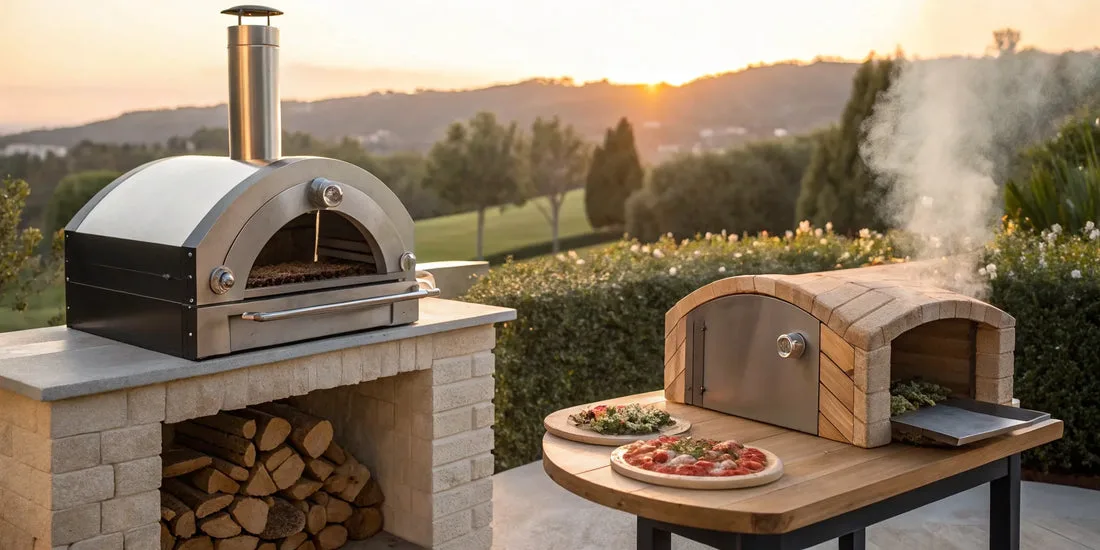
Image source: Bing (Web (fair-use with source credit))
Fuel choice is the single biggest lifestyle decision you will make, and no option wins across every category. Your answer depends entirely on what you value more: convenience, flavor authenticity, cost per use, or setup complexity. Each fuel type serves a different kind of cook.
Gas ovens dominate in speed and ease. Most reach operating temperature within fifteen to twenty minutes using propane or natural gas. You flip a switch and the heat appears.
Temperature control stays consistent as long as your supply lasts. However, gas simply cannot replicate the smoky flavor profile that defines wood-fired cooking. The crust colors beautifully, but it lacks that signature wood-kissed aroma that makes people ask what your secret ingredient is.
Wood-fired ovens deliver unmatched flavor but demand real commitment. You will need hardwood logs, lighter material, and patience during ignition. Preheat time stretches to forty-five minutes or more depending on size and ambient temperature.
Once firing, managing the fire requires active attention. You are moving embers, adjusting airflow, and building zones of heat for different cooking tasks. The payoff is authentic restaurant-quality results that gas can never match.
Many wood enthusiasts argue that even basic wood models produce superior food to premium gas versions.
Electric ovens occupy a rarely discussed middle ground. They offer push-button simplicity and clean operation with zero emissions on site. Their drawback is maximum temperature limitation.
Most electric units top out around 700 to 750 degrees Fahrenheit, which still makes excellent pizza but falls short of true Neapolitan standards requiring 800-plus degrees. Electric works well for home cooks who prioritize convenience and do not chase ultra-high heat.
| Fuel Type | Preheat Time | Max Temperature | Flavor Profile | Ease of Use | Setup Complexity |
|---|---|---|---|---|---|
| Gas | 15–20 minutes | 800–950°F | Mild | Very easy | Minimal |
| Wood | 40–60 minutes | 850–950°F+ | Authentic smoky | Moderate | Significant |
| Electric | 20–30 minutes | 700–750°F | Neutral | Very easy | Minimal |
If you host weekly pizza nights and want reliability over ritual, gas delivers. If flavor trumps convenience and you enjoy the process of fire management, wood rewards that investment tenfold. Electric fits renters or constrained spaces where flame is not permitted.
Portable vs. Standalone: Size, Setup, and Where It Lives
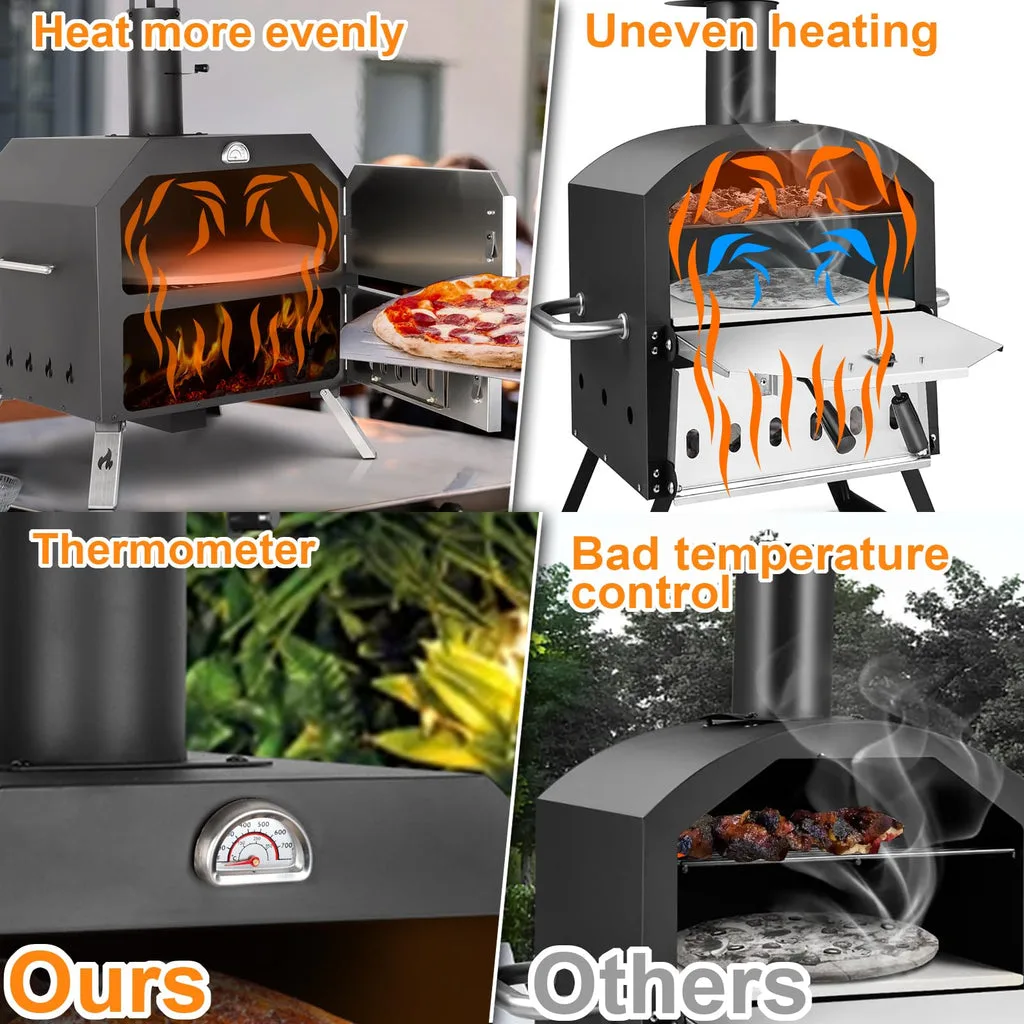
Image source: Web (Bing) / walfosbrand.com (Web image (fair-use with source credit))
Physical footprint and transportability shape your daily relationship with the oven far more than specs ever will. A heavy standalone unit demands a permanent home and a dedicated outdoor zone. A portable model slides into a car trunk and travels wherever your plans take it.
Neither approach is wrong, but each carries trade-offs that extend beyond weight alone.
Stationary ovens typically use thicker materials and heavier insulation precisely because they will not move. That added mass improves heat retention and temperature stability during extended cooking sessions. You get better performance when quantity matters.
Hosting a gathering where seven or eight pizzas go out back-to-back favors a permanent install. The oven recovers heat faster between pies because its thermal mass stays engaged. Portable models sacrifice some consistency for mobility because lightweight materials shed heat quicker.
Portability opens up scenarios many buyers never consider. Weekend trips to a lake house, tailgate gatherings, campsite dinners, or simply storing the oven indoors during harsh winters become practical when weight stays under sixty pounds. Several popular portable designs fold flat or disassemble in under five minutes.
That flexibility matters if your outdoor space doubles as a play area or garden that needs clearing between uses.
Location availability fundamentally constrains your options too. Apartment balconies often ban open flames entirely, eliminating wood and certain gas configurations. HOA rules in some neighborhoods restrict propane tank placement near property lines.
Urban patios benefit enormously from electric models that avoid both fuel types. Rural properties with fire-safe setbacks can accommodate nearly any configuration.
Space planning also involves wind exposure. An exposed patio location demands an oven with a wind-resistant design or a companion wind guard. Open flames and high airflow fight each other constantly outdoors, and poor wind management wastes fuel while creating uneven cooking surfaces.
Check whether your intended spot receives sustained breezes and choose accordingly.
Your frequency of use ultimately determines whether portability matters. Daily backyard cooks rarely benefit from folding mechanisms that add potential failure points. Occasional entertainers who move the oven between indoor storage and outdoor use gain enormous practical value from lightweight designs.
Match the form factor to your actual routine, not your aspirational one.
Matching Oven Types to Real-World Use Cases
No single outdoor pizza oven excels at every task, and honest buyers admit that upfront. The best model for one person becomes completely wrong for another because real usage patterns diverge sharply. Understanding your own habits before comparing features prevents the most common buyer regrets.
Weekend entertainers who host monthly pizza nights benefit most from gas models paired with a large cooking chamber. Speed between orders matters when feeding hungry guests. You want fifteen-minute preheats and reliable temperature recovery.
Gas delivers exactly that rhythm without fire management distractions pulling you away from conversation.
Family cooks prioritizing convenience and safety tend gravitate toward electric or regulated gas options. No open flame means fewer worries around curious toddlers or pets. Push-button ignition removes the learning curve entirely.
These families accept slightly lower peak temperatures in exchange for consistent weekend results without stress.
Authenticity chasers willing to invest time in mastering fire craft consistently recommend wood-fired ovens. The skill development itself becomes part of the experience. Learning to read flame behavior, manage ember beds, and position pizzas across different heat zones transforms cooking from chore to craft.
The results justify every extra minute spent preparing the fire.
Occasional cooks buying their first outdoor oven often overshoot on features they will not use. A $1,200 professional-grade wood unit sitting unused for months represents a wasted investment. Starting with a mid-range gas model lets you discover whether outdoor pizza cooking fits your lifestyle before committing serious money.
Upgrade later with confidence rather than regret early.
Budget-conscious buyers should prioritize insulation thickness and cooking surface quality over flashy extras. Built-in thermometers, decorative trim, and accessory bundles inflate price without improving cooking results. Those features look great in marketing photos but disappear into irrelevance after the first dozen pizzas.
Invest in core performance first, accessories second.
Renters and frequent movers benefit from considering resale value alongside purchase price. Portable ovens with strong brand recognition hold value remarkably well in secondary markets. A well-maintained unit from a reputable manufacturer can resell for seventy to eighty percent of original cost, softening the financial impact if your living situation changes.
Professional-quality results require understanding that equipment only delivers what technique enables. Even the most expensive oven produces mediocre pizza with improper dough hydration, rushed fermentation, or incorrect topping ratios. Match your oven capabilities to your skill development pace, and invest in education resources alongside your purchase rather than assuming hardware alone solves everything.
Common Buyer Mistakes That Turn Great Ovens Into Regrets
Most outdoor pizza oven regrets trace back to the same four mistakes, and all of them are avoidable with a little research before purchase. Recognizing these pitfalls saves money and prevents the frustration of discovering a critical flaw only after opening the box.
The first mistake is buying for aspiration instead of habit. People regularly imagine themselves as dedicated pizza makers hosting elaborate dinner parties every Friday night. Reality usually involves two or three attempts per month.
Buyers who pay premium prices for wood-fired craftsmanship end up with an expensive decoration. Match the oven to your actual schedule, not your fantasy one.
The second mistake ignores ventilation and wind conditions at your intended location. An oven that performs beautifully in a sheltered garden courtyard fails miserably on an exposed balcony. Wind steals heat from the cooking chamber, forces the burner to work harder, and creates uneven browning patterns.
Before purchasing, spend time at your intended spot on a windy day and observe how air moves through the space.
The third mistake is skipping the thermal mass check. Many budget ovens advertise impressive maximum temperatures while using thin metal construction that cannot retain heat. The oven fires up fast, peaks high, then collapses the moment you open the door or add a cold pizza.
Request detailed insulation specifications from manufacturers rather than accepting vague marketing claims. Reputable companies provide chamber wall thickness and insulating material details.
The fourth mistake is overlooking accessory costs. The base oven is only part of the equation. A quality pizza peel runs $30 to $80.
Additional stones, thermal cameras, and wind guards add another $100 to $200 easily. Factor these into your total budget before comparing models, or you may find yourself choosing between a better oven and the tools needed to use it effectively.
| Mistake | Typical Consequence | How to Avoid |
|---|---|---|
| Buying for fantasy lifestyle | Unused equipment, wasted money | Track your actual cooking habits for two weeks first |
| Ignoring wind exposure | Uneven cooking, fuel waste | Test your space on a windy day before purchasing |
| Skipping thermal mass check | Poor heat retention, inconsistent results | Request insulation specs directly from manufacturer |
| Underestimating accessory costs | Budget overrun, inadequate setup | Add $150–$300 to base price for essential accessories |
Avoiding these mistakes requires honest self-assessment and a willingness to ask manufacturers specific questions before buying. Customer service response quality and detail level also reveals how much a company stands behind its products. Companies that answer patiently tend to honor warranties better when issues arise.
Your 5-Minute Decision Framework: Pick the Right Oven for You
Making the right choice does not require endless research paralysis. A simple decision framework narrows options quickly and eliminates models that do not fit your situation. Follow these five steps and you will land on a well-matched oven in minutes rather than days.
First, define your actual usage pattern. Are you cooking once a month or weekly? Do you feed four people or twelve?
Be honest here. Usage frequency and guest count determine the minimum cooking chamber size and fuel type that make sense. Weekly entertainers needing speed should eliminate wood models immediately.
Monthly hobbyists chasing authenticity should eliminate most gas options.
Second, identify your available outdoor space and fuel access. Measure the area where the oven will live and note any wind exposure. Check whether your building or neighborhood allows open flames, propane tanks, or electric heating elements.
Location constraints eliminate entire categories before you even start comparing features.
Third, set a realistic total budget including accessories. Add $150 to $300 to whatever the oven costs to account for a peel, thermometer, and protective cover. Setting this number early prevents sticker shock when you realize the complete setup costs significantly more than the base unit.
Fourth, shortlist three models that pass your first three filters. Read verified buyer reviews focusing on long-term ownership experiences, not unboxing impressions. Look for comments about heat retention after six months, door seal durability, and customer service interactions.
These indicators predict ownership satisfaction far better than initial excitement.
Fifth, compare your shortlisted models against the non-negotiable features identified earlier. Thermal mass, insulation quality, and airflow control should rank higher than built-in thermometers, lighting, or decorative trim. The features that affect cooking results every time you use the oven deserve priority over cosmetic upgrades.
This framework works because it eliminates variables in order of importance rather than getting distracted by shiny features. Most buyer confusion stems from evaluating random attributes without a clear decision hierarchy. Establishing that hierarchy first turns a overwhelming marketplace into a simple selection process.
Frequently Asked Questions
What cooking temperature should an outdoor pizza oven reach?
Target an oven that consistently reaches 700 to 950 degrees Fahrenheit. Neapolitan-style pizzas require at least 800 degrees for proper crust development within sixty to ninety seconds. Lower-temperature ovens work for New York-style or flatbread but cannot achieve authentic wood-fired results.
Is wood-fired better than gas for homemade pizza?
Wood-fired produces superior flavor with characteristic smokiness that gas cannot replicate. Gas offers faster preheats, easier temperature control, and consistent results with minimal effort. Choose wood if flavor authenticity matters most.
Choose gas if convenience and speed drive your decision.
How long does an outdoor pizza oven take to preheat?
Gas models typically preheat in fifteen to twenty minutes. Electric units require twenty to thirty minutes. Wood-fired ovens need forty-five minutes to an hour depending on size, wood type, and ambient temperature.
Always follow manufacturer guidelines rather than rushing the process.
Do I need a separate pizza oven or can I use my grill?
Dedicated pizza ovens maintain higher temperatures and distribute heat more evenly than standard grills. Grill attachments exist but generally top out around 500 degrees, limiting your pizza options considerably. A dedicated oven provides noticeably better results if you plan to cook regularly.
What is the most important feature to check before buying?
Thermal mass and insulation quality matter more than any single spec. An oven that retains heat through multiple consecutive pizzas delivers better results than a thin-walled unit that peaks high but collapses quickly. Request detailed insulation specifications from the manufacturer before purchasing.
Are portable pizza ovens as effective as stationary models?
Portable models sacrifice some heat retention for mobility and convenience. Modern designs have narrowed the performance gap significantly, but stationary units with thicker refractory floors still outperform in extended cooking sessions. Portability matters most if you travel with your oven or store it indoors seasonally.

Sophia Martinez is a culinary lifestyle writer and product reviewer for DiningGadgets.com. Passionate about blending style with functionality, she explores the latest dining essentials, kitchen décor, and cleaning hacks that transform everyday cooking spaces. With a background in home organization and design, Sophia brings readers expert advice on creating beautiful, practical kitchens that truly feel like the heart of the home.