How to Start Tiling a Kitchen Wall: Easy Steps for Perfect Results
Tiling a kitchen wall is one of the most high-impact, budget-friendly upgrades you can make to your home. A well-installed tile backsplash or full wall resists moisture, stains, and heat, while adding custom style that boosts your kitchen’s resale value. For DIYers, the process can feel intimidating — crooked tiles, awkward sliver cuts, and grout haze are common pitfalls that make even simple projects feel overwhelming. This guide breaks the process into clear, actionable steps, with pro tips to help you avoid costly mistakes and achieve a professional finish, no prior tiling experience required.
Pre-Project Planning & Wall Preparation
A flawless tile installation starts long before you open a box of tiles. Proper prep prevents future issues like popped tiles, cracked grout, and water damage behind your new wall. For more on this, see our guide on how to regrout kitchen wall tiles easy steps.
Assess Your Wall Type & Suitability
Before you buy a single tile, confirm your wall is suitable for tiling. Most interior kitchen walls are either drywall, plaster, or cement backer board. Drywall works for low-moisture areas like decorative accent walls, but cement backer board is required for walls behind sinks, stovetops, or dishwashers, where constant exposure to water and steam is common. If you’re tiling over existing ceramic tile, ensure it’s fully adhered, crack-free, and has no water damage — roughen the surface with coarse sandpaper and apply a tile bonding primer before laying new thin-set. If you find water damage, mold, or loose drywall, repair these issues first; tiling over damaged surfaces will lead to popped tiles and grout failure down the line.
Clean, Repair, and Prime the Surface
A flawless finish starts with a perfectly prepared wall. Start by removing all grease, food residue, flaking paint, old wallpaper, or backsplash adhesives. For light grease buildup, warm soapy water works; for heavy, baked-on grease, use a trisodium phosphate (TSP) solution (wear gloves and eye protection). Let the wall dry completely for 24 hours. Next, fill holes, cracks, or uneven spots with a setting-type joint compound, sand smooth once dry, and wipe away all dust. For porous surfaces like plaster, apply a latex-based primer to improve thin-set adhesion. If you’re working with painted drywall, score the paint surface with a utility knife first to give the adhesive a rough surface to grip.
Take Accurate Measurements & Plan Your Layout
Measure the entire area you plan to tile, noting the locations of outlets, switches, cabinets, pipes, and the countertop edge. Calculate the total square footage of tile you need, and add 10% extra to account for cut waste and breakage. Mark the exact center point of your tiled area with a chalk line (pencil marks will fade during installation) to use as your starting reference. If you’re coordinating your new tile with existing green kitchen cabinets, you can find matching pairings for a cohesive look; for brown cabinetry, this style guide offers complementary options to tie your design together.
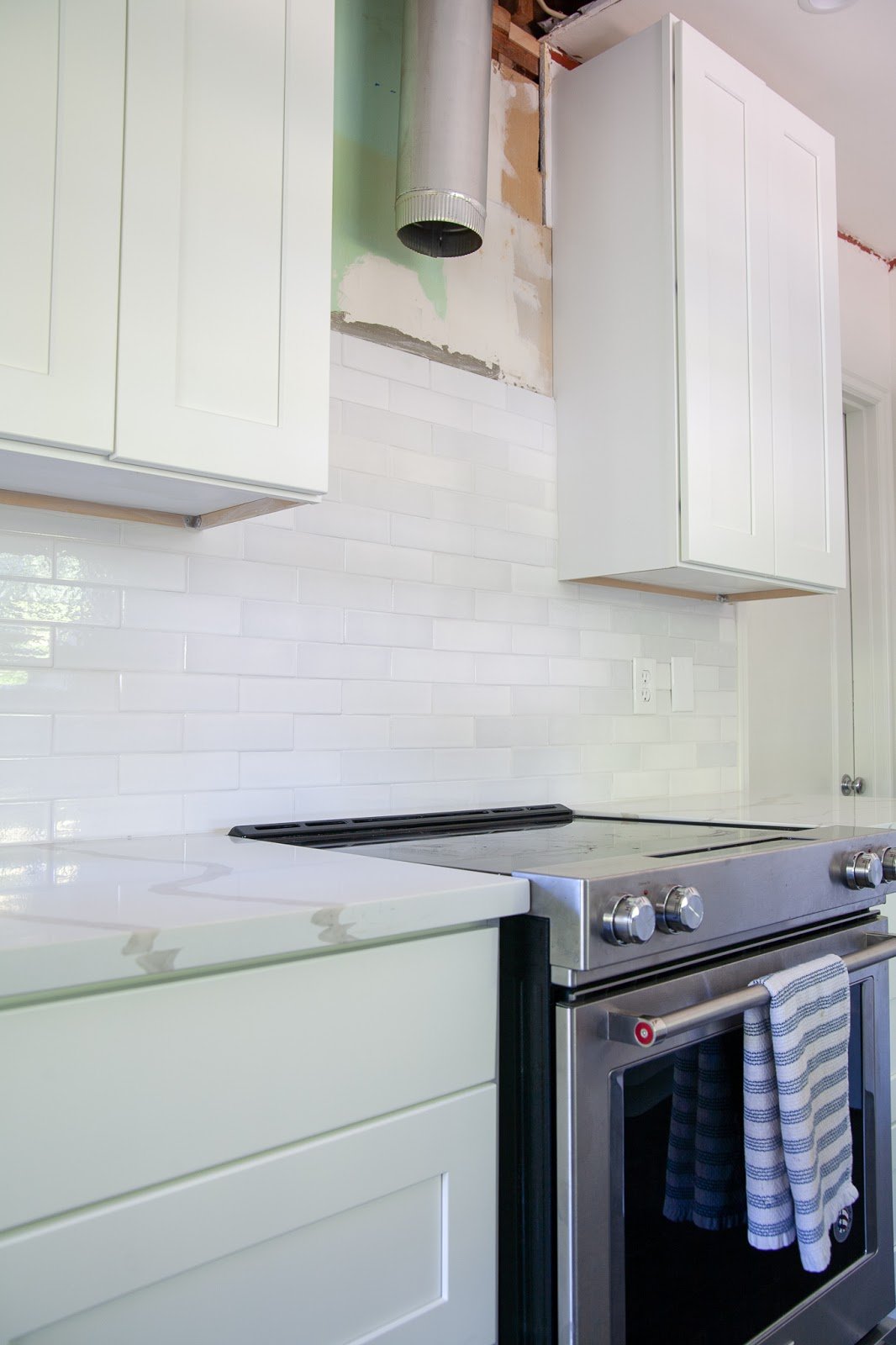
 Credit: www.create-enjoy.com
Accurate reference lines ensure your first row of tiles is perfectly level, eliminating crooked installation.
Credit: www.create-enjoy.com
Accurate reference lines ensure your first row of tiles is perfectly level, eliminating crooked installation.
Gather Tools & Materials
Having all your supplies on hand before you start will save you time and avoid mid-project trips to the hardware store.
Essential Tools & Safety Gear
You’ll need the following tools for a standard kitchen wall tile installation:
- Manual tile snap cutter for straight cuts on small format tiles (4×4, 6×6)
- Wet saw for clean, chip-free cuts on large format tiles (12×12 and larger) or intricate angles
- Notched trowel: 1/4" x 1/4" for mosaic sheets and small tiles, 1/2" x 1/2" for standard format tiles
- Rubber grout float, margin trowel for small adhesive patches, and tile nippers for curved cuts around pipes
- Spirit level, tape measure, chalk line, pencil, and straight edge for layout
- Sponge, bucket, and microfiber cloths for grout cleanup
- Safety gear: N95 respirator (cutting tile releases silica dust, a serious respiratory hazard per OSHA guidelines), safety goggles, cut-resistant gloves, and knee pads for comfort during installation If you need to remove a wall-mounted faucet to tile behind it, this step-by-step guide walks you through the process safely without damaging plumbing.
Adhesives, Grout & Finishing Supplies
Opt for polymer-modified thin-set mortar instead of standard pre-mixed adhesive — it’s more flexible, water-resistant, and forms a stronger bond with kitchen walls. For areas with constant splashing (behind sinks, stovetops), choose epoxy grout, which is stain-proof, mold-resistant, and never needs sealing. For low-moisture accent walls, cement-based grout works well and comes in a wide range of colors to match or contrast your tile. Have a mildew-resistant silicone caulk on hand to seal the gap between the countertop and bottom row of tiles, allowing for movement and preventing water intrusion.
Plan Your Tile Layout to Avoid Costly Mistakes
Skipping layout planning is the most common cause of botched DIY tile jobs. A dry run will save you hours of frustration and wasted materials.
Mark Reference Lines & Find Your Starting Point
Use your pre-measured center point to mark a vertical chalk line from floor to ceiling. Next, mark a horizontal reference line 1/4" above the lowest point of your tiled area (this accounts for tile thickness and minor unevenness in countertops or floors). This horizontal line is your guide for the first row of tiles. If your initial layout results in cut tiles smaller than half the width of a full tile on either side of the wall, shift your center point by a few inches to make cuts larger and less noticeable — this small adjustment will make your final installation look far more professional.
Dry Lay Your Tiles
Lay your tiles out on the floor in front of the wall, following your reference lines and planned pattern (straight lay, subway, herringbone, etc.). For mosaic sheets, lay them out to confirm the pattern alignment is consistent. This dry run lets you identify exactly where cuts are needed around outlets, cabinets, and pipes, so you can measure and cut them ahead of time, rather than rushing when thin-set is drying. Test different grout color options against your tiles to see how they look in your kitchen’s lighting before you commit.
 Credit: www.create-enjoy.com
A dry run of your tile pattern reveals cut needs and alignment issues before you apply adhesive.
Credit: www.create-enjoy.com
A dry run of your tile pattern reveals cut needs and alignment issues before you apply adhesive.
Adjust for Obstacles & Cut Tiles
Plan to place the smallest cut tiles in low-visibility areas: behind appliances, under upper cabinets, or in corners. Avoid placing sliver cuts in the middle of the wall, where they will be highly visible. For outlets, turn off power at the breaker and remove the outlet cover — use the cover as a template to mark the cutout on your tile, leaving 1/8" of space around the edges for grout. For pipes, use a compass to transfer the pipe’s exact shape to the tile for a perfect, gap-free fit.
Apply Adhesive & Set Tiles
This stage requires speed and precision to ensure tiles stay aligned and adhere properly.
Spread Thin-Set Evenly
Work in 3×3 foot sections at a time, so thin-set doesn’t dry out before you place tiles. Use a notched trowel to spread a thin, even layer of thin-set on the wall, then comb it with the trowel’s notches to create uniform ridges. This ensures full contact between the tile and adhesive, preventing popped tiles later. In warm kitchens (above 75°F), work in smaller 2×2 foot sections to avoid thin-set skinning over before you’re ready to tile.
Place & Align Tiles
Start at the bottom center of your horizontal reference line, placing the first tile firmly into the thin-set with a slight twisting motion to push out air bubbles. Press adjacent tiles together, using your spirit level to check that each tile is flat and aligned with your reference lines. Insert tile spacers between each tile as you go to maintain consistent grout lines (standard spacing is 1/8" for most tiles, 1/16" for polished porcelain). Do not adjust tiles after 5 minutes, as this can break the adhesive bond and cause shifting.
Let Adhesive Cure Fully
Thin-set takes 24 hours to cure completely at standard room temperature (70°F). Do not remove spacers, grout, or apply weight to the tiles during this time, as movement will cause misalignment.
Cut, Fit & Troubleshoot Tricky Areas
Precision cuts around outlets, pipes, and edges are what separate amateur tile jobs from professional ones.
Make Precise Straight & Curved Cuts
For straight cuts on large format tiles, a wet saw delivers clean, chip-free edges that manual snap cutters often can’t achieve on thicker tiles. For curved cuts around pipes or uneven edges, use tile nippers to gradually remove small amounts of material, testing the fit against the obstacle as you go. Always wear a N95 respirator when cutting tile, as respirable crystalline silica released during cutting can cause serious lung damage with prolonged exposure, per OSHA safety standards.
Fix Common Installation Errors
If a tile is placed crookedly, remove it immediately (before thin-set dries) and re-set it. If thin-set gets on the tile face, wipe it away with a damp cloth before it cures — hardened thin-set requires a chisel to remove, which can scratch or chip tile. If you notice lippage (one tile sitting higher than its neighbor), tap the lower tile gently with a rubber mallet to level it before thin-set sets.
Grout, Seal & Finish Your Tile Wall
Grouting is the final step that locks your tiles in place and gives the installation a polished, finished look.
Mix & Apply Grout
Mix your grout with cool water (per package instructions) to a smooth, lump-free consistency the texture of peanut butter. Let the mix sit for 5 minutes (called slaking) to activate additives, then remix before use. Use a rubber float held at a 45-degree angle to press grout firmly into all joints, working in 2×2 foot sections. Scrape excess grout off the tile face with the float held at a 90-degree angle to minimize cleanup later.
Clean Grout Haze & Cure
Wait 10-15 minutes for grout to firm up slightly, then wipe tiles with a damp (not soaking) sponge, using gentle circular motions to remove excess grout. Rinse the sponge frequently in clean water to avoid spreading grout back onto the tile. A light grout haze will remain after the first wipe — this is normal, and will be removed during sealing. Let grout cure fully for 72 hours before exposing it to moisture or using the kitchen, per University of Minnesota Extension's tile installation guidelines.
Seal Grout for Long-Lasting Durability
Once grout is fully cured, apply a penetrating grout sealer with a small brush or applicator bottle, covering all grout lines evenly. For high-splash areas, apply a second coat for extra protection. Sealing prevents stains from grease, food, and water, and reduces mold and mildew growth. Reapply sealer every 6-12 months to maintain protection. Use mildew-resistant silicone caulk to seal the gap between the countertop and bottom row of tiles, allowing for natural movement in your kitchen’s structure and preventing water from seeping behind the tile.
Pro Tips for Long-Lasting, Flawless Results
Small adjustments and consistent maintenance will keep your tile wall looking new for decades.
Maintenance Best Practices
Clean tile walls weekly with a mild, non-abrasive cleaner and a soft cloth — avoid vinegar or citrus-based cleaners on natural stone tiles, as they can etch the surface. Wipe up spills immediately, especially acidic ones like wine or citrus juice, which can stain unsealed grout. For cement-based grout, deep clean with a dedicated grout cleaner every 3 months, and reseal as noted above. Inspect your tile wall annually for loose tiles, cracked grout, or water damage behind the tile, and repair issues immediately to prevent larger, costlier repairs.
Avoid These Common DIY Mistakes
- Skipping the dry lay: This leads to awkward sliver cuts and misaligned patterns that ruin the finished look.
- Using the wrong adhesive: Standard wall adhesive is not formulated for kitchen moisture; always use polymer-modified thin-set mortar.
- Rushing grout cleanup: Scrubbing too hard or using excess water can pull grout out of joints, leading to weak, uneven lines.
- Tiling over damaged walls: Water damage or loose drywall will cause tiles to pop over time; fix underlying issues first.
- Forgetting to turn off power to outlets: Cutting around live outlets is a serious electrical shock hazard.
When to Hire a Professional
If your wall has significant water damage, mold, or structural issues, hire a professional to remediate before tiling. Complex patterns like herringbone, chevron, or large format tiles over 15" square require precise cutting and alignment, and a pro can avoid costly material waste. If you’re tiling a large area (over 20 square feet) and have no experience with tile cutting, hiring a professional can save you time and money in the long run.
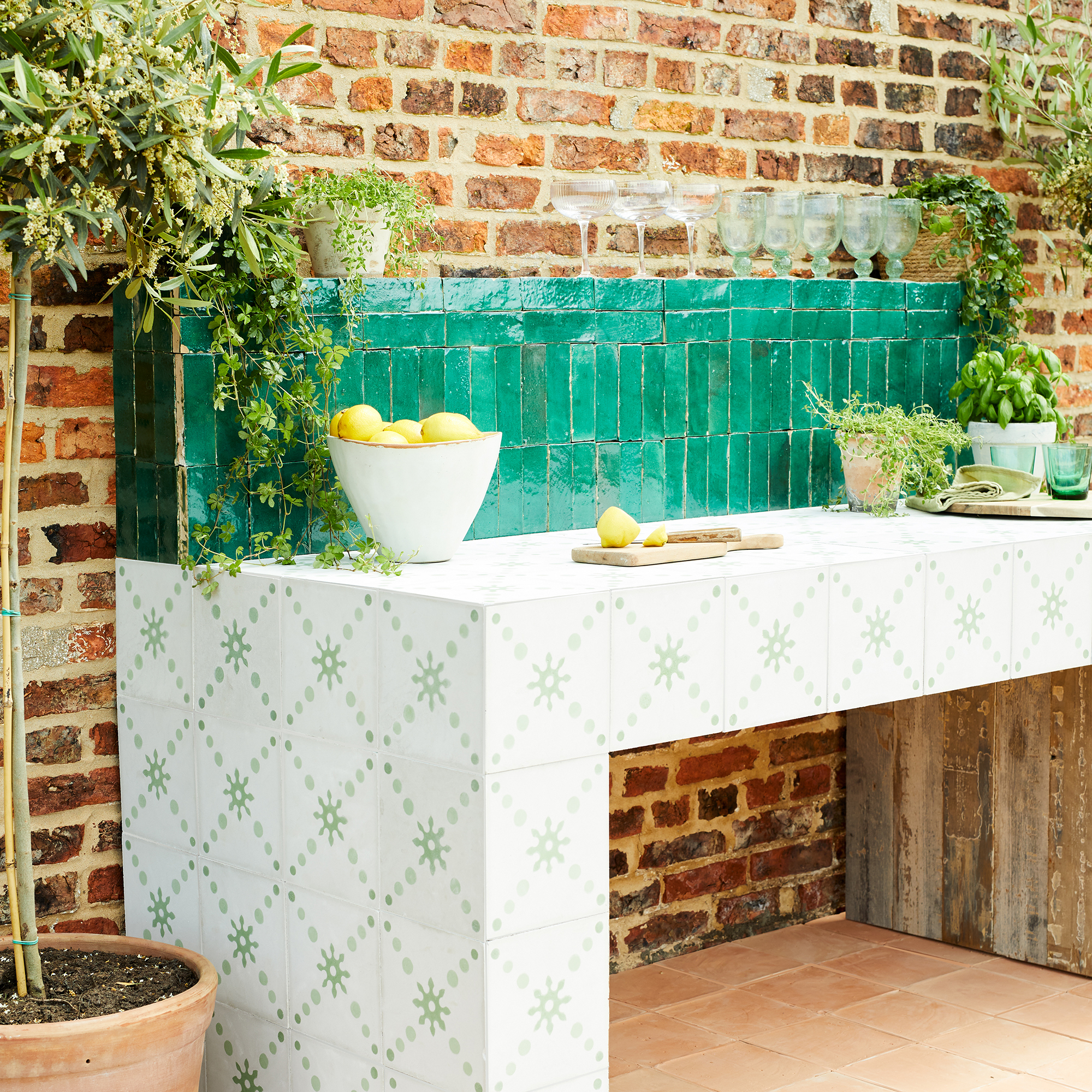 Credit: www.idealhome.co.uk
A properly installed tile wall adds long-lasting value and style to your kitchen.
Credit: www.idealhome.co.uk
A properly installed tile wall adds long-lasting value and style to your kitchen.
Frequently Asked Questions
How do I prepare a kitchen wall for tiling if it has existing wallpaper?
First, score the wallpaper with a wallpaper scorer to break its surface seal, then soak it with a dedicated wallpaper removal solution. Peel off all wallpaper and backing, then clean the wall with a degreaser to remove any adhesive residue. Let the wall dry completely for 24 hours before repairing and priming.
Can I tile over existing ceramic tile?
Yes, if the existing tile is in good condition: fully adhered, crack-free, and with no water damage. Roughen the surface with coarse sandpaper, clean thoroughly, and apply a tile bonding primer before laying new thin-set. If existing tile is damaged or loose, remove it entirely to avoid future failure.
How long does a kitchen wall tiling project take for a DIYer?
For a standard 10 square foot backsplash, expect 2-3 days total: 1 day for prep, 1 day for setting tiles, and 1 day for grouting and sealing. Larger full walls may take 4-5 days, accounting for 24 hours of thin-set curing time and 72 hours of grout curing time between steps.
Do I need a waterproof membrane behind kitchen wall tiles?
Yes, for areas directly behind sinks, stovetops, or dishwashers, a liquid-applied or sheet waterproof membrane prevents water from seeping into the wall and causing mold or rot. For low-moisture decorative accent walls, a membrane is optional but recommended for extra durability.
Conclusion
Tiling a kitchen wall is a rewarding DIY project that transforms your space without the cost of a full renovation. The key to perfect results is spending 80% of your time on prep and layout — rushing these steps is the most common cause of uneven tiles, popped tiles, and grout failure. By following these steps, using the right materials, and taking your time with each stage, you can achieve a professional finish that lasts for years. Ready to tackle your kitchen upgrade? Bookmark this guide to reference as you work, and explore our fixture removal tips if you need to adjust plumbing or hardware before tiling.