How to Put Wall Tiles in Kitchen: Easy Steps for a Stunning Look
Dreaming of a kitchen refresh that boosts both style and functionality? Installing wall tiles behind your countertops, sink, and stove is one of the most high-impact, budget-friendly DIY projects you can tackle. Unlike painted walls, tile resists grease, splatters, and moisture, making it ideal for high-traffic kitchen zones. While the process may seem intimidating at first, this step-by-step guide breaks it down into simple, actionable steps for DIYers of all skill levels, with tips to avoid common costly mistakes and achieve a professional, stunning finish that lasts for years.
Pre-Project Planning: Set Yourself Up for Success
Skipping pre-project planning is the top reason DIY tile installations end up crooked, uneven, or delayed. Spend 30 minutes on these upfront steps to save hours of frustration later. For more on this, see our guide on how to regrout kitchen wall tiles easy steps.
Assess Your Skill Level & Budget
Full-wall tiling requires more precision and tools than a small 30-square-foot backsplash. Beginners should start with a small, low-stakes area like a sink backsplash before tackling a full wall. Budget $3-$15 per square foot for tiles, plus $50-$150 for tools and supplies if you don’t already own them. For a standard 30-square-foot backsplash, total material costs typically fall between $150 and $450.
Choose Your Tile Location
Decide if you’re tiling a partial backsplash (behind the counter and sink), a full wall, or the area behind your stove. Full-wall installations require more cuts and alignment work, while partial backsplashes are ideal for first-time DIYers. If you have a wall-mounted range hood or faucet, plan to remove fixtures before starting to avoid awkward cuts around hardware. For more on this, see our guide on how to put mosaic tiles on kitchen wall.
Timeline Expectations
A standard 30-square-foot backsplash takes 4-6 hours for installation, plus 24 hours for adhesive to cure, 24-48 hours for grout to set, and 72 hours before sealing. Plan your project over a long weekend to avoid rushing steps, which leads to poor adhesion or uneven grout.
Choose the Perfect Kitchen Wall Tiles
The right tiles set the tone for your entire kitchen, balancing style, durability, and ease of maintenance. Focus on these key factors to pick a option that fits your space and lifestyle.
Tile Types & Durability Ratings
Not all tiles are built for kitchen use: look for a PEI (Porcelain Enamel Institute) rating of 3 or higher for wall tiles, which indicates they can withstand daily wear, scratches, and moisture.
- Ceramic tiles: Affordable, easy to cut, and available in endless colors and patterns. Ideal for beginners and low-budget projects.
- Porcelain tiles: Denser, more water-resistant, and higher PEI rated (often 4-5) than ceramic, making them perfect for high-moisture areas behind sinks and stoves.
- Glass tiles: Add a sleek, reflective finish that brightens dark kitchens, but are more prone to chipping and require careful cutting.
- Natural stone (marble, slate, granite): Offer timeless, high-end appeal, but require annual sealing and are vulnerable to etching from acidic foods and cleaners, making them a higher-maintenance choice for busy households.
Finish, Color & Pattern
- Matte finishes: Hide grease smudges and water spots better than glossy tiles, making them a practical choice for busy cooks.
- Glossy finishes: Reflect light to make small kitchens feel larger, but show every smudge and fingerprint.
- Light-colored tiles (white, cream, light gray) make small kitchens feel more open, while dark tiles (navy, charcoal, terracotta) add warmth and hide stains better. For a cohesive look, coordinate your tile choice with your kitchen’s cabinet and wall color: soft neutral tiles pair beautifully with pairing tile with green cabinetry, while warm earth tones complement matching tile to brown cabinetry.
- Subway tiles (3×6 inch rectangular tiles) are a timeless, versatile option for any style, while mosaics and patterned tiles add personality to accent walls.
Size & Layout Considerations
Larger tiles (12×12 inches or larger) create fewer grout lines for a sleek, modern look, but require a flatter wall surface to avoid lippage (uneven tile edges). Smaller tiles (1×1 or 2×2 inch mosaics) are forgiving of uneven walls and work well for detailed accent areas. When choosing size, factor in the scale of your kitchen: large tiles can overwhelm small spaces, while small tiles can look busy in large, open kitchens.
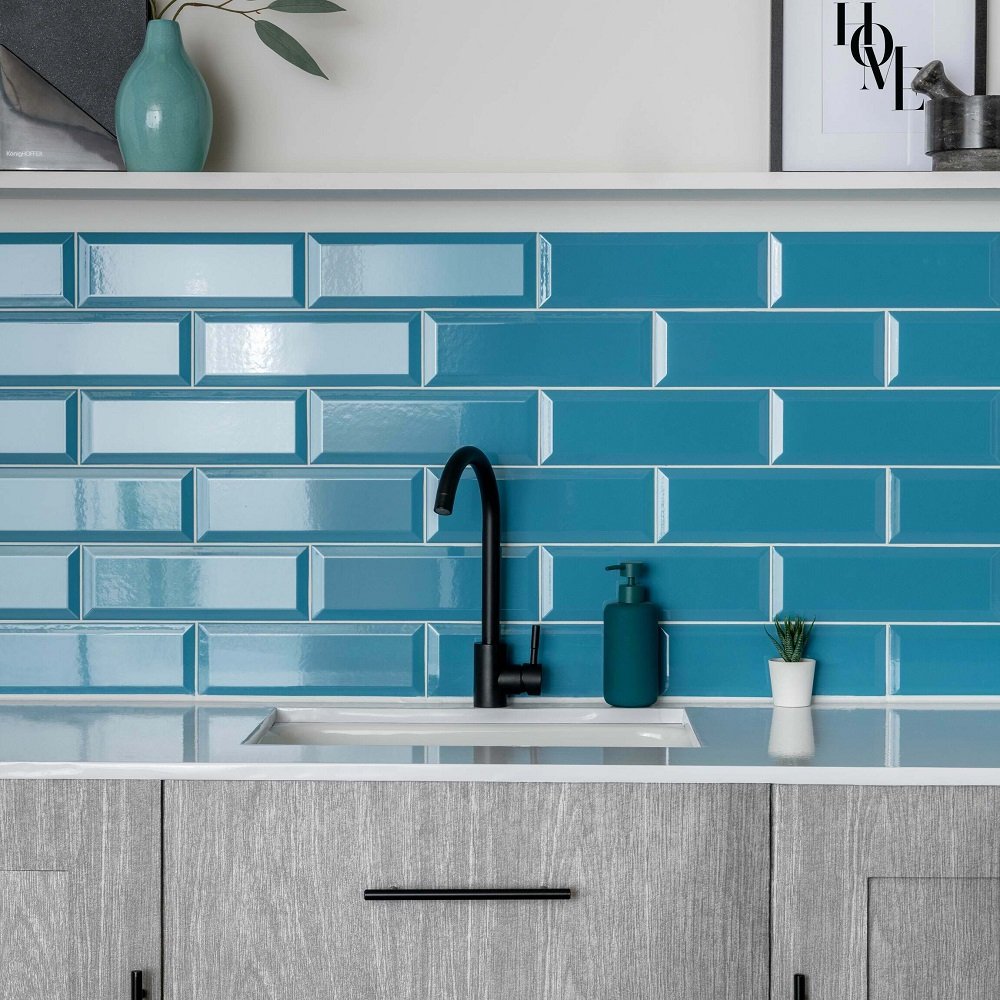
 This cool-toned blue metro tile backsplash pairs seamlessly with white quartz countertops and light wood cabinets for a bright, coastal-inspired kitchen look.
Credit: www.tilemountain.co.uk
This cool-toned blue metro tile backsplash pairs seamlessly with white quartz countertops and light wood cabinets for a bright, coastal-inspired kitchen look.
Credit: www.tilemountain.co.uk
 Muted sage green subway tiles add a soft, organic contrast to white cabinetry, perfect for farmhouse or modern kitchen styles.
Credit: www.tilemountain.co.uk
Muted sage green subway tiles add a soft, organic contrast to white cabinetry, perfect for farmhouse or modern kitchen styles.
Credit: www.tilemountain.co.uk
Gather Your Tools & Materials
Having all your supplies on hand before you start prevents mid-project trips to the hardware store and ensures a smooth, efficient process. Don’t skip these essentials:
Essential Tools
- Tile cutter or wet saw (for straight and curved cuts)
- Notched trowel (1/4" x 1/4" for tiles under 8", 1/2" x 1/2" for larger tiles)
- Laser level or long spirit level (for accurate, straight reference lines)
- Tile nippers (for curved cuts around outlets and edges)
- Rubber grout float
- Tile spacers (1/8" or 1/4", depending on your desired grout width)
- Mixing bucket and paddle (for adhesive and grout)
- Soft sponge and microfiber cloths
- Knee pads (for comfort during long work sessions)
- Safety goggles, gloves, and dust mask
Adhesives & Grout
- Tile adhesive: Use polymer-modified thin-set mortar for most kitchen installations, as it offers superior bond strength and water resistance in high-moisture areas. Premixed adhesive works for small, low-moisture backsplashes but has a shorter working time than powdered mixes.
- Grout: Choose sanded grout for joints wider than 1/8", unsanded for narrower gaps. Epoxy grout is stain-resistant and mold-proof, making it ideal for high-traffic kitchen areas, though it is more expensive and has a shorter working time than cement-based options.
- Sealer: Penetrating grout sealer for cement-based grout, and tile sealer for natural stone tiles if required.
Additional Supplies
- Cement backer board (for tiling over drywall in high-moisture areas behind sinks and stoves)
- Tile primer (for improving adhesion on smooth or porous walls)
- 100% silicone caulk (for sealing edges between tile and countertops/cabinets)
- Painter’s tape and drop cloths (for protecting surrounding surfaces)
- Outlet extenders (if tiling over existing electrical boxes)
Prepare Your Kitchen Wall for Tiling
Proper wall prep is the most critical step for a long-lasting, professional-looking installation. Skipping this step leads to tiles popping off, uneven surfaces, and water damage behind the wall.
Clean & Repair the Surface
Start by removing all grease, dust, and old adhesive from the wall using a degreaser and warm water. For walls with existing paint, sand the surface lightly to create a rough texture for better adhesion. Fill any cracks, holes, or deep gouges with spackle, and sand smooth once dry. Use a straight edge to check for uneven spots: any area with more than 1/8" of variation needs to be sanded down or filled to avoid lippage between tiles. If you have existing tile on the wall, score the grout lines with a utility knife and pry the tiles off carefully before prepping the underlying surface.
Install Backer Board (If Needed)
If you’re tiling over drywall in a high-moisture area (behind a sink, stove, or dishwasher), install 1/4" cement backer board over the drywall, secured with corrosion-resistant screws. Tape and mud the seams with thin-set mortar to create a smooth, water-resistant base. For low-moisture areas away from water sources, properly primed and repaired drywall is sufficient for tile adhesion.
Mark Reference Lines
Use a laser level to draw two horizontal reference lines: one at the starting point (usually the top of the countertop) and one at the top of the installation area. Mark a vertical center line to ensure your layout is symmetrical, especially if you’re working around outlets or fixtures. If you have a wall-mounted faucet, removing a wall-mounted faucet first will make cutting and fitting tiles around the fixture far easier.
Protect Surrounding Areas
Cover countertops, cabinets, and floors with drop cloths, and use painter’s tape to protect trim, switch plates, and nearby surfaces. Wrap electrical outlets and switches in plastic to keep adhesive and grout out of electrical components.
Plan Your Tile Layout (Critical for a Stunning Look)
Skipping layout planning is the most common cause of crooked tile rows, uneven cuts, and awkward thin sliver tiles at the edges of the wall. This step takes 30 minutes but eliminates 90% of installation headaches.
Dry-Fit Tiles First
Lay your tiles out on the floor next to the installation area, using tile spacers to mimic the final grout lines. This lets you see where cuts need to be made, adjust the layout to avoid thin slices at the edges, and spot any color variations or damaged tiles before you commit to adhesive.
Mark Cut Lines
Use your reference lines and dry-fit notes to mark where cuts need to be made on each tile with a pencil. For outlets, use an outlet template to mark the cutout shape, or trace the outlet cover directly onto the tile. Double-check all measurements before cutting to avoid waste.
Account for Fixtures & Outlets
If you’re tiling around an outlet, purchase an outlet extender to raise the electrical box to the thickness of the tile, so the cover sits flush with the tile surface. For wall-mounted fixtures like range hoods, plan your layout so cuts are hidden behind the fixture as much as possible.
Cut & Handle Tiles Safely
Accurate cuts ensure tiles fit perfectly around outlets, corners, and edges, while careful handling prevents chipping and breakage.
Making Straight & Curved Cuts
Use a manual tile cutter for straight cuts on ceramic and porcelain tiles: score the tile firmly along the marked line, then snap it along the scored edge for a clean cut. For curved cuts, thick porcelain tiles, or glass tiles, use a wet saw with a diamond blade for precise, smooth edges. Always cut tiles in a well-ventilated area, and wear a dust mask to avoid inhaling fine silica dust.
Handling Fragile Tiles
Glass and natural stone tiles are more prone to chipping than ceramic or porcelain. Handle them gently, and store them flat in a safe area away from foot traffic. For glass tiles, use a glass-specific cutting bit to avoid cracking. If a tile chips during cutting, set it aside for use in a hidden area (like behind a cabinet) rather than discarding it. A common mistake beginners make is cutting tiles as they go, rather than cutting all required pieces upfront. This leads to rushed cuts and mistakes, as you’ll be working against the clock while adhesive dries.
Apply Adhesive & Set Tiles
Proper adhesive application and tile placement ensure your tiles stay securely in place for decades, with no lippage or shifting.
Mix & Apply Adhesive
Mix thin-set mortar according to the package instructions, using clean water and a mixing paddle to achieve a smooth, lump-free, peanut butter-like consistency. Let the mix slake (rest) for 5-10 minutes, then remix before use—this improves bond strength. Apply adhesive to the wall in small 2×2 foot sections using a notched trowel held at a 45-degree angle, creating straight, consistent grooves. For uneven walls or large tiles, apply a thin layer of adhesive to the back of the tile (back-buttering) before pressing it to the wall to ensure full contact.
Place Tiles Accurately
Press each tile firmly into the adhesive, twisting it slightly side to side to squeeze out air bubbles and ensure full coverage. Check alignment with your reference lines every 3-4 tiles, adjusting as needed before the adhesive sets. Work from the bottom up, starting at your marked center line or a corner, depending on your layout. Wipe away any excess adhesive squeezed out between tiles immediately with a damp sponge, as it will harden and be difficult to remove later.
Use Spacers for Even Gaps
Insert tile spacers at each corner of the tile as you work to maintain consistent grout lines. For a seamless look, choose spacers that match your grout width (1/8" for narrow lines, 1/4" for wider, more textured lines). Check spacing regularly with a ruler to avoid uneven gaps, which ruin the professional look of the installation. Leave spacers in place for 24 hours to allow the adhesive to cure fully before removing them.
Grout & Seal for Long-Lasting Results
Grouting fills the gaps between tiles to create a seamless, water-resistant finish, while sealing protects the grout from stains, moisture, and mold. This step takes 2-3 hours, plus drying time.
Choose the Right Grout
Select grout that matches your tile and kitchen needs:
- Cement-based grout: Affordable, easy to apply, and available in a wide range of colors. Requires sealing for moisture resistance.
- Epoxy grout: Stain-resistant, mold-proof, and requires no sealing, making it ideal for high-traffic kitchen areas. It is more expensive and has a shorter working time than cement-based options.
- Match your grout color to the tile for a seamless look, or choose a contrasting shade to highlight the tile pattern. For a subtle, cohesive finish, a grout shade one or two tones lighter or darker than the tile works well.
Apply & Clean Grout
Mix grout to a thick, peanut butter-like consistency, then apply it to the tile gaps using a rubber grout float held at a 45-degree angle. Press firmly into the gaps to ensure full coverage, working in small 10-15 minute sections to avoid the grout drying too quickly. Once all gaps are filled, wait 10-15 minutes for the grout to set slightly, then wipe away excess grout from the tile surface with a damp sponge. Rinse the sponge frequently in clean water, and avoid rubbing out grout from the joints. After 30 minutes, polish the tiles with a dry microfiber cloth to remove any remaining grout haze.
Seal for Durability
Wait 72 hours after grouting to apply sealer, as applying it too early can trap moisture and cause discoloration. Use a penetrating grout sealer applied with a small brush or roller, covering all grout lines evenly. For natural stone tiles, apply a stone sealer to the tile surface as well to prevent staining and etching. Epoxy grout does not require sealing. For detailed, research-backed guidance on grout mixing and application, refer to the official ceramic tile installation standards from the University of Minnesota Extension.
Finishing Touches & Final Inspection
These final steps turn a good tile installation into a stunning, professional-looking finish that lasts for years.
Install Trim & Caulk Edges
Install bullnose, pencil molding, or corner trim pieces at the top and edges of the tiled area for a clean, finished look. Seal the gap between the bottom of the tile and the countertop, and between the tile and adjacent walls, with 100% silicone caulk to prevent water damage. Smooth the caulk with a wet finger, and remove painter’s tape before the caulk dries to avoid peeling off finish.
Final Inspection
Use a bright flashlight to check for lippage (tiles that are higher or lower than adjacent ones), uneven grout lines, or air pockets in the tile. Tap each tile lightly with a rubber mallet; a hollow sound indicates poor adhesion that needs to be fixed before the adhesive fully cures. Fix any small gaps or uneven spots with a small amount of leftover grout or adhesive.
Reinstall Fixtures
Once the caulk and adhesive are fully cured (24-48 hours), reinstall any removed fixtures, like outlet covers or range hoods.
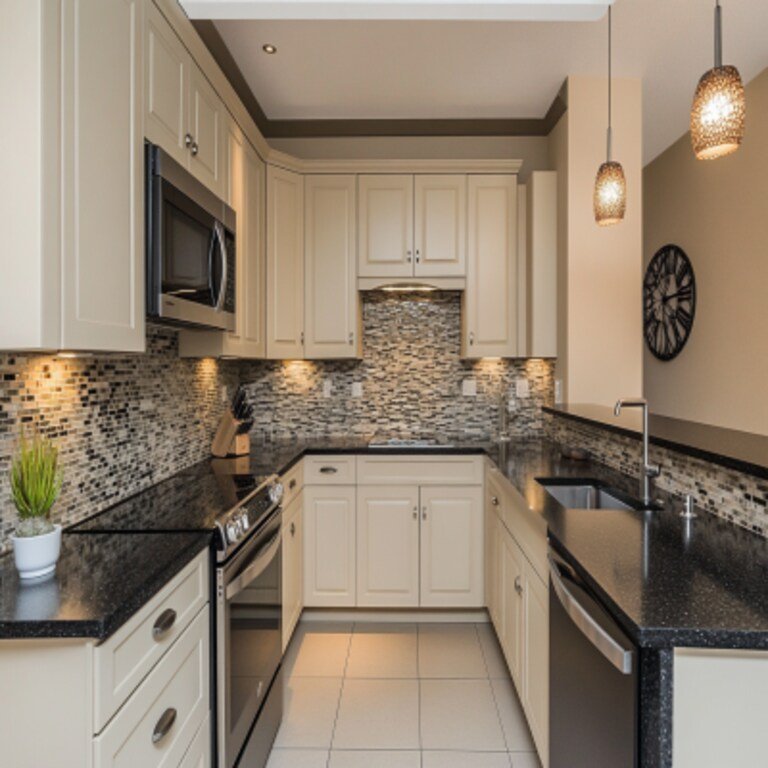
 A well-installed backsplash with even grout lines and clean caulk creates a high-end, cohesive look that elevates the entire kitchen.
Credit: www.create-enjoy.com
A well-installed backsplash with even grout lines and clean caulk creates a high-end, cohesive look that elevates the entire kitchen.
Credit: www.create-enjoy.com
Long-Term Maintenance for Stunning Results
Proper maintenance keeps your tiled kitchen walls looking like new for decades, with minimal effort.
Regular Cleaning
Wipe down tiles after each cooking session with a soft sponge and warm, soapy water to prevent grease and food splatters from hardening. For deeper cleans, use a pH-neutral cleaner specifically designed for tile: avoid vinegar, bleach, or abrasive scrubbers on natural stone tiles, as these can etch the surface and cause permanent discoloration. Matte-finish tiles hide smudges better than glossy finishes, making them ideal for busy households.
Stain & Mold Prevention
For stubborn grease stains, make a paste of baking soda and water, apply it to the stain, let sit for 10 minutes, then scrub gently with a soft brush. To prevent mold and mildew in grout lines, run your kitchen exhaust fan while cooking to reduce humidity, and wipe down the tile and grout weekly with a mild anti-fungal cleaner. If mold does appear, scrub with a 1:3 bleach and water solution, wearing gloves and ensuring proper ventilation.
Long-Term Care
Reseal cement-based grout every 6-12 months, depending on usage, to maintain its stain and water resistance. Natural stone tiles require annual sealing to prevent etching and staining. Inspect your tile and grout every 6 months for cracks, loose tiles, or worn sealer, and address small issues immediately to avoid larger, costlier repairs later.
Frequently Asked Questions
Can I tile over existing kitchen wall tiles?
Yes, as long as the existing tiles are flat, securely attached, and free of damage. Clean the existing tiles thoroughly, rough up the surface with sandpaper to improve adhesion, and apply a tile primer before installing new tiles. Avoid tiling over loose or cracked tiles, as these will cause new tiles to shift or fall off.
Do I need a backer board for kitchen wall tiles?
Cement backer board is required for high-moisture areas behind sinks, stoves, and dishwashers, even if you’re tiling over drywall. For low-moisture areas away from water sources, properly primed and repaired drywall is sufficient for tile adhesion.
What grout color should I choose for a seamless look?
For a subtle, cohesive finish, choose a grout shade within one or two tones of your tile color. For a bold, statement look, choose a high-contrast grout color that highlights the tile pattern. Test grout samples on a small section of your wall before committing to the full installation.
How long do I have to wait to use my kitchen after tiling?
Wait at least 72 hours after grouting and sealing before using the tiled area for cooking or cleaning. Avoid splashing water on the grout for 7 days after installation to ensure it cures fully.
What is the easiest tile cut for beginners?
Straight cuts with a manual tile cutter are the simplest for first-time DIYers. Practice on a spare tile before cutting your final pieces to get a feel for the tool and avoid wasting materials.
Conclusion
Installing kitchen wall tiles is a rewarding DIY project that transforms your space, adds value to your home, and creates a durable, easy-to-clean surface that stands up to daily use. By following these steps—prepping your wall properly, planning your layout, using the right tools, and taking time with grouting and sealing—you can achieve a stunning, professional-looking finish without hiring a contractor. The key to success is patience: don’t rush the drying time for adhesive, grout, or sealer, and double-check your alignment at every step. Ready to start your kitchen makeover? Pick your perfect tile shade this weekend, and you’ll have a refreshed, beautiful kitchen in no time.