How to Install Wall Cabinets in Kitchen: Easy Step-by-Step Guide
Are you ready to transform your kitchen and add valuable storage space? Installing wall cabinets might seem tricky, but with the right steps, you can do it yourself and save money.
Imagine having neatly organized shelves within easy reach, making cooking and cleaning simpler every day. In this guide, you’ll discover clear, easy instructions to help you install your kitchen wall cabinets quickly and safely. Keep reading, and you’ll gain the confidence to tackle this project like a pro—your dream kitchen is closer than you think!

Credit: www.familyhandyman.com
Tools And Materials Needed
Installing wall cabinets in your kitchen requires the right tools and materials. Having everything prepared makes the job easier and faster. This section lists the essential items to gather before starting.
Basic Tools
- Drill with drill bits
- Stud finder
- Level
- Measuring tape
- Screwdriver
- Hammer
- Pencil for marking
- Clamps
- Step ladder
Materials Required
- Wall cabinets
- Mounting screws
- Wood shims
- Anchors (if no studs found)
- Construction adhesive (optional)
- Protective gloves
Safety Equipment
- Safety goggles
- Dust mask
- Work gloves
Preparing The Wall
Preparing the wall is a crucial step before you install your kitchen wall cabinets. A solid and well-prepared wall ensures your cabinets stay securely mounted and hold the weight of your items over time. Taking the time to get this right can save you from future headaches and costly repairs.
Locate Studs And Mark Positions
Start by finding the studs behind your wall drywall. These wooden beams are the strongest points to anchor your cabinets. Use a stud finder to scan the wall, moving it slowly until it beeps or signals a stud.
Mark each stud location clearly with a pencil. Space is typically 16 or 24 inches apart, but always check your specific wall. After marking the studs, measure and mark where the top and bottom of each cabinet will sit to ensure perfect alignment.
Have you thought about how uneven markings can affect your cabinet’s stability? Double-check your marks before drilling to avoid misaligned cabinets that can cause balance issues.
Clear The Installation Area
Before you start drilling or lifting cabinets, clear the entire area around your installation space. Remove any furniture, appliances, or decorations that might get in the way or get damaged.
Also, clean the wall surface to remove dust, grease, or loose paint. A clean surface helps the screws grip better and reduces the chance of slipping. Think about how much easier your work will be when you have an open, tidy space.
Consider placing a drop cloth or cardboard on the floor to catch dust and protect your flooring. This small step keeps your kitchen clean and makes cleanup much faster.
Measuring And Planning
Measuring and planning are crucial before installing wall cabinets in your kitchen. Accurate measurements ensure the cabinets fit perfectly and align well with other elements like countertops and appliances. Taking the time to plan will save you from costly mistakes and frustration during installation.
Determine Cabinet Height
Start by deciding how high you want your wall cabinets. The standard height is usually 54 inches from the floor, but this can vary based on your ceiling height and countertop depth.
Measure from the countertop surface to the ceiling to see how much space you have. Keep in mind you need at least 18 inches of clearance between the countertop and the bottom of the wall cabinets for comfortable workspace.
Think about your own height and reach. If you’re tall, placing cabinets slightly higher might create more room below. If you’re shorter, you might want them a bit lower for easier access.
Mark Cabinet Layout
Once you know the height, it’s time to mark where each cabinet will go. Use a pencil and a level to draw a straight guideline on the wall at the height you determined.
Mark the edges of each cabinet along this line, accounting for the width of the cabinets and any gaps needed for doors to open properly. Double-check these measurements to avoid surprises later.
Consider how your cabinets will align with existing fixtures like windows, lights, or power outlets. Adjust your layout to avoid blocking or crowding these features.
Have you ever started a project only to realize later that something didn’t line up? Careful marking here helps you avoid that frustration and ensures a smooth installation process.
Installing The Ledger Board
Installing the ledger board is a crucial part of setting up your kitchen wall cabinets. This board acts as a temporary support, holding the cabinets in place while you secure them to the wall. Without a properly installed ledger board, your cabinets might shift or become misaligned, making the entire installation process frustrating and uneven.
Choosing The Right Location For The Ledger Board
Start by measuring the height where your cabinets will hang. Mark a level line on the wall to guide the placement of the ledger board. Use a spirit level to ensure this line is perfectly horizontal—any tilt here will cause your cabinets to hang crookedly.
Don’t guess the height; double-check your measurements against the cabinet specifications. This step prevents costly adjustments later on.
Cutting And Preparing The Ledger Board
Use a sturdy piece of wood, typically a 1×4 or 1×6 board, as your ledger. Cut it to the exact length of the cabinet run. Sand down any rough edges to avoid splinters and ensure a clean fit against the wall.
Consider painting or sealing the board if it might be exposed to moisture. This adds durability and keeps the wood from warping over time.
Securing The Ledger Board To The Wall
Locate the wall studs using a stud finder—this is critical for a secure hold. Attach the ledger board directly into these studs using strong screws. Avoid just screwing into drywall as it won’t support the cabinet weight.
If the wall is uneven, use shims behind the ledger board to create a flat, stable surface. This small adjustment can save you from dealing with misaligned cabinets later.
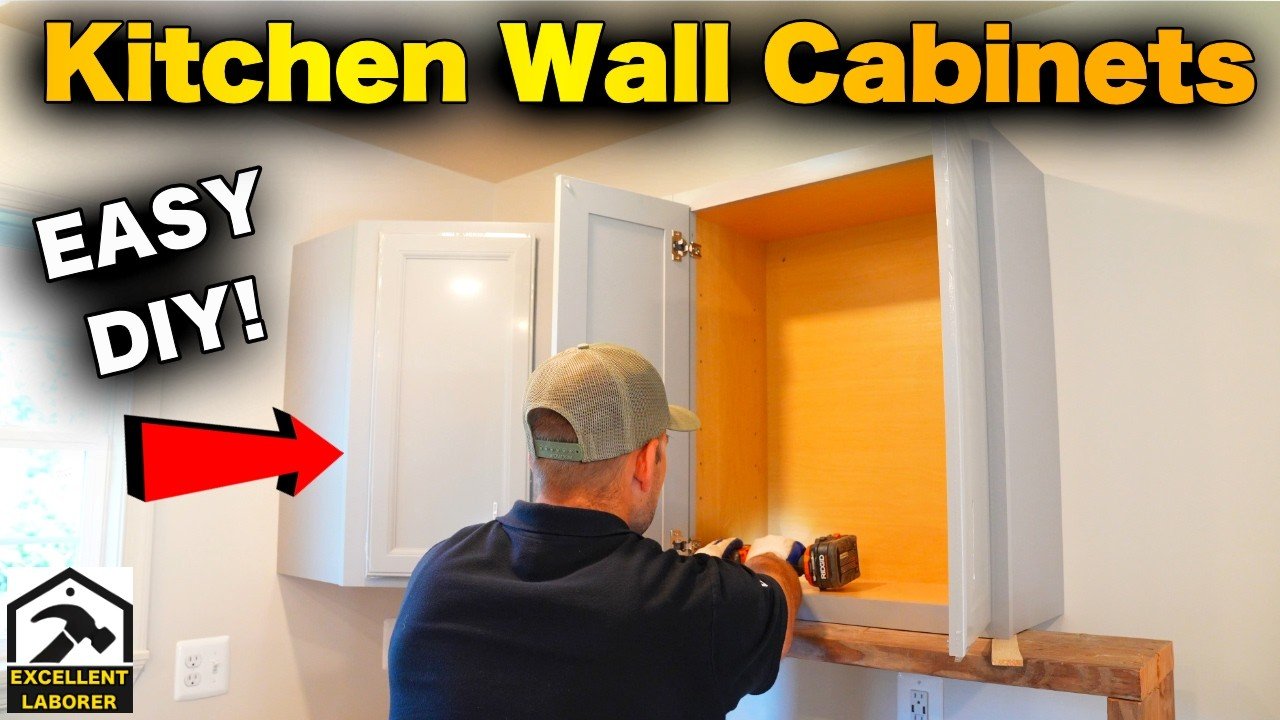
Mounting The Cabinets
Mounting wall cabinets correctly sets the foundation for a sturdy and visually appealing kitchen setup. It requires precision and patience to ensure the cabinets are safe and level. Let’s look at how to get your cabinets mounted with confidence.
Attach First Cabinet
Start by locating the wall studs using a stud finder. Mark these points clearly as they provide the strongest support for your cabinet.
Lift the first cabinet into place and, if possible, have someone hold it steady. Drill pilot holes through the cabinet’s back panel into the studs to avoid splitting the wood.
Secure the cabinet with screws long enough to penetrate the studs by at least 1.5 inches. This first cabinet serves as your anchor, so take your time to make sure it’s perfectly positioned.
Level And Secure Cabinets
Use a spirit level to check if the cabinet is perfectly horizontal. Even a slight tilt can cause doors to misalign and stress the cabinet frame over time.
If the cabinet isn’t level, use shims behind it to adjust. Once level, add more screws through the cabinet into the studs for extra security.
Do you notice how small adjustments here prevent bigger problems later? It’s worth double-checking before moving on.
Join Additional Cabinets
Bring the next cabinet close to the first, aligning the edges carefully. Cabinets should sit flush without gaps for a seamless look.
Clamp the two cabinets together temporarily. Drill pilot holes through the face frames where they meet, then screw them together to create a strong joint.
Repeat this process for each cabinet, checking alignment and level as you go. Your kitchen wall will soon be transformed into a unified, secure storage space.

Credit: www.create-enjoy.com
Final Adjustments
Final adjustments can make or break the look and functionality of your kitchen wall cabinets. Paying close attention now saves you from annoying issues later, like doors that won’t close properly or uneven cabinet heights. These last steps ensure everything fits perfectly and operates smoothly.
Check Alignment And Level
Start by inspecting the alignment of your cabinets. Use a level to confirm that each cabinet sits perfectly straight both horizontally and vertically.
If you notice any slight tilt, don’t ignore it. Adjust the mounting screws or shims behind the cabinet until the surface is completely even. This small correction prevents doors from swinging open or gaps forming between cabinets.
Stand back and look at the overall arrangement. Do the cabinet tops line up neatly? Are the gaps consistent? If something looks off, now is the time to fix it, not after you’ve installed doors and hardware.
Install Doors And Hardware
Attaching doors and hardware last lets you make precise adjustments. Start by hanging the cabinet doors on their hinges and check how they swing.
You might find a door scraping the cabinet frame or not closing flush. Most hinges have small screws that let you tweak the position up, down, left, or right. Make these adjustments patiently until the doors sit perfectly aligned and close effortlessly.
Next, attach handles or knobs. Choose hardware that feels comfortable in your hand and complements your kitchen style. Tighten screws firmly but avoid over-tightening, which can strip the holes or damage the door surface.
Think about how often you’ll use these cabinets. Could a soft-close hinge add convenience? What about magnetic catches to keep doors securely shut? Small upgrades here can make your daily kitchen routine smoother.
Safety Tips And Common Mistakes
Installing wall cabinets in your kitchen can improve storage and style. Safety should be a top priority to avoid accidents and damage. Many common mistakes can cause problems during and after installation.
Following safety tips helps protect you and your home. Knowing what errors to avoid saves time and money. Keep these points in mind for a smooth installation process.
Use Proper Tools And Equipment
Always use the right tools like a stud finder, level, and drill. Wear safety glasses and gloves to protect your eyes and hands. Use a sturdy ladder or step stool for better reach.
Check Wall Structure And Studs
Locate wall studs carefully before mounting cabinets. Screwing into drywall alone will not hold the cabinet’s weight. Mark studs clearly and measure twice before drilling.
Do Not Overload Cabinets
Avoid placing heavy items in wall cabinets that are not securely fastened. Follow weight limits provided by the manufacturer. Distribute weight evenly to prevent cabinet damage.
Avoid Skipping The Leveling Step
Ensure cabinets are level before securing them to the wall. Uneven cabinets can cause doors to swing open or close poorly. Use a spirit level for accuracy.
Secure Cabinets Properly
Use long screws to anchor cabinets to studs. Short screws or nails may loosen over time. Tighten all fasteners firmly without stripping the screw heads.
Do Not Work Alone
Ask for help when lifting and holding cabinets in place. Cabinets can be heavy and awkward to handle alone. A second person improves safety and precision.

Credit: www.youtube.com
Frequently Asked Questions
How Do You Measure For Kitchen Wall Cabinets?
Measure the wall width and height where cabinets will hang. Account for appliances and outlets. Mark stud locations for secure mounting.
What Tools Are Needed To Install Wall Cabinets?
You need a drill, level, stud finder, screwdriver, tape measure, pencil, and clamps. These ensure precise and safe installation.
How High Should Kitchen Wall Cabinets Be Installed?
Standard height is 54 inches from the floor to the cabinet bottom. Adjust based on countertop height and ceiling clearance.
How To Secure Wall Cabinets Safely To Studs?
Use a stud finder to locate studs. Drill pilot holes and use long screws into studs for strong support.
Conclusion
Installing kitchen wall cabinets is a rewarding DIY project. It enhances your kitchen’s look and functionality. Start by gathering all necessary tools and materials. Measure and mark the walls accurately. Secure the cabinets firmly to ensure safety. With patience and attention to detail, you can do it.
A well-installed cabinet improves storage space and kitchen organization. Remember to double-check your work as you go. Enjoy the satisfaction of completing a home improvement task. Your kitchen will look neat and organized. Happy installing!