How to Mount Kitchen Cabinets to Wall: Easy Steps for Perfect Results
Are you ready to give your kitchen a fresh new look? Learning how to mount kitchen cabinets to the wall is a game-changer.
It can transform your space, add storage, and boost your home’s value. But if you’re worried it sounds complicated, don’t be. With the right steps and tools, you can do it yourself—and do it right. Keep reading, and you’ll discover simple, clear instructions that make this project easier than you think.
Your dream kitchen is just a few steps away!
Tools And Materials Needed
Mounting kitchen cabinets to the wall requires a clear understanding of the tools and materials involved. Having everything ready before you start saves time and keeps the process smooth. Knowing what you need also helps avoid frustrating interruptions during your project.
Essential Tools
- Stud Finder:Crucial for locating wall studs to ensure your cabinets have solid support.
- Level:Keeps your cabinets perfectly horizontal, avoiding crooked installation.
- Drill and Drill Bits:You need a drill to make pilot holes and drive screws securely into the wall.
- Screwdriver:A manual or electric screwdriver helps with fine adjustments and tightening screws.
- Measuring Tape:Accurate measurements prevent gaps and uneven spacing between cabinets.
- Pencil:Marking stud locations and cabinet placement is easier with a clear pencil mark.
- Clamps:Holding cabinets in place while you fasten them saves effort and improves precision.
- Safety Gear:Always wear safety glasses and gloves to protect yourself during installation.
Required Materials
- Wall Anchors or Screws:Choose heavy-duty screws or anchors rated for cabinet weight and wall type.
- Cabinet Mounting Brackets:These provide extra stability, especially for larger or heavier cabinets.
- Shims:Use shims to level cabinets if your walls are uneven or not perfectly straight.
- Cabinets:Obviously, you need the cabinets themselves—make sure they are pre-assembled or ready for mounting.
- Caulk or Wood Filler:Useful for filling gaps and giving a clean, finished look after installation.
Have you ever started a project only to realize you’re missing a key tool halfway through? That’s why a quick double-check of your toolbox and materials can make a huge difference. Think about the space you’re working in—does it have drywall, plaster, or concrete? This will affect the type of screws and anchors you pick.
Preparing The Wall
Preparing the wall is a crucial step before mounting your kitchen cabinets. It sets the foundation for a secure and level installation. Skipping this stage or rushing through it can lead to cabinets that sag or pull away over time.
Locating Wall Studs
Wall studs are the backbone of your cabinet installation. Use a stud finder to locate them accurately; they are usually spaced 16 or 24 inches apart. Mark each stud with a pencil at the height where the cabinets will sit to ensure you screw directly into solid wood.
Relying on drywall anchors alone won’t hold heavy cabinets safely. Trust me, I once tried mounting without stud support, and the cabinet barely lasted a week before it started pulling away from the wall. Don’t make the same mistake.
Marking Cabinet Placement
After finding the studs, mark the exact position of the cabinets on the wall. Use a level and a pencil to draw a horizontal line where the bottom of the cabinets will rest. This line acts as your guide, helping you mount the cabinets straight and even.
Measure twice, mark once—this rule is especially true here. A slight misalignment can cause doors not to close properly or gaps between cabinets. Take your time with this step; it pays off during installation.
Checking For Obstacles
Before you start drilling, look for obstacles hidden behind the wall like electrical wires, plumbing pipes, or ventilation ducts. Use a multi-scanner tool that detects wiring and pipes to avoid damaging them.
Imagine drilling blindly and hitting a wire—it’s not just a hassle; it’s dangerous. If you find obstacles, adjust your cabinet placement or consult a professional to reroute utilities safely. Your safety and the integrity of your home’s systems depend on this check.
Measuring And Leveling
Measuring and leveling are the foundation of mounting kitchen cabinets securely and neatly. Without precise measurements and a perfectly level frame, your cabinets may end up crooked or misaligned, which can ruin both the look and functionality of your kitchen.
Have you ever seen a cabinet door that swings open on its own or drawers that stick? Often, this is due to poor measuring and leveling during installation. Paying close attention here saves you from future headaches and costly fixes.
Measuring Height And Width
Start by measuring the wall height where your cabinets will hang. Use a tape measure to find the distance from the floor or countertop to the ceiling or upper limit.
Mark this height clearly on the wall with a pencil. Double-check your measurements to avoid mistakes.
Next, measure the width of the space to ensure your cabinets fit perfectly without gaps or overlaps. Don’t forget to account for obstacles like electrical outlets or plumbing.
- Measure twice, mark once to avoid errors.
- Use a straight edge to draw horizontal lines for cabinet placement.
- Consider the height of appliances or countertops that will affect cabinet positioning.
Using A Level For Accuracy
Once you’ve marked your measurements, it’s time to ensure everything is level. A carpenter’s level or laser level works best for this task.
Place the level along your pencil lines and adjust until the bubble is perfectly centered. This confirms your lines are horizontal or vertical as needed.
If you skip this step, even slight unevenness can cause problems when hanging the cabinets. You might notice doors that don’t close properly or shelves that tilt.
- Check multiple points along the wall, not just one spot.
- Recheck your marks after leveling to confirm accuracy.
- Use shims during installation if your wall is uneven to keep cabinets straight.
Have you ever tried to hang something heavy only to find it tilted? Using a level prevents that frustration and guarantees a polished result.

Credit: www.familyhandyman.com
Assembling The Cabinets
Assembling kitchen cabinets is a crucial step that sets the foundation for a smooth installation. It involves preparing the cabinet parts and ensuring everything fits perfectly before mounting. Getting this right saves time and prevents frustration during the actual wall mounting.
Pre-assembly Tips
Start by organizing all your cabinet parts and hardware. Lay everything out on a clean, flat surface to avoid losing small screws or brackets. Check the instructions for any special tools or extra components you might need.
Take a moment to inspect each panel for damage or defects. It’s easier to address issues now than after assembly. Also, dry-fit the pieces together to understand how they align and to spot any adjustments needed.
Ask yourself: Have you measured your workspace? Clear your work area to give yourself enough room to move around comfortably. A cramped space can lead to mistakes or damage during assembly.
Attaching Face Frames
Face frames add strength and style to your cabinets. Begin by aligning the face frame pieces to the cabinet box edges. Use clamps to hold them in place before securing with screws or nails.
Make sure the frame is flush and square with the cabinet box. Uneven frames can cause doors and drawers to misalign later. Use a carpenter’s square to double-check the corners.
Take your time here. I once rushed this step and ended up with gaps that were hard to fix without disassembling. It’s better to be precise now than redo work later.
Once attached, sand any rough edges on the face frames for a smooth finish. This small detail improves both the appearance and safety of your cabinets.
Mounting The Cabinets
Mounting kitchen cabinets to the wall is a key part of any kitchen remodel. Proper installation keeps cabinets secure and aligned. It also ensures safety and a professional look. This section guides through the main steps of mounting cabinets, focusing on top and base cabinets.
Securing Top Cabinets
Start by locating wall studs with a stud finder. Mark each stud with a pencil. Use a level to draw a straight line where the bottom of the top cabinets will sit. This line helps to align all cabinets evenly.
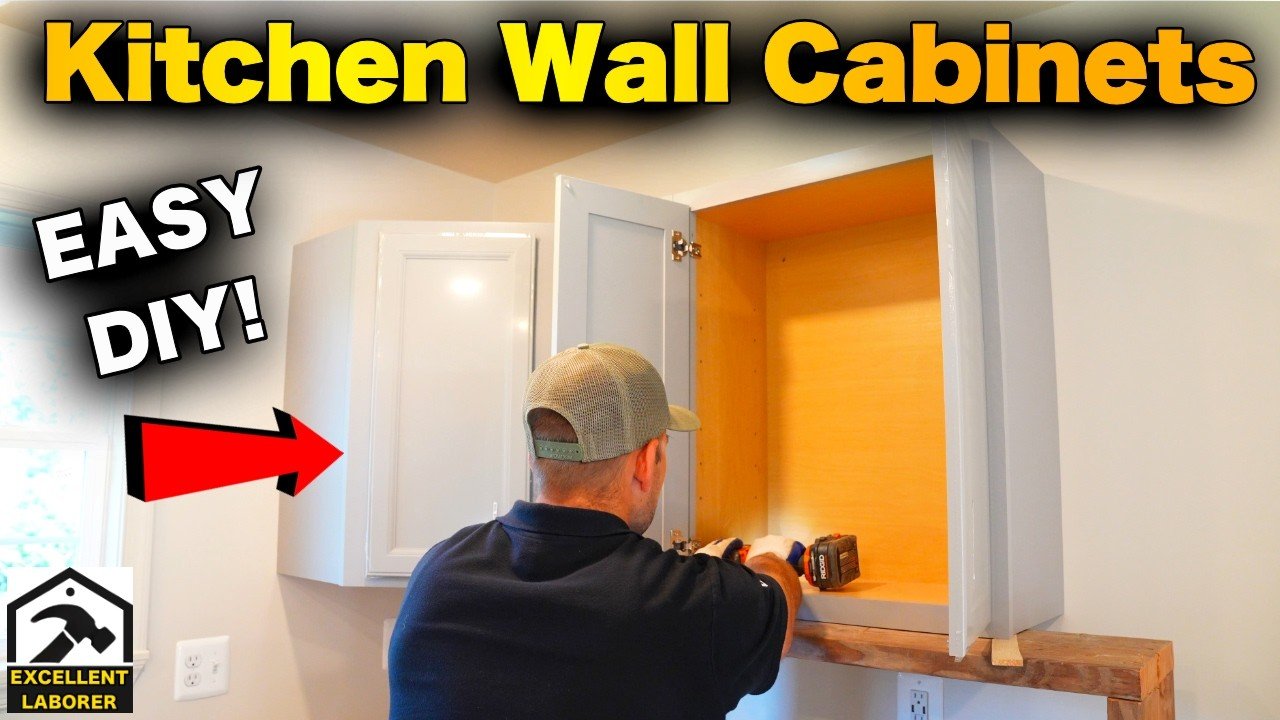
Lift the first top cabinet and hold it against the wall, matching the bottom edge with the line. Use clamps or ask for help to hold the cabinet steady. Drill pilot holes through the cabinet’s back panel into the studs. Secure the cabinet with long screws designed for wood and drywall.
Check the cabinet for level and adjust if needed. Repeat this process for each top cabinet, joining cabinets together by screwing through the side panels. Make sure all cabinets are flush and level to avoid gaps.
Installing Base Cabinets
Begin by preparing the floor. Clean the area and check if the floor is level. Use shims to adjust any uneven spots. Draw a guideline on the wall at the base cabinet height for alignment.
Place the first base cabinet along the guideline. Use a level to ensure it is straight. Secure the cabinet to the wall by drilling pilot holes and using screws into the studs. Join base cabinets together by screwing through side panels.
Keep checking that each cabinet is level and flush with the adjacent ones. Fill any gaps with shims. Once all base cabinets are installed and secured, you can proceed to install the countertop.

Credit: www.create-enjoy.com
Adjusting And Aligning
Adjusting and aligning kitchen cabinets is crucial for a polished, professional look. Cabinets must sit flush and level on the wall. Even small misalignments can affect the entire kitchen’s appearance and functionality.
Take your time to check every cabinet’s position before finalizing the installation. Proper alignment ensures doors open smoothly and gaps stay consistent. Use simple tools like a level and measuring tape to achieve perfect results.
Checking Cabinet Alignment
Start by placing a level on top of each cabinet. Check for any tilt forward, backward, or sideways. Look along the cabinet edges to see if they line up with adjacent units.
- Check the height of cabinet tops for evenness.
- Make sure cabinets sit flat against the wall without gaps.
- Compare door and drawer fronts for uniform spacing.
Small gaps or uneven surfaces indicate a need for adjustment. Accurate measurements help prevent mistakes before securing cabinets permanently.
Making Necessary Adjustments
Loosen screws slightly to allow cabinets to move. Use shims made of wood or plastic to fill gaps behind the cabinet. Push or pull cabinets to align edges and level surfaces.
- Insert shims behind cabinets where walls are uneven.
- Adjust each cabinet independently for height and depth.
- Recheck level and alignment after each adjustment.
Tighten screws only after confirming the cabinet is perfectly aligned. Repeat this process for every cabinet to ensure a seamless kitchen setup.
Finishing Touches
Finishing touches bring your kitchen cabinets to life. They make your cabinets look complete and polished. These final steps improve both function and style. The right hardware and a fresh coat of paint add charm. Small details make a big difference in your kitchen’s look.
Installing Doors And Hardware
Attach cabinet doors carefully to avoid damage. Use hinges that match the cabinet style. Align doors evenly for a neat appearance. Tighten screws but do not over-tighten. This avoids stripping and keeps doors secure.
Choose handles and knobs that fit your kitchen design. Install hardware at a comfortable height. Test doors and drawers to ensure smooth operation. Adjust hinges if doors don’t close properly. Well-installed hardware adds ease and beauty.
Sealing And Painting
Seal cabinets to protect wood from moisture. Use a clear sealant for natural wood or paint. Apply paint evenly with a brush or roller. Choose paint that suits kitchen conditions, like semi-gloss. Allow each coat to dry fully before adding another.
Check for drips or uneven spots after painting. Sand lightly between coats for a smooth finish. Proper sealing and painting extend cabinet life. They keep your kitchen looking fresh and clean.

Credit: www.create-enjoy.com
Safety Tips And Best Practices
Mounting kitchen cabinets securely is not just about getting the job done—it’s about doing it safely. Ignoring safety can lead to accidents or damage that cost time and money. Paying attention to the right practices protects you and ensures your cabinets stay firmly in place for years.
Handling Heavy Cabinets
Kitchen cabinets can be surprisingly heavy, especially when made of solid wood. Always have a second person help you lift and hold cabinets while positioning them on the wall. Trying to do it alone increases the risk of dropping the cabinet or injuring yourself.
Use lifting techniques that protect your back. Keep the cabinet close to your body and lift with your legs, not your back. If possible, use a cabinet jack or temporary supports to hold the cabinet steady while you secure it.
Have you thought about the best way to move large cabinets through tight spaces? Planning your path before you start can prevent injuries and damage to both the cabinets and your home.
Using Proper Anchors
Choosing the right anchors is critical to keep your cabinets safely mounted. Drywall alone can’t hold heavy cabinets, so you need to locate studs or use heavy-duty wall anchors designed for your wall type.
Use a stud finder to locate wall studs and mark them clearly. If studs don’t line up with cabinet mounting points, toggle bolts or molly bolts rated for heavy loads work well. Avoid relying on plastic anchors that aren’t rated for the cabinet’s weight.
Double-check the weight rating on your anchors before installation. Overloading weak anchors can cause cabinets to pull away from the wall, risking injury and damage. Would you want your cabinets crashing down because of a missed detail here?
Frequently Asked Questions
How Do You Find Studs To Mount Kitchen Cabinets?
Use a stud finder to locate wall studs. Mark their positions with a pencil. Studs provide strong support for cabinets and prevent damage.
What Type Of Screws Are Best For Cabinet Mounting?
Use 2. 5 to 3-inch wood screws. Choose screws with a thick gauge for better grip. Avoid drywall screws as they lack strength.
How High Should Kitchen Cabinets Be Mounted?
Standard height is 54 inches from floor to cabinet bottom. This allows comfortable access and fits most countertops and appliances.
Can I Mount Cabinets On Drywall Without Studs?
It’s not recommended to mount cabinets only on drywall. Drywall cannot support heavy weight, leading to cabinet failure or wall damage.
Conclusion
Mounting kitchen cabinets to the wall can seem daunting. But with patience and the right tools, it’s doable. First, ensure you have a sturdy wall. Then, measure carefully. Use a level for accuracy. Secure the cabinets firmly to prevent accidents.
Double-check your work for safety. This project enhances your kitchen’s look. Plus, it boosts functionality. Remember, practice makes perfect. With these steps, you can confidently mount your cabinets. Enjoy your transformed kitchen space!